
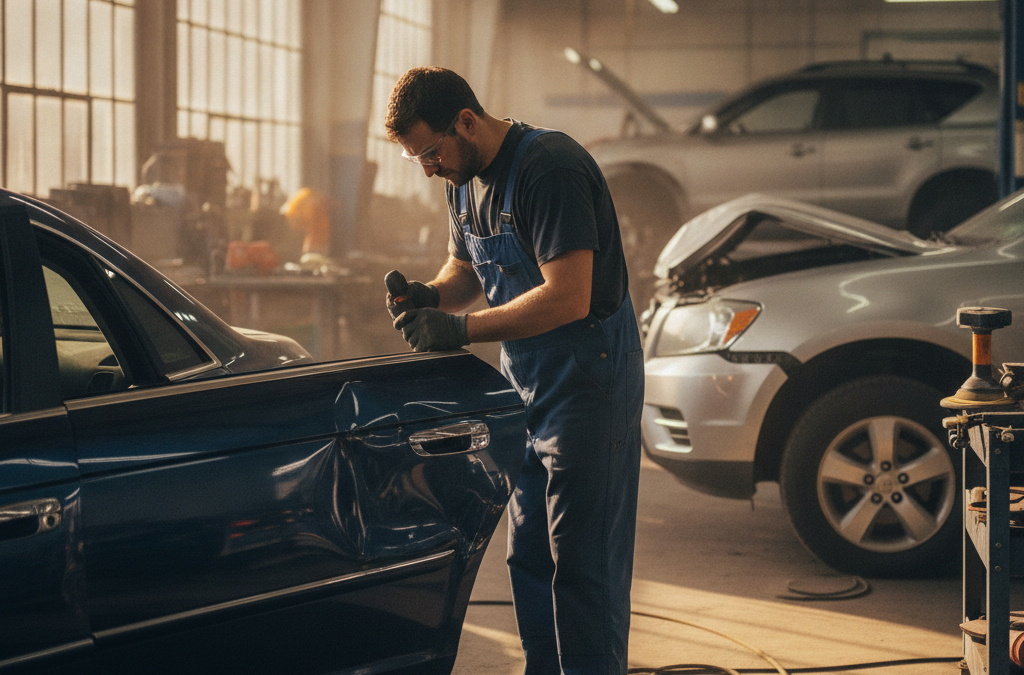
How Does Dent Repair Actually Work in the Bronx — and When Do You Need More Than a Quick Fix?
If you drive in the Bronx, dents are practically unavoidable. A tight parking spot near Fordham Road, a slow-moving fender tap on the Cross Bronx Expressway, a shopping cart that got away from somebody in a lot off Pelham Bay — it all adds up. Dent repair is one of those things most drivers know they need but don’t fully understand until they’re standing in a shop parking lot wondering why the estimate is higher than they expected. The short answer is that not all dents are created equal, and the right fix depends on the depth of the damage, the location on the vehicle, whether the paint is broken, and what’s underneath the panel. Here’s how to make sense of it.
The Two Basic Types of Dent Repair
When you bring your car in for a dent, a technician is going to assess it and decide between two main approaches: paintless dent repair (PDR) or traditional dent repair. Both are legitimate — they just apply to different situations.
Paintless Dent Repair (PDR): When It Works and When It Doesn’t
PDR is exactly what it sounds like. A trained technician uses specialized rods and tools to massage the metal back into shape from behind the panel — no filler, no paint, no sanding. It’s a skilled process that takes years to get right, and when it’s done well, you genuinely can’t tell the dent was ever there.
PDR works best when:
- The dent is relatively shallow with no sharp creases
- The paint is still intact — no chips, cracks, or scratches
- The damaged panel can be accessed from behind
- The metal hasn’t been stretched significantly
Common PDR candidates: door dings from parking lots, minor hail damage, small round dents on hoods or roofs, and those infuriating shallow dents you pick up just sitting in traffic. It’s typically faster and less expensive than traditional repair, and in the right situation, it’s an excellent option.
But PDR has real limits. If the paint is cracked, if the dent has a sharp fold or crease, or if it’s in a location a technician physically can’t reach, PDR isn’t going to cut it. A shop that tells you every dent is a PDR job — or pushes PDR because it’s quicker — isn’t giving you the full picture.
Traditional Dent Repair: What It Involves
When a dent is too severe for PDR, the repair process goes deeper. This typically involves:
- Pulling or hammering the panel back toward its original shape
- Applying body filler to smooth out any remaining imperfections
- Block sanding to achieve a flat, even surface
- Primer, paint, and clear coat — matched precisely to your vehicle’s color code
Done right, traditional dent repair is invisible. Done wrong — rushed filler work, poor paint matching, thin clear coat — it shows within months. That’s why the quality of the technician and the shop’s equipment matters as much as the process itself.
What Makes Bronx Dent Damage Different from Other Markets
If you’ve driven anywhere else in the country and then come back to New York City, you already know: the density here is different. The Bronx alone sees some of the highest traffic volume in the metro area. The streets around the Grand Concourse corridor, the bottlenecks near major intersections, the parallel parking on every block — these conditions mean that low-speed contact happens constantly. Most of it doesn’t get reported to insurance. Most of it ends up being out-of-pocket repairs that drivers want done right without spending a fortune.
We also see a lot of multi-point dent situations — a car that’s been dinged in three different spots from three different incidents. Addressing each one properly, rather than just slapping filler over everything and painting the whole panel, takes experience and honesty.
Drivers coming in from Yonkers, Mount Vernon, or White Plains deal with a mix of highway and surface street damage. Some of it is light. Some of it is more involved than it first appears. The inspection matters more than the visual.
The Part Most Shops Don’t Talk About: What’s Underneath the Dent
Here’s something you won’t find prominently on most competitor sites: the dent you can see on the outside isn’t always the whole story. In moderate or higher-speed impacts, the damage can transfer to the panel’s inner structure, to brackets behind the skin, or — in serious cases — to the vehicle’s frame or unibody. A dent that looks like a $300 repair from the outside can turn into something much more significant once the panel comes off and a technician can see what’s actually there.
This is why a proper inspection matters before anyone gives you a firm number. Collision and mechanical repair often go together more than drivers realize. You might come in for a door dent and discover the door frame was bent enough to affect how the door seals — which affects weather resistance and even crash safety down the road. A shop that skips the thorough look-over to give you the cheapest quote upfront may cost you more in the long run.
At S&T Auto Body, we’ve been doing this in the Bronx since 1975. We’ve seen enough deferred repairs gone wrong to know that a complete, honest assessment at the start saves everyone time, money, and frustration.
When Dent Repair Should Go Through Insurance
A lot of drivers hesitate to file a claim for dent damage because they’re worried about rates going up. That’s a legitimate concern — and whether to file is a personal decision. But there are situations where going through your insurer is clearly the right call:
- When the damage involves another vehicle or party
- When the damage is more extensive than it looks
- When the repair cost clearly exceeds your deductible
- When there’s any question about structural involvement
As a Geico preferred shop, we work with that insurer regularly and can help coordinate your claim directly so you’re not left managing paperwork on your own. We also work with most other major carriers serving the NYC metro area. We’ll give you a clear, itemized estimate so you know exactly what’s being repaired and why — whether it goes through insurance or not.
Dent Repair on EVs and Aluminum-Bodied Vehicles: A Different Animal
If you drive a Tesla, a newer Mercedes-Benz, or another vehicle with aluminum body panels, this section matters to you. Aluminum behaves very differently from steel. It doesn’t respond to the same PDR techniques, it can crack or work-harden under improper manipulation, and welding aluminum requires specialized equipment and certified training that most general body shops simply don’t have.
Using a shop that doesn’t have the right certification for your vehicle’s body materials can result in repairs that look fine on the surface but are structurally compromised — and that can affect how the vehicle performs in a future collision. If you own an EV or luxury vehicle and you’re dealing with dent damage, make sure the shop you choose has the right credentials for your specific make. You can learn more about how we handle Tesla and EV body repair and the manufacturer-specific standards we follow.
Frequently Asked Questions About Dent Repair in the Bronx
How long does dent repair usually take?
A straightforward PDR job — one or two small dents with no paint damage — can often be done in a day or less. Traditional repair involving painting typically takes two to four days, depending on the number of panels and the drying time needed between coats. We’ll give you a realistic timeline upfront, not a number we walk back later.
Can I drive my car with a dent before I get it fixed?
In most cases, yes — as long as the damage doesn’t affect visibility, the structural integrity of the door, or any safety systems. However, if the dent involved any contact near the wheels, frame, or bumper supports, get it inspected before driving it regularly. What looks cosmetic can sometimes affect how your car handles impact in the future.
Will a dent repair show up on a Carfax report?
Minor cosmetic repairs done out of pocket typically won’t appear on a vehicle history report unless they were part of an insurance claim. If you’re buying or selling a car and dent repair is a factor, ask specifically about what was done and whether it was reported to insurance.
Is it worth fixing a dent on an older car?
That depends on your situation. If the dent is affecting how the vehicle functions — door doesn’t seal properly, panel is rubbing on something — yes, it’s worth addressing. If it’s purely cosmetic on a vehicle you’re planning to sell or retire soon, weigh the repair cost against what you’d realistically get for the car. We’re always happy to give you an honest opinion, not just a bill.
Do you offer free estimates for dent repair?
Yes. You can bring the vehicle in for a no-obligation look, or send us photos through our contact page to get started. We’ll give you a clear breakdown of what the repair involves before any work is authorized.
Ready to Get That Dent Taken Care Of?
Whether it’s a door ding from a Riverdale parking lot or a more serious dent from a fender collision in Queens, S&T Auto Body has been handling it all for over 50 years. We’re a family-owned shop with I-CAR Gold Class certified technicians, manufacturer certifications, and zero interest in overselling you a repair you don’t need. Come see us at 4632 3rd Ave in the Bronx, or reach out through our contact page to request a free, itemized estimate. We’ll tell you exactly what you’re dealing with and what it’s going to take to make it right.