Is Your Body Shop Actually Qualified to Fix an EV? What White Plains and Bronx Drivers Should Ask
If you drive a Tesla, a Rivian, a Chevy Bolt, or any other electric vehicle and you’ve been in a collision, here’s something most people don’t find out until it’s too late: the vast majority of auto body shops in the New York metro area are not properly equipped to repair your car. That’s not an exaggeration — it’s a straightforward fact about how different EVs are from traditional gas-powered vehicles, and it has real consequences for your safety, your warranty, and your car’s long-term value. Whether you’re in the Bronx or coming in from White Plains or Yonkers, knowing what questions to ask before you choose a shop can save you a serious headache down the road.
Why EVs Aren’t Just “Cars With a Different Engine”
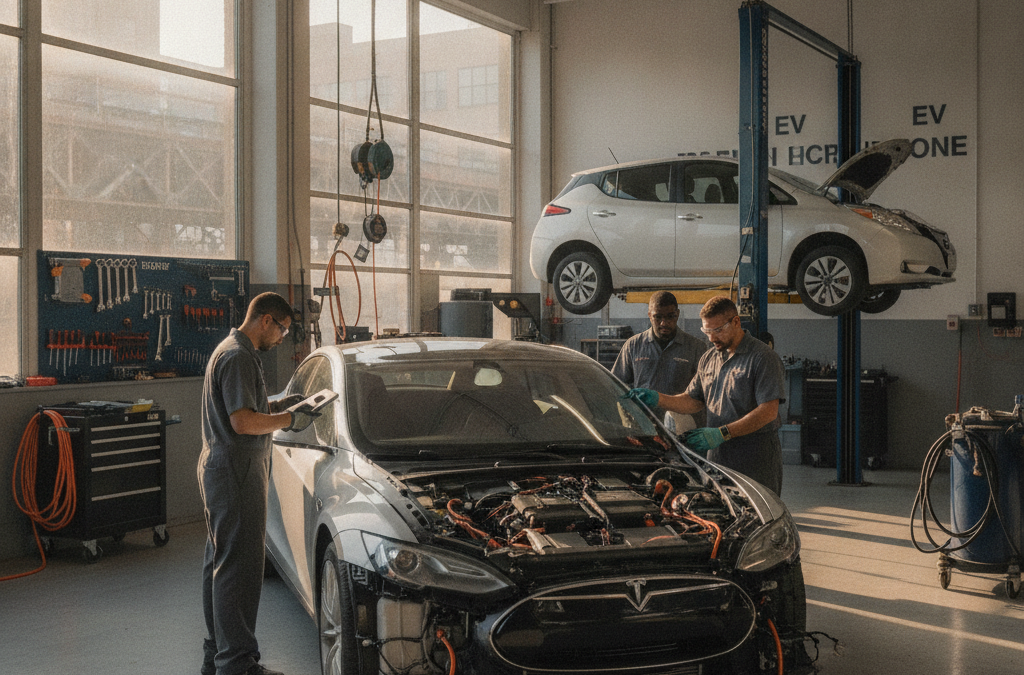
A lot of drivers assume that a body shop is a body shop — if they can fix a Honda, they can fix a Tesla. But electric vehicles are built around fundamentally different architecture. The battery pack on most EVs is structural. It’s not tucked under the hood the way a gas tank is — it runs along the floor of the vehicle and is often integrated into the frame itself. That means even a moderate side or rear collision can affect the battery enclosure in ways that aren’t visible to the naked eye.
Beyond the battery, EVs like the Tesla Model 3, Model Y, and Model S use aluminum-intensive body structures. Aluminum doesn’t behave like steel — it can’t be straightened the same way, it requires different welding equipment, and if a technician who isn’t trained in aluminum repair tries to work on it, they can compromise the structural integrity of the vehicle without realizing it. This isn’t a minor risk. It directly affects how your car performs in a future collision.
High-voltage systems are the other major issue. Tesla vehicles run on battery packs that operate at 400 to 800 volts. Proper EV collision repair requires technicians who are trained to safely disable and manage those systems before any repair work begins. A shop that hasn’t invested in that training and the proper insulated tools is not a safe place to bring your EV, period.
What “EV Certified” Actually Means — and Why Competitors Often Skip This Explanation
Here’s a gap we’ve noticed in how most local body shops — including some well-known ones in the area — talk about EV repair online: they say they work on electric vehicles, but they don’t explain what qualifies them to do so. Saying “we repair Teslas” and being certified to repair Teslas are two very different things.
Tesla’s approved collision repair network requires shops to meet specific standards — dedicated aluminum repair equipment, high-voltage safety certification for technicians, Tesla-approved parts sourcing, and a repair process that follows Tesla’s own repair procedures. A shop that’s part of that network has gone through a formal vetting process. One that isn’t might still attempt the repair, but they may be using steel repair tools on aluminum panels, sourcing aftermarket parts that don’t meet spec, and working without the diagnostic access that certified shops have.
At S&T Auto Body, our technicians hold I-CAR Gold Class certification, which is the industry’s highest ongoing training standard for collision repair. That includes training specific to EV repair procedures and high-voltage safety. You can read more about what our certifications mean in practice on our certifications page.
The Right Questions to Ask Any Shop Before You Commit
If you’re calling around to shops after an EV collision — whether you’re in Scarsdale, the Bronx, or driving in from Westchester County — here’s what to ask directly:
- Are your technicians trained and certified for high-voltage EV systems? Ask specifically about training, not just experience.
- Do you have dedicated aluminum repair equipment? This includes separate MIG welding equipment for aluminum, which should never be shared with steel repair tools due to contamination risk.
- Are you an approved or certified repair facility for this vehicle brand? For Tesla owners, ask if they’re part of Tesla’s approved collision repair network. For other EV brands, ask about manufacturer-specific authorization.
- Will you use OEM parts? For EVs, non-OEM battery components or structural parts can have serious safety and warranty implications.
- Can you perform a post-repair diagnostic scan? EVs have complex sensor and software systems that need to be re-calibrated after a collision, including ADAS (advanced driver assistance systems). This step is non-negotiable.
If a shop can’t answer these questions clearly and confidently, that tells you something important.
Why This Matters More in the NYC Metro Than Almost Anywhere Else
EV adoption has accelerated fast across the Bronx, Manhattan, and the surrounding suburbs — White Plains, Yonkers, and communities throughout Westchester County have all seen a sharp increase in EVs on the road over the past few years. That’s great for the environment. But the collision repair infrastructure hasn’t kept pace. There are simply more EVs in this area now than there are properly certified shops to fix them.
Add in the density of NYC-area traffic — the Cross Bronx Expressway, the BQE, the Deegan — and the daily reality of fender benders and parking lot scrapes, and you have a lot of EV owners who need collision repair and are discovering that their options are more limited than they expected. Many drivers from White Plains or Scarsdale end up traveling to the Bronx specifically because of the concentration of certified shops in the area. It’s worth making that trip rather than settling for a shop that isn’t equipped to do the job right.
Our EV and Tesla repair page walks through exactly what our process looks like from the moment your vehicle arrives to the moment you pick it up.
What About Your Insurance Claim?
One thing that surprises a lot of EV owners is how EV repair intersects with the insurance claim process. Some insurers — including major players in the New York market — will try to direct you toward shops that are on their preferred vendor list. That list doesn’t always include shops that are actually certified for your specific vehicle. You have the right to choose your own repair facility in New York State. Your insurer cannot require you to use a specific shop.
If you’re working through a Geico claim or another major insurer and they’re pushing back on your choice of shop, ask your body shop to advocate on your behalf. A certified shop with experience handling insurance claims — and with documented credentials — is in a much stronger position to push back on lowball estimates or parts substitutions than a shop that isn’t.
Frequently Asked Questions
Can any I-CAR certified shop repair my EV?
I-CAR Gold Class certification is a strong baseline, but EV repair requires additional training beyond the general I-CAR curriculum. Look for technicians with specific I-CAR EV and steel/aluminum training modules completed, or manufacturer-specific EV certification from brands like Tesla.
What happens if I take my Tesla to an uncertified shop?
Tesla may void the portion of your warranty related to the repaired area, and the shop likely won’t have access to Tesla’s repair procedures or proper diagnostic tools. Structural repairs done incorrectly on a Tesla’s aluminum body can also compromise crash safety in a future accident.
How long does EV collision repair typically take?
It depends on the severity of the damage, but EV repairs often take longer than comparable repairs on gas vehicles — partly because OEM parts for newer EV models can have lead times, and partly because the diagnostic and recalibration steps at the end of the repair add time. A shop that quotes you a very fast turnaround on a significant EV repair may be cutting corners.
Do I need a certified EV shop for a minor dent or scratch?
For purely cosmetic damage that doesn’t involve the EV’s structural panels, battery area, or any electrical components, a standard certified shop with proper paint matching capabilities can handle it. But if there’s any question about whether the collision involved the battery enclosure or structural panels, certified EV repair is the right call.
Does S&T Auto Body work on EVs other than Tesla?
Yes. We work on a range of electric and hybrid vehicles and hold manufacturer certifications across multiple brands. If you’re unsure whether we’re the right fit for your specific EV, call us and we’ll give you a straight answer before you tow the vehicle anywhere.
Get a Free Estimate From a Shop That Actually Knows Your Vehicle
We’ve been in the Bronx for over 50 years. Family-owned since 1975. We’ve seen every kind of collision damage, and we’ve invested in the training, equipment, and certifications to repair the vehicles people are actually driving today — including EVs. If you’ve been in an accident and you’re trying to figure out your next move, we’ll give you a straight answer and a free, itemized estimate with no pressure.
If you’re in White Plains, Yonkers, Manhattan, or anywhere in the Westchester or NYC area, reach out to us directly. We’ll walk you through the process, help you understand your insurance options, and make sure your vehicle gets repaired the right way. Contact S&T Auto Body to request your free estimate — or just call us to talk it through first. We’re here.