How Does a Hit-and-Run Accident in the Bronx Affect Your Insurance Claim and Repair Options?
A hit-and-run in the Bronx is one of the most frustrating things that can happen to you as a driver. You come out of the grocery store on Fordham Road, or you’re waiting at a light near the Cross Bronx Expressway, and someone clips your car and takes off. No name, no plate, no apology. Just damage and a sinking feeling. The good news is that you have more options than you might think — and the steps you take in the next few hours matter a lot. This guide walks you through exactly what to do, how your insurance actually works in a hit-and-run situation, and how to make sure your car gets fixed properly even when the other driver is long gone.
Step One: Report It Before You Do Anything Else
In New York State, you’re required to report any accident involving more than $1,000 in damage or any injury to the police. With a hit-and-run, filing a police report isn’t just a legal formality — it’s something your insurance company will likely require before they process your claim. Call the NYPD or your local precinct as soon as possible and document the incident while your memory is fresh. Note the time, location, direction the vehicle was traveling, and any details you remember about the other car, even partial ones.
If there were any witnesses — someone on the sidewalk, a nearby business, a driver who stopped — get their contact information if you can. Surveillance footage from nearby businesses or traffic cameras can sometimes help identify the responsible vehicle, especially in busier corridors like the Grand Concourse or near shopping areas in Pelham Bay or Fordham.
How New York’s Insurance System Works in Your Favor Here
New York is a no-fault state, which means your own insurance covers certain costs regardless of who caused the accident. But for vehicle damage specifically — not medical costs — no-fault doesn’t apply. That’s where two other types of coverage come in:
- Collision coverage: If you carry collision on your policy, you can use it to repair your car after a hit-and-run. You’ll pay your deductible, and your insurer covers the rest. The at-fault driver being unknown doesn’t change this.
- Uninsured motorist property damage (UMPD): New York does not require UMPD for property damage, but some drivers carry it. If you have it and can show physical contact occurred — meaning the other vehicle actually struck yours — it may help cover damage with a lower deductible than collision.
If you only carry liability coverage (the state minimum), you may be in a tougher spot. In that case, a police report is still important because it documents the incident for any future legal options, and it protects you if the other driver is later identified.
If you’re insured with Geico or another major carrier with a strong presence in the New York metro area, call them directly after you’ve filed the police report. As a Geico-preferred shop, we work with their adjusters regularly and can help make sure your estimate is thorough and accurate — nothing missed, nothing padded.
What Happens When You Bring Your Car In After a Hit-and-Run
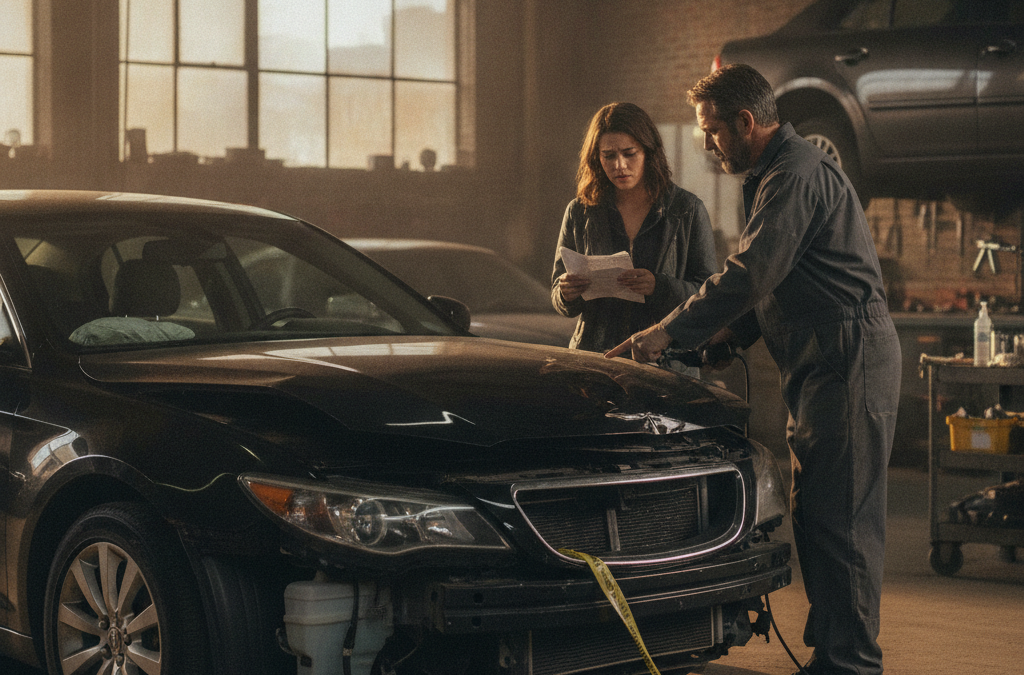
When you bring your vehicle to our collision repair team, the first thing we do is a full inspection — not just the visible damage, but anything underneath it. Hit-and-run damage often looks minor on the surface. A side swipe on a parking lot in Yonkers or a rear-end tap at a red light in Queens can look like a scuff, but underneath there may be hidden structural damage, misalignment, or damage to sensors and cameras that aren’t visible to the eye.
We provide a free, itemized written estimate. Itemized means line by line — every part, every labor hour, every step of the repair spelled out so you know exactly what’s being done and why. That matters when you’re going through an insurance claim because you want to be certain your insurer isn’t approving a shortcut version of the repair.
Our technicians are I-CAR Gold Class certified, which is the industry’s highest standard for collision repair training. That certification isn’t just a plaque on the wall — it means the people working on your car are trained to modern repair standards, including on vehicles with advanced safety systems that are increasingly common even on everyday cars.
What Competitors Often Don’t Tell You About Hit-and-Run Claims
Here’s something we’ve noticed that a lot of body shops — including some larger collision centers in the area — don’t explain clearly to their customers: the body shop you choose affects how smoothly your insurance claim goes, and in some cases, how much of the repair actually gets approved.
When a shop submits a vague or incomplete estimate to your insurer, the adjuster may approve a cheaper fix than what your car actually needs. You might not know this until the repair is done and something doesn’t look or drive right. A thorough, documented estimate from a certified shop makes it harder for anyone to cut corners at your expense.
We’ve been serving the Bronx and surrounding communities since 1975. In five decades, we’ve handled every kind of claim situation you can imagine — including plenty of hit-and-runs from Mount Vernon to Manhattan. We know how to document damage properly, communicate with adjusters, and advocate for a complete repair on your behalf.
Special Considerations for Newer and High-Value Vehicles
If you drive a Tesla, a Mercedes-Benz, or another vehicle with a lot of built-in technology, a hit-and-run can be particularly complicated. Modern vehicles are packed with sensors, cameras, radar systems, and aluminum body panels that require specialized repair techniques. Damage to a rear bumper on a Tesla, for example, isn’t just a body panel replacement — it may involve recalibrating autopilot sensors. On a Mercedes, even a minor impact can trigger structural checks required under the manufacturer’s repair standards.
We’re certified to repair a wide range of makes including Tesla, Mercedes-Benz, and many other manufacturers, which means repairs are done to the brand’s own specifications, not just general best practices. That matters for your safety, your warranty, and your vehicle’s resale value.
Frequently Asked Questions
Do I need a police report to file an insurance claim after a hit-and-run in the Bronx?
Most insurers, including Geico, require a police report for hit-and-run claims where the at-fault driver is unknown. File one as soon as possible — ideally the same day. It protects your claim and is required under New York law if damage exceeds $1,000.
Will my rates go up if I file a collision claim after a hit-and-run?
This varies by insurer and your policy history. In New York, insurance companies are generally not supposed to surcharge you for a not-at-fault accident, and a properly documented hit-and-run should qualify as not-at-fault. Ask your insurer directly before filing if you’re concerned.
What if the other driver is identified later — can I recover my deductible?
Yes. If the at-fault driver is later found and held responsible, you or your insurer can pursue subrogation to recover costs, including your deductible. Keep your police report number and all repair documentation.
Can I choose my own body shop for a hit-and-run claim, or does my insurance pick?
In New York, you have the right to choose your own repair shop. Your insurer may suggest a shop, but you are not required to use it. Choose a shop with the certifications and experience to do the job right — it’s your vehicle and your safety.
How long does a hit-and-run repair typically take?
It depends on the extent of the damage. A minor side swipe might take a few days. A more significant impact with structural or sensor damage could take one to two weeks or longer, depending on parts availability. We’ll give you a realistic timeline upfront and keep you updated throughout.
Get a Free Estimate and Let Us Help You Through the Claim
If you’ve been hit and the driver took off, you don’t have to figure this out on your own. We’ve helped drivers all across the Bronx, Westchester County, and the surrounding boroughs navigate exactly this situation — from the police report to the insurance claim to getting back on the road with a car that’s been fixed the right way.
You can bring your car in or send us photos to get started. We’ll give you a free, itemized estimate with no obligation, help you understand your coverage options, and work directly with your insurer so the process is as painless as possible. Give us a call at (718) 220-2201 or stop by — we’re here to help.