What Bronx and Fordham Road Drivers Should Know About Frame Straightening After a Serious Collision
If your car took a serious hit — a hard rear-ender on the Cross Bronx Expressway, a T-bone at an intersection near Fordham Road, or a front-end impact in stop-and-go traffic — the damage you can see is only part of the story. When the collision force is strong enough, it pushes through the sheet metal and into the underlying structure of the vehicle. That’s when your shop will use the phrase “frame damage,” and that’s when the repair gets more involved. The good news: frame straightening is a well-established process, and when it’s done by the right shop with the right equipment, your car can come back to factory specification — safe, aligned, and ready for the road. Here’s what you actually need to know before your vehicle goes up on the rack.
What “Frame Damage” Actually Means for Modern Cars
Most vehicles built in the last two or three decades don’t have a traditional ladder-style frame running under the body. Instead, they use what’s called a unibody construction — the body panels, floor, pillars, and structural rails are all welded together into one integrated unit. When any part of that structure absorbs a hard impact, it can bend, buckle, or twist in ways that affect the entire vehicle’s geometry, not just the corner that got hit.
What this means for you practically: even if your front bumper cover looks like the worst of it, the impact energy may have traveled into the radiator support, the front rails, or the firewall. Similarly, a hard rear impact can push in the trunk floor and compromise the rear suspension mounting points. When those structural components shift — even by a fraction of an inch — you may notice the car pulling to one side, tire wear that seems uneven, doors that feel misaligned, or a subtle vibration you can’t explain. These are warning signs the frame wasn’t fully addressed.
How Frame Straightening Actually Works
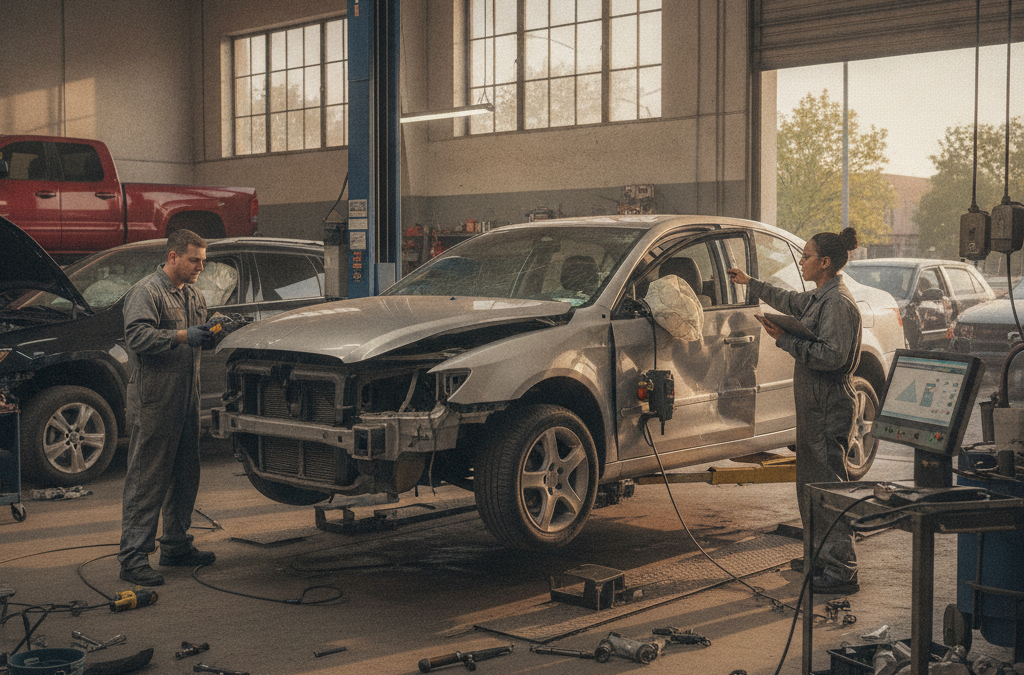
Frame straightening isn’t hammering metal back into shape by hand. Modern shops use a computerized frame measuring system — often called a bench or frame rack — that anchors the vehicle securely and uses electronic sensors to measure hundreds of reference points across the body structure. Those measurements are compared against the manufacturer’s published specifications for that exact make and model. The technician can see, in real time, which sections are out of tolerance and by exactly how much.
Once the damage map is established, hydraulic pulling equipment applies controlled force to move the affected sections back into alignment. The measurements are checked continuously throughout the process. When the vehicle’s geometry matches factory spec, the pull stops. There’s no guesswork — the numbers either match or they don’t.
This process is why the quality of the shop’s equipment — and the training of the technicians operating it — matters enormously. An undercapitalized shop with outdated equipment may get the car close, but “close” isn’t the same as correct when you’re talking about the structural foundation your airbags, suspension, and safety systems depend on.
Why Certified Technicians Make the Difference Here
Frame straightening is one of the areas where I-CAR Gold Class certification carries real weight. I-CAR is the industry’s training standard for collision repair, and Gold Class is the highest level a shop can achieve — it requires ongoing, annual training across multiple repair disciplines, including structural repair, welding, and aluminum work. Not every shop in the Bronx or Westchester maintains that standard.
At S&T Auto Body, our technicians hold I-CAR Gold Class certification and are trained to work with the structural repair standards published by vehicle manufacturers — not just general industry guidelines. That distinction matters because different vehicles have different frame compositions. A steel-framed pickup has different repair procedures than a high-strength steel unibody sedan, which is different again from an aluminum-intensive EV platform. The wrong technique on the wrong material can weaken a repair point even after the geometry looks correct on the measuring system.
What Competitors in This Area Often Leave Out
When we looked at what other local shops explain online about structural repair, there’s a consistent gap: most sites mention that they do frame straightening, but they don’t explain what happens after the rack work is finished. Frame alignment is not the last step — it’s the middle step.
After the structure is back to spec, a properly completed structural repair also requires:
- Alignment check and adjustment — the frame being straight doesn’t automatically mean the wheels are aligned. A full four-wheel alignment should follow any structural repair.
- ADAS sensor inspection — cameras, radar units, and parking sensors that are mounted to structural components may have shifted and require recalibration.
- Weld inspection and sealing — if any structural welds were made during the repair, they need to be properly finished and sealed against moisture intrusion, which leads to rust down the road.
- Documentation for your insurance and records — a reputable shop provides a written record of what was measured, what was corrected, and to what specification. That documentation protects you if questions arise later.
If a shop quotes you only for the visible damage and doesn’t mention a structural inspection, ask directly. A thorough estimate should reflect what’s actually wrong, not just what’s easy to explain.
How Insurance Usually Handles Frame Damage
Most comprehensive and collision policies cover structural repair, but the claim process is a bit more involved than a straightforward bumper replacement. The adjuster will typically want to see the frame measurement report before approving the repair cost. A good shop — one with experience handling insurance claims — will generate that documentation as a standard part of the estimate process and share it directly with your insurer.
As a Geico preferred shop, S&T Auto Body works directly with insurance adjusters on claims involving structural damage, which removes a lot of the back-and-forth from your plate. You shouldn’t have to be the middleman between your shop and your insurer when the repair is already this complex. You can learn more about our collision repair services and how we handle the full scope of structural repairs from estimate through final alignment.
Timeline and Cost: What to Realistically Expect
Frame straightening adds time to a repair. Depending on the extent of the damage, structural work alone can take one to three days — and that’s before the shop addresses the body panels, paint, or mechanical components that often need attention after a hard impact. A minor frame correction on a fender-bender might add a day. A severe front-end or rear-end collision with significant rail damage can push a total repair timeline to two weeks or more.
Costs vary widely based on the severity of the bend, the vehicle type, and whether any structural components need to be replaced rather than straightened. Shops in the Manhattan and Westchester areas often charge a premium for the same work. That’s worth keeping in mind if you’re driving in from Yonkers or Mount Vernon and weighing your options. We provide free, itemized written estimates with no pressure — so you know exactly what you’re paying for before anything is authorized.
Frequently Asked Questions About Frame Straightening
Can my car be driven after a collision if I suspect frame damage?
It depends on the severity. If the car is pulling hard, doors are binding, or the geometry is visibly off, driving it can accelerate tire wear, stress suspension components, and affect how safety systems respond in a second impact. Have it inspected before putting more miles on it.
Will frame damage show up on a Carfax report?
It can — if the accident was reported to insurance or police. A vehicle history report may flag structural damage. This is another reason to have a written record showing the damage was properly repaired to manufacturer specification. That documentation can protect your vehicle’s resale value.
Is a car with frame damage ever a total loss?
Sometimes. If the cost to restore the frame to manufacturer spec — combined with all other repairs — exceeds a percentage of the vehicle’s actual cash value, the insurer may declare it a total loss. An honest shop will tell you upfront if the numbers are heading in that direction.
Does frame straightening affect my warranty?
If your car is still under manufacturer warranty, repairs performed by a certified shop using manufacturer-approved procedures generally protect your warranty coverage. Repairs done at non-certified shops using non-approved methods can create complications. That’s one of the reasons manufacturer certification matters more than most drivers realize.
Do EVs and aluminum-body vehicles require different frame repair procedures?
Yes — significantly. Aluminum doesn’t behave like steel under impact or during repair. Some EV platforms also integrate the battery housing into the structural floor, which adds another layer of complexity. Our shop is trained and equipped to handle EV and aluminum-body repair to the standards those vehicles require.
Get a Straight Answer — and a Straight Frame — at S&T Auto Body
We’ve been fixing cars in the Bronx since 1975. In that time, we’ve straightened frames on everything from family sedans to commercial fleet vehicles to late-model EVs. We use computerized measuring systems, I-CAR Gold Class certified technicians, and manufacturer-specific repair procedures — and we explain every step to you in plain language before we start. If you’ve been in a serious collision and you’re not sure what you’re dealing with, come see us or send us photos for a free estimate. We’ll tell you exactly what’s wrong, what it takes to fix it, and what your insurance should cover. No runaround, no surprises.
Call us at (718) 220-2201, email info@stautobody.com, or visit our contact page to request a free estimate. We’re here at 4632 3rd Ave in the Bronx, and we’re ready to help you get back on the road with confidence.