What Bronx and Kingsbridge Drivers Should Know About Getting Their Car Inspected After a Collision — Even If the Damage Looks Minor
If you’ve been in a fender-bender in the Bronx — whether it happened on Kingsbridge Road, near the Cross Bronx Expressway, or in a crowded parking lot — and the car still drives and looks mostly okay, you might be tempted to just let it go. Maybe there’s a small dent, a scuffed bumper, nothing dramatic. But here’s the honest truth: in our 50 years of working on cars in this city, some of the most expensive hidden damage we’ve found came from accidents that drivers thought were no big deal. Getting a proper post-collision inspection, even after a minor hit, is one of the smartest things you can do for your safety and your wallet.
Why “Looks Fine” Doesn’t Mean “Is Fine”
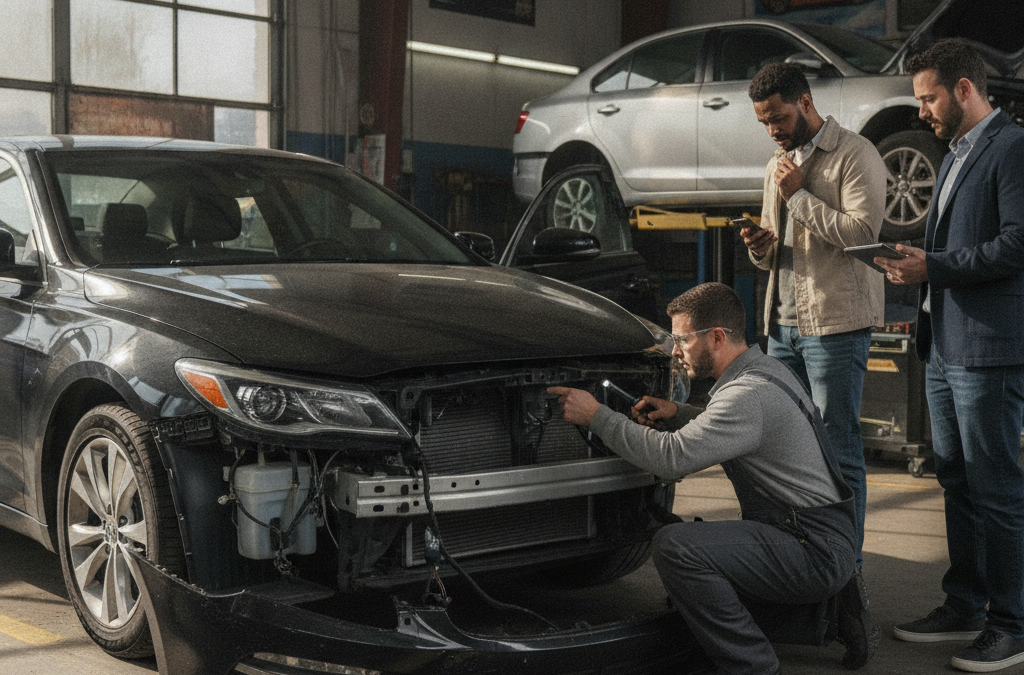
Modern cars are engineered to absorb impact energy in very specific ways. Your bumper, front fascia, and the foam or reinforcement bar behind it are all designed to crumple or flex so that energy doesn’t travel directly into the passenger cabin — or into critical mechanical and electronic components. That’s actually good engineering. But it also means that the part you can see took the hit so that something you can’t see was protected. Sometimes that protection works perfectly. Other times, what got protected actually got damaged in the process.
After even a low-speed collision, the following are commonly found during a professional inspection:
- Bent or shifted bumper reinforcement bars that aren’t visible from the outside but have lost their ability to protect you in a second impact
- Damaged radiator support or cooling components, especially in front-end collisions — even slow ones
- Misaligned suspension components that cause uneven tire wear and pulling while driving
- Triggered but unreported airbag sensors or seatbelt pretensioners that may not deploy correctly in a future accident
- Subtle frame or unibody distortion that affects how the vehicle handles but isn’t immediately obvious to the driver
- Parking sensors, backup cameras, or ADAS components that were physically shifted out of alignment without showing any visible exterior damage
None of these things will necessarily throw a warning light on your dashboard right away. That’s what makes them dangerous.
The Bronx Reality: High-Volume Traffic Means High-Frequency Minor Collisions
If you drive in the Bronx or commute through Kingsbridge, Fordham, or down into Manhattan regularly, you already know how common low-speed collisions are. Dense urban traffic, double-parked vehicles, tight intersections, and aggressive lane changes make fender-benders almost routine in this part of the city. In Yonkers and along the Westchester County border, drivers deal with similar stop-and-go conditions on surface roads that feed into the major highways.
Because these collisions happen so frequently, there’s a temptation to treat them as routine — to exchange info, get a quote, and move on if the car drives. But the volume of minor accidents in this area is exactly why local shops like ours have seen so many cases where the damage was worse than it looked. We’ve pulled cars in that had been driven for weeks with bent subframe components because the driver didn’t think a parking lot tap was worth inspecting.
What a Real Post-Collision Inspection Actually Involves
This is a section that’s largely missing from most competitor body shop websites in the area, and it matters. When you bring your car to a qualified shop after a collision — even a minor one — a proper inspection is more than a visual once-over. At S&T Auto Body, our I-CAR Gold Class certified technicians use a systematic process that includes:
- Physical measurement of the vehicle’s structure using a frame measuring system to check for any dimensional changes, even small ones that aren’t visible by eye
- Electronic scanning of the vehicle’s onboard systems to check for fault codes stored in the airbag control module, ABS system, and stability control — codes that may be stored even if no warning lights came on
- Inspection of all impact-absorbing components behind the visible exterior surfaces, including energy absorbers, reinforcement bars, and foam blocks
- A check of alignment and suspension geometry to see whether the impact shifted anything out of spec
- A visual and tactile inspection of seams, gaps, and panel alignment — small changes in how body panels line up can indicate that something moved underneath
This is different from a quick visual estimate. It takes time, trained eyes, and the right equipment. Not every shop in the city has all of that. A shop without proper frame measuring tools or the ability to scan your vehicle’s safety systems cannot give you a complete picture of what happened to your car.
Insurance and Inspections: What You Should Know
One reason drivers skip post-collision inspections after minor accidents is that they assume insurance won’t cover anything if the damage looks small — or they worry that filing a claim will raise their rates. These are valid concerns, but they shouldn’t stop you from getting your car looked at.
First, getting an inspection is not the same as filing a claim. You can have your vehicle evaluated at no cost, get a full picture of what the damage actually is, and then decide how to proceed. At S&T Auto Body, we offer free itemized estimates with no obligation — so you can walk in after a minor collision, find out exactly what’s going on under the surface, and make an informed decision.
Second, if you do decide to file a claim — whether with your own insurer or the other driver’s — having a documented, professional inspection report actually strengthens your position. It’s much harder for an insurance adjuster to minimize your claim when a certified shop has produced a written assessment of what was found.
We work closely with Geico and other major NYC-area insurers and can help you navigate the claim process once you know the full scope of the damage.
This Matters Even More for EVs and Newer Vehicles
If you’re driving a Tesla, a hybrid, or any newer vehicle loaded with driver-assist features, the stakes after even a minor collision are higher. These vehicles have cameras, radar units, and ultrasonic sensors mounted in bumpers, side mirrors, and grilles that can be physically displaced without breaking or leaving an obvious mark. If even one of those sensors is off by a few millimeters, the lane-keeping assist, automatic emergency braking, or adaptive cruise control may not perform correctly — and you may not know it until you’re in a situation where it was supposed to help. Our team is trained in EV and Tesla body repair, including the inspection protocols specific to high-voltage systems and aluminum-intensive construction that most general shops aren’t equipped to handle.
Frequently Asked Questions
How long does a post-collision inspection take?
A basic inspection — including a visual review, electronic scan, and structural measurement check — typically takes one to two hours. If additional disassembly is needed to see behind exterior panels, it may take longer. We’ll give you a clear timeline before we start.
Do I need an appointment, or can I just bring the car in?
Appointments help us give your vehicle the time and attention it deserves, especially for a thorough inspection. That said, if you’re coming from Kingsbridge or elsewhere in the Bronx after a fresh accident, call us and we’ll do our best to work you in and get eyes on the car quickly.
What if the inspection finds nothing wrong?
That’s genuinely a good outcome, and we’ll tell you exactly that. We don’t recommend repairs that aren’t needed. If your vehicle checks out structurally and electronically, you’ll leave with peace of mind rather than an inflated repair estimate.
Can a minor collision affect my car’s resale or trade-in value even if I don’t repair it?
Yes. Unrepaired collision damage — even minor damage — shows up on vehicle history reports and in pre-purchase inspections. Buyers and dealerships will factor it into any offer. Getting it properly documented and repaired protects your car’s value, whether you’re planning to sell in six months or six years.
My car drives fine and nothing looks bent. Should I still come in?
Yes — especially if the collision involved any front-end impact, a side hit near a wheel, or any contact significant enough to leave a mark. Driving fine in the moment is not the same as everything being structurally and electronically intact. We’ve seen it go the wrong way too many times to say otherwise.
Don’t Wait on This One
If you were in a collision recently — in Kingsbridge, somewhere else in the Bronx, or commuting in from Yonkers or Westchester County — and you’re not 100% sure your vehicle got away clean, let us take a look. We’ve been at this since 1975. We know what to look for, we have the tools to find it, and we’ll give you a straight answer. No pressure, no upselling, no surprises.
Reach out to S&T Auto Body today to schedule your free post-collision inspection. You can request a free estimate or book an appointment right here. We’re easy to get to from anywhere in the Bronx, and we’ll treat your car — and your time — with respect.