
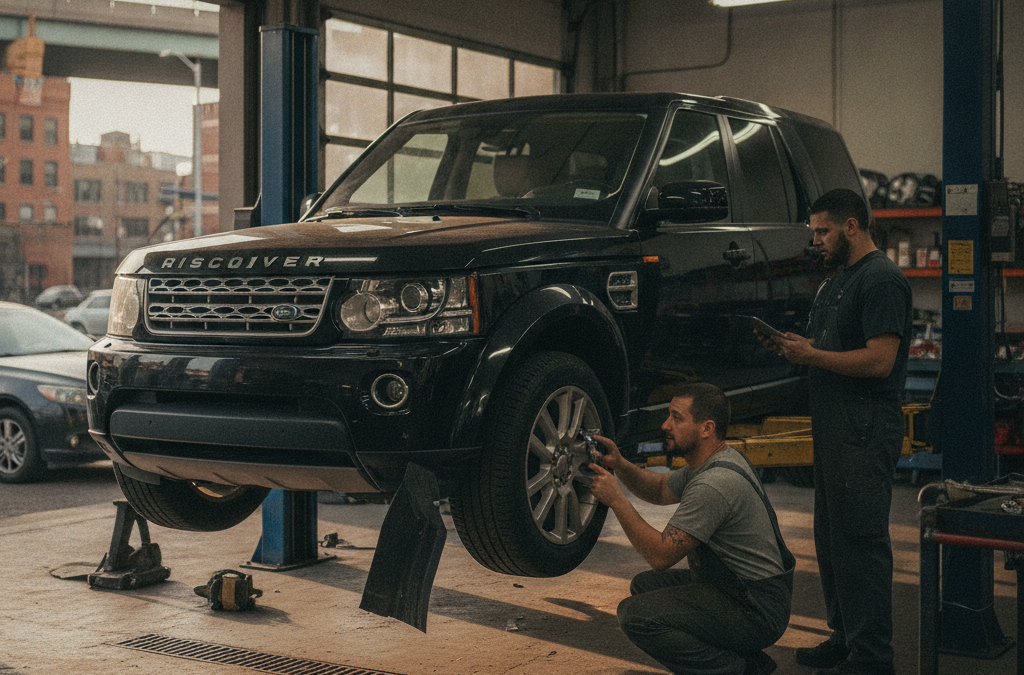
What Bronx and Scarsdale Drivers Should Know About Getting a Car Repaired After a Winter Pothole or Road Hazard Damage
If you’ve bottomed out on a pothole along the Cross Bronx Expressway or clipped a chunk of road debris on your way through Scarsdale or Yonkers, you already know the gut-drop feeling — that loud bang, the shimmy in the steering wheel, and the immediate dread of what it just did to your car. The honest answer is: it may have done more than you think. Potholes and road hazards are one of the most underestimated causes of serious vehicle damage in the New York City metro area, and most drivers don’t know where to start when it comes to getting the damage assessed, repaired, and — sometimes — covered by insurance.
Why NYC-Area Roads Are Especially Hard on Your Car
New York roads take a beating. Freeze-thaw cycles throughout the winter months crack and heave asphalt, and with the density of traffic the Bronx sees every single day — on the Fordham Road corridor, up and down the Grand Concourse, and across the Cross Bronx Expressway — potholes form fast and get worse before the city can patch them. Scarsdale, White Plains, and other parts of Westchester County have their own road hazard problems, especially on older residential streets that weren’t built for today’s traffic volume.
It’s not just potholes, either. Debris falls off trucks. Pieces of retread tire litter the highway. Construction zones leave steel plates with edges sharp enough to damage a tire sidewall in one pass. If you commute in this area regularly, a road hazard incident isn’t a matter of if — it’s a matter of when.
What Damage Can a Pothole Actually Do?
This is where a lot of drivers get surprised. You might look at your car after hitting a bad pothole and see nothing obviously wrong. But underneath, the story can be different. Here’s what a hard pothole strike can actually damage:
- Wheels and rims: Bent, cracked, or buckled rims are extremely common — and a bent rim can cause handling issues and uneven tire wear long-term.
- Tires: Sidewall bulges and blowouts are immediate risks. Even if the tire holds air, a compromised sidewall can fail without warning.
- Suspension components: Ball joints, control arms, tie rods, and struts can all absorb damage in a hard impact. You might notice pulling, vibration, or a ride that doesn’t feel quite right.
- Alignment: Even a moderate pothole can knock your alignment out. Left uncorrected, that leads to uneven tire wear and unsafe handling.
- Undercarriage and body panels: Low-profile vehicles and EVs are especially vulnerable. Road debris can crack plastic underbody covers, damage exhaust components, or — on electric vehicles — come dangerously close to battery pack housings.
- Steering components: A severe strike can bend steering rack components, leading to a car that doesn’t track straight.
The key point here is that none of this is always visible from the outside. A thorough inspection — not just a tire check in your driveway — is the only way to know for sure what happened.
Will Your Insurance Cover Pothole or Road Hazard Damage?
This is one of the questions we hear most often, and the answer depends on what kind of coverage you carry. In New York State, comprehensive coverage typically covers damage from road debris and objects — like a piece of tire tread you ran over. Collision coverage is what usually applies when you strike a pothole directly, because hitting the road surface itself is classified as a collision event.
If you only carry liability coverage — the bare minimum required in New York — you’re likely paying out of pocket for pothole damage. That’s one reason it’s worth reviewing your policy after an incident like this.
A few things worth knowing about the claims process:
- You’ll generally owe your deductible before insurance kicks in, so for minor damage, it may not be worth filing a claim at all.
- New York City does have a pothole claims process through the NYC Department of Transportation, though getting compensated is difficult and requires proving the city had prior notice of the specific pothole.
- Document everything at the scene — photos of the pothole, your vehicle, the location — before you drive away if it’s safe to do so.
At S&T Auto Body, we’ve been helping Bronx drivers navigate insurance claims since 1975. If you’re unsure whether to file, we can walk you through it during your free estimate — no pressure, just straight answers. Contact us to request a free, itemized estimate.
What Most Local Competitor Shops Don’t Tell You About Road Hazard Repairs
Here’s something that genuinely surprises people: most body shop websites in this area — and we’ve seen plenty of them — don’t say a word about pothole or road hazard damage. They focus almost entirely on collision repair from accidents involving other vehicles. That leaves drivers who hit a pothole or debris wondering whether a body shop is even the right place to go, or whether they should head to a tire shop, a dealership service center, or a mechanic.
The real answer is that road hazard damage often falls somewhere in between — and that’s exactly why you want a shop with the diagnostic capability to look at the whole vehicle, not just one system. Our I-CAR Gold Class certified technicians are trained to assess structural and mechanical damage together, so nothing falls through the cracks. If your suspension took a hit, if your rim is bent, if your underbody has damage — we find it, we document it, and we tell you exactly what needs to happen. Learn more about our certifications and what I-CAR Gold Class means for your repair.
EV Drivers: Pothole Damage Is a Different Concern
If you’re driving a Tesla or another electric vehicle in the Bronx or up through Westchester County, pothole damage carries an added layer of concern. EV battery packs are mounted low and flat under the vehicle floor — which is exactly where road hazard impacts land. A hard strike or debris dragging underneath can damage the battery enclosure, coolant lines, or charging components.
This isn’t a repair that every shop can handle safely or correctly. High-voltage systems require specific safety protocols, and EV manufacturers have strict repair standards. If you’re in an EV and you took a serious road hazard hit, don’t assume everything is fine just because the car is still driving normally. Get it inspected by someone who actually knows what to look for under there. See how S&T Auto Body handles EV and Tesla body repair.
What to Do Right After Hitting a Pothole or Road Hazard
Here’s a simple checklist for what to do in the moment and the days that follow:
- Pull over safely as soon as possible and check for visible tire damage or fluid leaks.
- Take photos of the pothole, any road debris, your vehicle’s damage, and the location (street signs or mile markers).
- Note whether your car is pulling to one side, vibrating, or handling differently than before.
- Check your tire pressure and look for visible rim damage before driving further.
- Call your insurance company to understand your coverage before assuming you’re on your own.
- Get the vehicle inspected — not just the tire or the rim, but the full undercarriage and suspension — at a shop equipped to do it properly.
Frequently Asked Questions
Does hitting a pothole count as a collision for insurance purposes in New York?
Yes — in most cases, striking a pothole is classified as a collision event under your auto insurance policy. That means your collision coverage applies, and your deductible would be owed. Debris that falls onto your car or that you run over may fall under comprehensive coverage instead. Check with your insurer to confirm how your specific policy handles it.
My car seems fine after hitting a pothole — do I still need an inspection?
Yes, and this is important. Suspension damage, bent rims, and alignment issues don’t always produce obvious symptoms right away. They can develop into bigger, more expensive problems over time — or cause a safety issue when you least expect it. A proper undercarriage inspection takes the guesswork out of it.
Can S&T Auto Body repair suspension and undercarriage damage from a pothole, or only collision damage?
We handle collision and mechanical repair together, which makes us well-suited for road hazard incidents that don’t fit neatly into one category. Our team can assess structural, body, and mechanical damage in one visit and give you a complete, itemized picture of what the vehicle needs.
I drive a leased vehicle. Who pays for pothole damage — me or the leasing company?
You’re responsible for repairing the vehicle, and most lease agreements require repairs to be completed by the end of the lease term. Whether your insurance covers it depends on your policy. Either way, it’s worth getting an estimate quickly so you know what you’re dealing with and can plan accordingly.
How long does pothole damage repair typically take?
It depends entirely on what’s damaged. A rim swap or alignment might be done same-day or next day. If there’s suspension component damage or undercarriage body work involved, plan for a few days. We’ll give you a clear timeline upfront so you’re not left guessing.
Get a Free Inspection and Estimate at S&T Auto Body
We’ve been working on cars in the Bronx since 1975. In that time, we’ve seen every kind of pothole damage this city’s roads can dish out — from cracked rims on the Cross Bronx to suspension hits on back roads in Scarsdale and Mount Vernon. We know what to look for, and we’ll give you an honest, itemized assessment with no runaround.
If you hit a pothole or road hazard and you’re not sure what to do next, the best thing you can do is bring it in — or send us photos first — and let us take a look before the damage gets worse. Reach out to S&T Auto Body to request your free estimate. We’re here to help you figure out what’s going on and get you back on the road with confidence.