
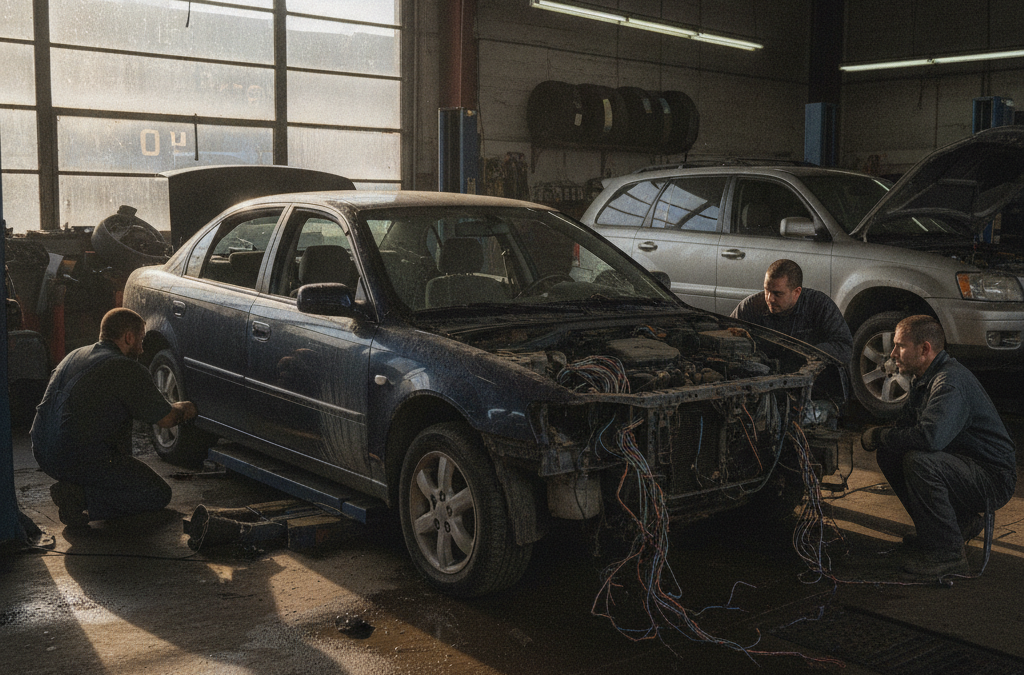
What Bronx and Manhasset Drivers Should Know About Getting a Car Repaired After a Flood or Water Damage Incident
If your car was caught in a flash flood, storm surge, or even a deep puddle that pushed water into the cabin or engine bay, the damage may be far worse than it looks from the outside. Flood and water damage is one of the most deceptive problems a vehicle can have — the exterior might look fine while the electrical system, engine, frame, and interior are quietly deteriorating. Drivers across the Bronx, Manhasset, and the wider New York City metro area have dealt with serious flooding events in recent years, and more are inevitable. Knowing what to do right after the water recedes can be the difference between a car that gets repaired correctly and one that becomes a money pit or a safety hazard down the road.
Why Flood Damage Is Different From a Typical Collision
When you get rear-ended or side-swiped, the damage is usually visible. You can see the dent, the broken taillight, the crumpled quarter panel. With flood damage, the most serious problems are often invisible. Water infiltrates everything — the wiring harness, the airbag control modules, the engine internals, the brake and transmission systems, the flooring and structural cavities. And here’s what makes it worse: some of that damage doesn’t show up right away. A car that drives fine the morning after a flood can start throwing warning lights, developing mold, or experiencing electrical gremlins weeks later.
This is why it matters enormously where you take a flood-damaged vehicle. A shop that only does paint and panel work isn’t equipped to handle the full scope of what water does to a modern car. You need a shop with I-CAR Gold Class certified technicians who understand both structural integrity and the cascading effects water has on today’s complex vehicle systems.
What Actually Happens to Your Car During a Flood
The severity depends on how high the water reached and for how long. Here’s a rough breakdown of what happens at different levels:
- Water reaches the door sills or floor: Carpet, insulation, and flooring materials soak up water fast and hold it. Mold can start growing within 24 to 48 hours. Electrical connectors under the seats and in the door panels are at risk.
- Water reaches the seat cushions or dashboard: Now you’re looking at potential damage to airbag sensors, seat belt pre-tensioners, infotainment wiring, and HVAC components. These are expensive systems to replace.
- Water reaches the engine air intake: This is where it gets critical. If the engine ingested water while running, you may have what’s called hydrolocking — water in the cylinders can bend connecting rods and cause catastrophic internal engine damage. This is often non-repairable at a cost that makes sense.
Even if the water level was relatively low, the time your car sat in standing water matters. Corrosion begins immediately. Salt water — which can be a factor near coastal areas like Nassau County or during certain storm events — accelerates that corrosion dramatically.
The Gap Most Competitor Shops Aren’t Filling: Honest Flood Damage Assessment
Here’s something that most local body shops — and frankly, most competitor collision centers — don’t talk about clearly: not every flood-damaged car is worth repairing. Part of what you need from a shop after a flooding event isn’t just a repair quote. You need an honest, thorough assessment that helps you understand whether repair makes financial and safety sense, or whether you’re looking at a total loss situation where you’d be better served working with your insurer on a payout.
At S&T Auto Body, we’ve been doing this work in the Bronx for 50 years. We’ll give you a free itemized estimate that actually breaks down what we’re seeing and what it’s going to cost to fix it correctly. We’re not in the business of taking your money on a car that can’t be made safe again — and we’ll tell you that straight if that’s the situation.
How Insurance Claims Work for Flood-Damaged Vehicles in New York
Flood damage is typically covered under the comprehensive portion of your auto insurance policy — not collision. That distinction matters. If you only carry liability coverage, flood damage likely isn’t covered at all. If you have full coverage with comprehensive, you should be in good shape to file a claim.
Here’s how the process usually goes:
- Document everything before you move the vehicle. Take photos and video of the waterline marks on the exterior, the interior, and any visible damage.
- Call your insurer — whether that’s Geico, Allstate, Progressive, or another carrier — to open a claim. Don’t wait.
- Your insurer will send an adjuster or use a digital appraisal tool to assess the damage. Their initial estimate may not capture everything, especially hidden electrical or mechanical issues.
- A reputable certified shop can work directly with your insurer to document supplemental damage as it’s uncovered during the repair process.
If your insurer declares the vehicle a total loss, that doesn’t necessarily mean the car is destroyed — it means the estimated repair cost exceeds a certain percentage of the car’s actual cash value. You have the right to negotiate that determination. An itemized estimate from a certified shop can be a useful tool in that conversation.
What Manhasset and Nassau County Drivers Should Know About Saltwater Exposure
Drivers closer to the coast — in Manhasset, parts of Nassau County, and Long Island — face an added risk during major storm events: saltwater intrusion. Salt water is far more destructive to metal, electrical contacts, and brake components than fresh water. It accelerates rust in the frame and suspension components, corrodes brake lines, and damages wiring insulation. If your vehicle was submerged in or exposed to saltwater flooding, the urgency of a professional assessment is even higher. Don’t let a car sit for weeks before getting it looked at — every day that passes, corrosion spreads further.
What About EVs and Flood Damage?
This is a topic that gets very little attention at most local shops, and it’s an important one as more drivers in Yonkers, Queens, Manhattan, and across the Bronx switch to electric vehicles. If your Tesla or other EV was caught in a flood, the stakes are different from a gas-powered vehicle — and in some ways, higher. High-voltage battery packs that have been submerged pose serious safety risks. Even after a vehicle appears dry, compromised battery cells can short-circuit, generate heat, or in extreme cases, ignite fires days or weeks later.
EV flood damage requires specialized assessment by technicians trained in high-voltage systems. You should not attempt to charge a flood-affected EV before it’s been inspected. If you have a Tesla or another electric vehicle that was caught in a flood, learn more about our EV repair capabilities and call us before you do anything else with the vehicle.
What to Do Immediately After Your Car Is Caught in a Flood
- Do not try to start the car if it’s been submerged or if water reached the engine air intake. Starting a hydrolocked engine will make the damage catastrophically worse.
- Do not charge your EV if it’s been submerged. Call a certified EV repair facility first.
- Document the damage thoroughly with photos and video before the car is moved or dried out.
- Have the car towed rather than driven to a shop — driving a flood-damaged car can spread water damage to components that weren’t yet affected.
- Call your insurer to open a comprehensive claim as soon as possible.
- Get an assessment from a certified shop — not just a body shop that handles cosmetic repairs, but one with the diagnostic capabilities to assess mechanical, electrical, and structural damage.
Frequently Asked Questions: Flood and Water Damage Car Repair in the Bronx Area
How do I know if my car is totaled after a flood?
Your insurer will make a total loss determination based on whether the estimated repair cost exceeds a certain percentage of your car’s actual cash value — typically 75 to 80 percent in New York. A certified shop can give you an itemized estimate to compare against your insurer’s assessment. You always have the right to get your own estimate before accepting a total loss determination.
Is flood damage covered by my car insurance?
Flood damage falls under comprehensive coverage, not collision. If you carry full coverage (liability plus collision plus comprehensive), you’re likely covered. If you only carry liability, flood damage is typically not covered. Check your declarations page or call your insurer to confirm.
How long does flood damage car repair take?
It depends heavily on the extent of the damage. A car with minor interior water intrusion might be dried out, cleaned, and back to you in a week or two. A vehicle with significant electrical, mechanical, or structural damage from flooding could take four to eight weeks or more, especially if parts need to be ordered. We’ll give you a realistic timeline upfront — we don’t make promises we can’t keep.
Can a flood-damaged car be safely repaired?
Yes — but only if the damage is properly assessed and fully repaired by technicians who know what to look for. The danger with flood-damaged cars is incomplete repairs. If a shop dries out the interior and fixes the visible cosmetic issues but misses corroded brake lines or compromised wiring, the car becomes a safety hazard. Certified, thorough repair by trained technicians is the only way to be sure.
Should I take a flood-damaged car to a dealership or an independent certified shop?
Either can be appropriate depending on the make and model. What matters most is that the shop has certified technicians trained in structural, mechanical, and electrical repair — not just cosmetic bodywork. S&T Auto Body has been serving Bronx drivers and the surrounding area since 1975, with manufacturer certifications and I-CAR Gold Class trained technicians who handle the full scope of damage, not just what shows on the surface.
S&T Auto Body Has Been Here Through Every Storm
We’ve been in the Bronx for 50 years. We’ve seen the damage that heavy rains, flash floods, and storm surges do to vehicles all across this city — from the Grand Concourse to the Cross Bronx Expressway to the neighborhoods along the shore. When the water recedes and you’re standing in front of a car that may or may not be saveable, you need someone you can trust to give you a straight answer and a fair plan. That’s what we’ve done for every driver who’s walked through our doors, and it’s what we’ll do for you.
If your vehicle was caught in a flood or suffered water damage, don’t wait. The sooner we can assess it, the better the outcome. Contact S&T Auto Body today for a free, no-obligation estimate. You can call us, stop by, or submit photos online to get the process started — we’ll tell you exactly what we’re looking at and what it’s going to take to make it right.