What Bronx and New Rochelle Drivers Should Know About Getting a Car Repaired When the Parts Are on Backorder
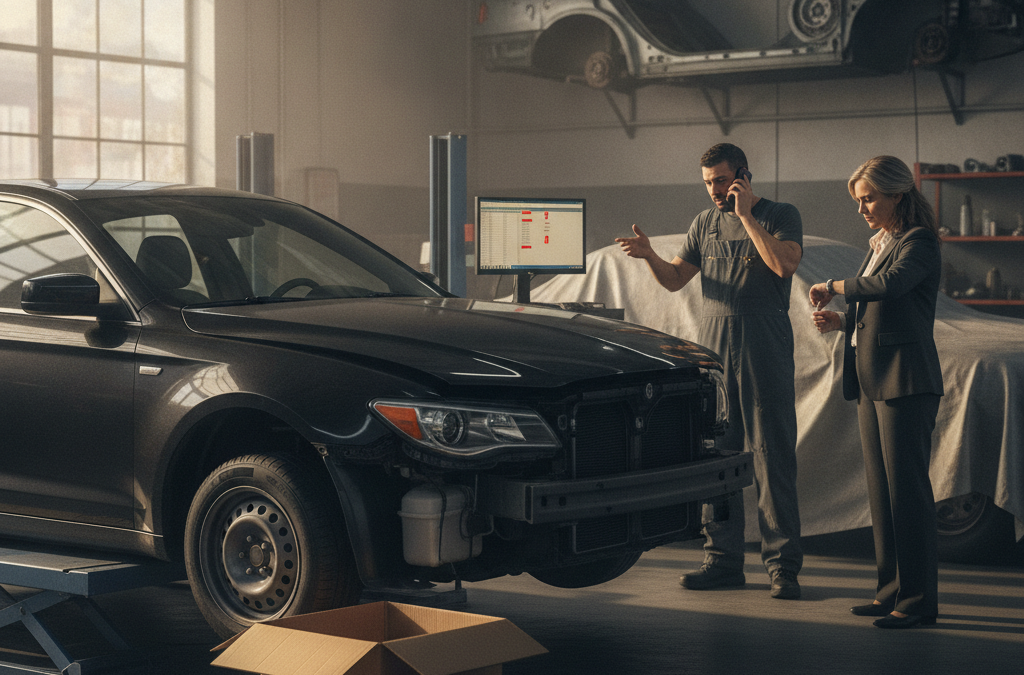
If your car is sitting at a shop and someone just told you “we’re waiting on a part,” you’re not alone — and you’re not stuck, even if it feels that way. Parts backorders have become one of the most common reasons collision repairs drag on longer than expected, and it’s a problem that hits drivers across the Bronx, New Rochelle, and the wider Westchester and NYC metro area harder than people realize. The good news is that you have more options than most shops bother to explain. Here’s what’s actually going on, and what you can do about it.
Why Are Parts Taking So Long Right Now?
The short answer: supply chains for auto parts — especially OEM (original equipment manufacturer) parts — never fully recovered from the disruptions that started a few years back. Semiconductor shortages affected vehicle production, and parts inventories at distributors are still catching up. On top of that, newer vehicles — including EVs and advanced safety system-equipped cars — often use parts that aren’t widely stocked because the car itself is relatively new to the market.
For drivers in dense urban areas like the Bronx, where fender-benders and collision claims are a near-daily reality, this creates a real bottleneck. A part that used to arrive in two or three days might now take two or three weeks — or longer. And for certain makes and models, particularly newer EVs and luxury vehicles, some components may have no clear ETA at all.
OEM Parts vs. Aftermarket: What’s the Difference and Why Does It Matter to You?
When your shop says they’re waiting on a part, it’s worth asking: what kind of part are we waiting on? There are two main options:
- OEM parts are made by or for the vehicle’s manufacturer. They’re designed to fit your exact car and meet the same safety and performance standards as the original component.
- Aftermarket parts are made by third-party manufacturers. They’re often cheaper and more readily available, but quality varies — and for certain repairs, they may not meet your vehicle’s original safety specifications.
Here’s where it gets important: if you have a manufacturer-certified repair, like a Mercedes-Benz certified collision repair, the certification program typically requires OEM parts. Using non-OEM parts can void your manufacturer warranty and — if your insurer is paying — may be something they push back on. Know what your policy covers and what your manufacturer requires before agreeing to a substitution.
For most standard repairs on non-luxury vehicles, a quality aftermarket part from a reputable supplier is often a reasonable option when an OEM part is genuinely unavailable for weeks. A good shop will walk you through the tradeoffs honestly. If they’re not doing that, ask.
What Your Insurance Company Should Be Doing During a Parts Delay
This is the area that most local shops — and honestly, most insurance adjusters — do a poor job of explaining. If your repair is being delayed because of a backordered part, your rental car coverage doesn’t automatically extend indefinitely. Some policies have a daily cap and a total coverage limit, and insurers don’t always proactively tell you when you’re close to hitting it.
Here’s what you should do:
- Call your insurer and ask specifically whether your rental coverage extends through parts delays that are outside your shop’s control.
- Get the parts backorder status in writing from your shop — a confirmation from the supplier showing the expected delivery date, or a note that the part is on backorder with no ETA. This documentation matters if you need to push back on a rental cutoff.
- Ask your adjuster whether the insurer can source the part through a different channel. Large insurers like Geico sometimes have parts procurement relationships that independent shops don’t.
- If you’re being pressured to accept an aftermarket substitute and you believe OEM is required under your policy or your vehicle’s warranty terms, say so in writing.
Navigating this is genuinely complicated, and it’s one reason it helps to work with a shop that has experience handling insurance claims directly — not just doing the repair. At S&T Auto Body, we’ve been handling collision repairs and insurance coordination for over 50 years, and we know how to communicate with adjusters to keep your claim moving and your coverage intact.
The Gap Most Local Shops Don’t Talk About: Parts Delays on EVs and Newer Safety Systems
This is something you won’t find clearly explained on most local competitor websites — and it’s genuinely important right now. If you drive a Tesla, a newer hybrid, or any vehicle equipped with Advanced Driver Assistance Systems (ADAS) — cameras, radar sensors, lane departure warnings, automatic emergency braking — a collision repair is almost never as simple as swapping a panel and repainting.
These vehicles require specific calibration equipment and, often, proprietary OEM components that aren’t available through general parts channels. A Tesla, for instance, uses aluminum structural components and a software-integrated repair process that requires Tesla-certified facilities and parts ordered directly through Tesla’s supply network. When those parts are backordered, there’s no aftermarket shortcut — and any shop telling you otherwise is cutting corners that affect your safety.
The same is true for many newer Mercedes-Benz, Subaru, and Hyundai models with integrated safety systems. Backordered sensor components or camera housings can hold up an entire repair — not because the shop is dragging its feet, but because the vehicle literally can’t be returned to safe operating condition without them. If you’re dealing with this situation, you need a manufacturer-certified shop that can document the delay and communicate accurately with your insurer about why the part can’t be substituted.
Practical Steps to Protect Yourself During a Long Parts Wait
Whether you’re in New Rochelle, Yonkers, or the Bronx, here’s a straightforward checklist for navigating a backordered parts situation:
- Get a written repair authorization and parts status update from your shop at the start of the job. Ask them to notify you immediately when the part ships.
- Check your rental coverage limits with your insurer before the repair starts — not after you’ve already hit the cap.
- Ask your shop whether they’ve explored multiple suppliers. A well-connected shop often has access to parts networks that smaller or less-established shops don’t.
- Don’t accept a “we’ll call you” indefinitely. Ask for a specific follow-up timeline — every week, for example — so you’re not left wondering.
- Document everything. Keep emails, texts, and phone call notes with dates. If there’s ever a dispute with your insurer about coverage or repair quality, your paper trail matters.
Frequently Asked Questions
Does my insurance have to keep covering my rental car if the shop is waiting on a backordered part?
It depends on your policy. Many policies cover rental cars for a set number of days or up to a dollar limit, regardless of why the repair is taking longer. If the delay is due to parts availability and isn’t the fault of the shop, some insurers will extend rental coverage — but you usually have to ask, and you need documentation from the shop showing the backorder status.
Can a shop use aftermarket parts on my car without my permission?
In New York, insurers are generally allowed to specify aftermarket parts in estimates, but shops are supposed to disclose this to you. If you have a certified repair requirement under your manufacturer’s warranty, you have grounds to request OEM parts. Always ask before anything is ordered.
What if the part has no ETA and the shop doesn’t know when it will arrive?
This happens, especially with newer EVs and certain imported vehicles. Your options include waiting, asking whether a salvage OEM part (from a certified recycler) is a safe and insurer-approved alternative, or — in some cases — escalating with your insurer to push for parts procurement assistance. A shop with strong insurer relationships can help advocate for you here.
Will a long parts wait affect my vehicle’s resale value?
Only if the repair quality suffers as a result. A properly completed certified repair — even one that took longer due to parts availability — should not affect resale value if documented correctly on the vehicle history. Rushed repairs using substandard substitute parts, on the other hand, can.
How long should I realistically expect to wait for backordered parts in the NYC area?
It varies widely by make, model, and part type. Common body panels for popular models might arrive in a week or two. Specialty components for newer EVs or vehicles with integrated safety systems can take four to eight weeks or more. The Bronx and broader NYC metro area have access to major regional parts distributors, which helps — but for certain parts, the supply simply isn’t there yet, regardless of location.
We’ll Be Straight With You About Where Your Repair Stands
One thing we hear from drivers who come to us after a frustrating experience at another shop: they felt like they were being kept in the dark. The repair just sat there, and nobody called. That’s not how we operate. S&T Auto Body has been serving Bronx drivers and families from across Westchester and the surrounding area since 1975, and we’ve built our reputation on being honest about timelines, transparent about parts options, and proactive about keeping you informed and covered while your vehicle is in our care.
If your car is currently sitting somewhere waiting on a part — or if you’ve just had a collision and you want to work with a shop that will actually stay on top of the parts process for you — we’re here. Contact S&T Auto Body to request a free estimate or ask us about your situation. We’ll give you a straight answer and help you figure out your next step.