What Bronx and New Rochelle Drivers Should Know About Getting a Car Repaired When You’re Buying or Selling a Used Vehicle with Accident History
If you’re buying or selling a used car in the Bronx or New Rochelle and there’s accident history on the report, the quality of the body repair that was done — or wasn’t done — matters a lot more than most people expect. A Carfax report tells you a collision happened. It doesn’t tell you whether the repair was done properly, whether OEM parts were used, or whether there’s hidden frame damage waiting to cause problems down the road. That’s the part no one talks about until it’s too late.
At S&T Auto Body, we’ve been working on cars in the Bronx since 1975. We’ve seen the full range — clean repairs that nobody would ever notice and hasty patchwork jobs that look fine in a driveway but fall apart after a few months on the Cross Bronx Expressway. Here’s what you actually need to know before money changes hands on a used vehicle with accident history.
Why Accident History on a Used Car Isn’t Automatically a Deal Breaker
Let’s be honest: in the NYC metro area, used cars with accident history are everywhere. Dense urban traffic, tight parallel parking on Fordham Road, and congestion on every surface street mean fender-benders happen constantly. That doesn’t mean every car with a reported accident is a problem — it depends entirely on how well the damage was repaired.
A minor rear bumper replacement done by a certified shop using factory parts is very different from a severe front-end collision repaired by whoever the seller found cheapest. The Carfax report won’t make that distinction. You have to look at the vehicle — or have someone qualified look at it for you.
The Red Flags a Buyer Should Never Ignore
When you’re looking at a used vehicle that shows accident history, here are the things that should raise a flag immediately:
- Uneven panel gaps. Stand at the front or rear corner of the car and look along the body line. If the gaps between panels — hood to fender, door to door — aren’t consistent, that usually points to frame or structural misalignment that wasn’t properly corrected.
- Mismatched paint. In certain lighting — especially outside on a bright day — poor paint matching becomes obvious. If one panel looks slightly different in shade, texture, or sheen compared to the panels next to it, the repair wasn’t done by someone who knows paint matching.
- Overspray. Check the rubber trim around windows, door jambs, and plastic components near repainted panels. Overspray — small flecks of paint on surfaces that should be clean — is a sign of rushed, low-quality work.
- Rippling or waviness in body panels. Run your hand along the side of the car. Waves or ripples in the metal usually mean filler was used to cover damage rather than properly repairing the underlying structure.
- Trunk or door that doesn’t close flush. If the trunk lid sits slightly crooked or a door requires extra force to close, structural alignment is likely off.
None of these things show up on a Carfax. They only show up when someone who knows what they’re looking at actually examines the vehicle in person.
What Sellers in New Rochelle and the Bronx Should Do Before Listing a Vehicle
If you’re on the selling side — whether you’re an individual selling privately or a small dealer moving inventory — accident history on a vehicle’s report will cost you money at negotiation time. Buyers will use it to push the price down, sometimes aggressively, even if the repair was done correctly.
The smart move is to get ahead of it. Before you list the vehicle, bring it to a certified shop for an honest evaluation. If the prior repair was done properly, you’ll have documentation to show buyers. If there are visible quality issues — paint that doesn’t quite match, a gap that’s slightly off — getting those corrected before the sale protects your asking price and prevents the deal from falling apart over questions you can’t answer.
A free itemized estimate from a shop like ours gives you a clear picture of what, if anything, needs to be addressed. You go into the sale knowing exactly what you’re working with. Request a free estimate here before you list the vehicle.
What a Pre-Purchase Body Inspection Actually Covers — And Why Certified Shops Do It Better
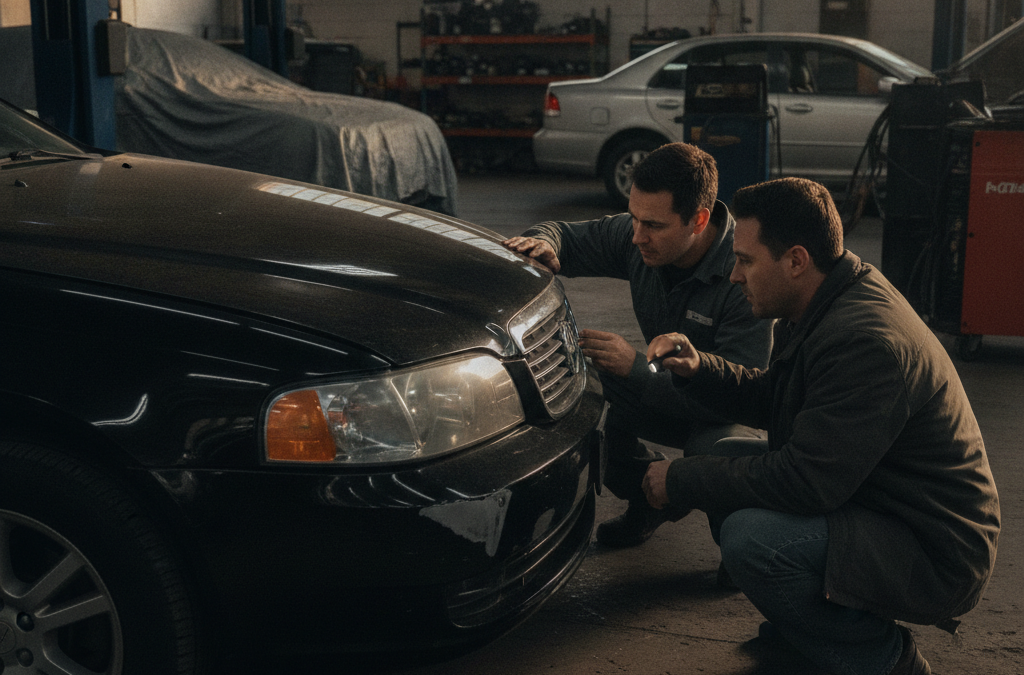
A certified collision repair shop can evaluate a used vehicle in ways that a general mechanic or a dealership lot attendant simply can’t. Here’s what a proper inspection from a trained body technician looks at:
- Frame and structural integrity using measuring systems — not just visual inspection
- Panel alignment and gap consistency across all body panels
- Paint thickness readings across different panels, which reveals where filler or repainting was done
- Evidence of prior welding or panel replacement
- Quality of any previous repairs — OEM versus aftermarket parts, proper refinishing versus quick cosmetic cover-ups
Our technicians at S&T Auto Body are I-CAR Gold Class certified, which means they train continuously on the latest repair standards — including identifying what previous repairs were and weren’t done correctly. That’s not something you get from a quick lot inspection. Learn more about our certifications and what they mean for repair quality.
The Hidden Problem: Frame Damage That Wasn’t Properly Corrected
Frame damage is the issue that keeps coming up when used car buyers later regret a purchase. A vehicle with unrepaired or poorly repaired frame damage can handle poorly, wear tires unevenly, and in a subsequent collision, fail to protect occupants the way it’s designed to. In New York State, a vehicle with known frame damage that affects structural integrity can also create complications during inspection.
If the accident on the Carfax report was anything more than a low-speed cosmetic hit — anything that involved the front end, rear quarter panels, or side impact — frame and structural inspection isn’t optional. It’s the thing you most need to know.
If you’re buying a vehicle and the seller can’t tell you what shop did the repair or whether frame straightening was performed, treat that as a gap in the story. It’s worth getting a professional look before you sign anything.
For Drivers Coming In from Yonkers, Manhattan, or Westchester County
We regularly work with buyers and sellers coming in from Yonkers, Manhattan, and across Westchester County who want an unbiased assessment of a vehicle’s repair history before a transaction. You don’t have to be a current S&T customer to bring a vehicle in for an inspection. Family-owned shops that have been in one place for fifty years don’t have an incentive to shade their assessment either way — our reputation is built on straight answers, not upselling.
If the car checks out, we’ll tell you. If there are problems, we’ll show you exactly what they are and what it would cost to fix them — in writing, for free.
Frequently Asked Questions
Can I bring a car I’m thinking of buying to S&T Auto Body for a body inspection?
Yes. You don’t have to own the vehicle or be an existing customer. Bring the car in and one of our technicians will go over the body and structural condition with you. We’ll give you a straight assessment.
Does a Carfax accident report tell me whether the repair was done correctly?
No. Carfax tells you that an accident was reported — it doesn’t tell you what was damaged, what was repaired, or how well the work was done. That’s what a physical inspection is for.
If I’m selling a car with accident history, will fixing cosmetic issues actually help my sale price?
Often yes, especially for cosmetic problems that buyers will use as leverage. Mismatched paint or visible body filler is something a buyer’s eye goes straight to. Correcting those issues before listing can recover more than the cost of the repair in your final sale price.
What’s the difference between a cosmetic repair and a structural repair on a used car?
A cosmetic repair covers surface damage — scratches, dents, paint. A structural repair addresses the underlying frame and body structure. Both matter, but structural integrity affects safety and long-term vehicle behavior. That’s the one you can’t afford to skip evaluating.
Does S&T Auto Body provide written documentation of a pre-purchase inspection?
We provide itemized written estimates for any repair work identified. If you need documentation for a transaction, we can note the condition of the vehicle at the time of inspection. Contact us to schedule a time to bring the vehicle in.
Ready to Get a Straight Answer Before You Buy or Sell?
Whether you’re a buyer in New Rochelle who wants to know what you’re actually getting, or a seller in the Bronx who wants to go into a transaction with confidence, we’re here to help. S&T Auto Body has been giving honest assessments to the Bronx and surrounding communities for fifty years. We’re not going to tell you what you want to hear — we’re going to tell you what’s actually there.
Bring the vehicle in, or send us photos to start the conversation. There’s no charge for an estimate and no pressure. Just a clear picture of what you’re working with before money changes hands.
Contact S&T Auto Body to schedule your free pre-sale or pre-purchase body inspection.