What Bronx and Scarsdale Drivers Should Know About Getting a Car Repaired When the Paint Job Doesn’t Match After a Collision
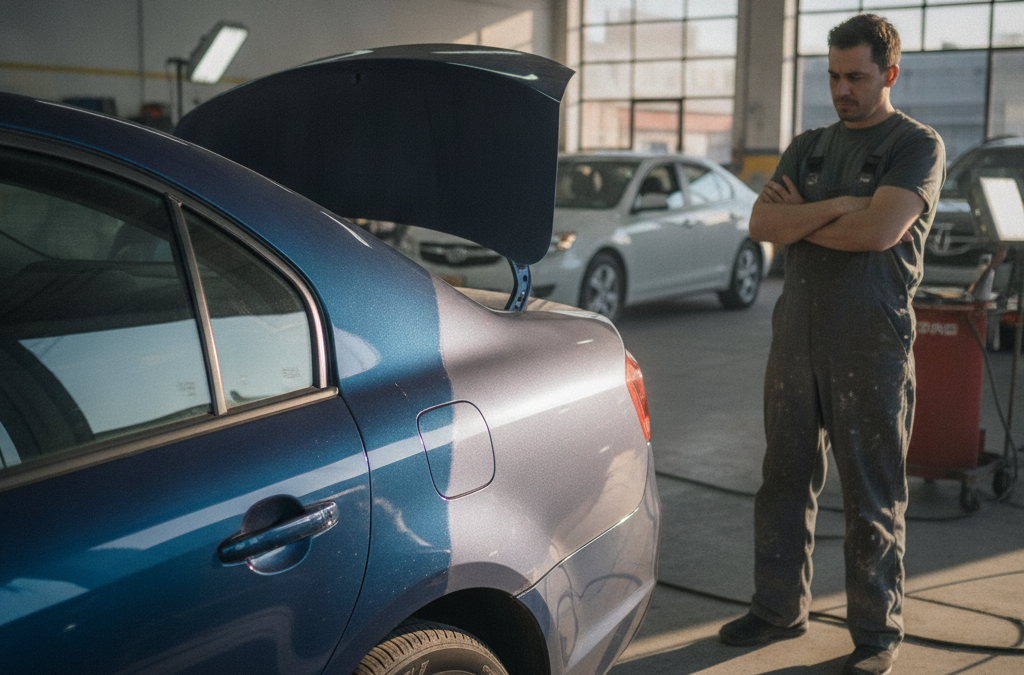
If you’ve just picked up your car after a collision repair and you’re standing in the parking lot squinting at a rear quarter panel that’s clearly a different shade than the rest of your vehicle — you’re not imagining it, and you’re not being picky. A paint mismatch after body repair is a real problem, and it happens more often than it should, especially when shops rush the job, skip the blending process, or don’t have the right equipment. For drivers in the Bronx, Scarsdale, and across Westchester County, here’s what you need to know — before you drop your car off and after you pick it up.
Why Paint Matching Is Harder Than It Looks
Most people assume that paint matching is simple — you find the factory color code on the door jamb sticker, you order the paint, you spray it. Done. But that’s not how it works in the real world, and it’s not how a shop that knows what it’s doing approaches the job.
Your car’s paint fades, oxidizes, and shifts in color over time — sometimes slightly, sometimes noticeably — depending on how long you’ve owned it, where you park it, how often you wash it, and how much sun it sees. A vehicle that’s been sitting on Fordham Road or fighting Cross Bronx traffic for three years in the New York sun is going to look a little different than it did off the dealer lot. That aged paint on the surrounding panels won’t match a freshly sprayed panel using the original factory formula alone. A skilled painter has to account for that drift and blend the new paint into adjacent panels so the repair disappears.
The shops that skip this step — or don’t have the spectrophotometers and mixing equipment to do it right — are the ones that hand your car back looking like a two-tone vehicle you didn’t ask for.
What Good Paint Matching Actually Involves
At a properly equipped shop, paint matching isn’t guesswork. Here’s what the process should include:
- Color code identification: Reading the factory paint code from your vehicle’s identification sticker is the starting point, not the endpoint.
- Spectrophotometer scanning: This tool reads the actual color of your existing paint — accounting for age and fade — so the mixed paint is formulated to match what’s on your car right now, not what left the factory.
- Test panels before application: A careful painter tests the mixed color on a sample panel before committing to your car.
- Clear coat blending into adjacent panels: Blending clear coat into the panels next to the repaired area creates a seamless transition. This is the step cheap shops skip because it takes time and materials.
- Color-correct lighting during inspection: Final inspection under proper lighting reveals any remaining variation before the car goes back to the customer.
This is what I-CAR Gold Class training covers in depth. Our technicians at S&T Auto Body are I-CAR Gold Class certified, which means they’re trained on current paint technology, blending techniques, and manufacturer standards — not just how things were done fifteen years ago.
The Gap Competitors Aren’t Filling: What Happens After a Bad Paint Job
Here’s something you won’t find on most competitor sites in the area: what your actual options are if you’ve already had a repair done and the paint doesn’t match.
If you picked your car up from a shop and the color is off, you have more leverage than you might think. In New York, a body shop is required to stand behind the quality of their work. If you signed off on a written repair order — and any legitimate shop gives you one — you can go back and request a correction. The shop should re-blend or re-spray the affected panel at no additional charge if the mismatch is a workmanship issue.
The problem is that some shops will push back, blame your car’s age, or claim the color match is within an acceptable tolerance. That’s sometimes a fair point — perfect color matches on very old or heavily faded vehicles can genuinely be difficult — but it’s also sometimes an excuse. If you suspect a shop is stonewalling you, get a second opinion from another certified shop. A professional painter can tell you quickly whether the mismatch is within normal variation or whether the shop cut corners on blending.
If you’re in that situation right now, contact us and we can take a look. We’ll give you an honest assessment of what went wrong and what it would take to fix it properly.
Luxury and EV Vehicles: Where Paint Matching Gets Even More Complicated
For drivers coming to us from Scarsdale, White Plains, or Yonkers with a Mercedes-Benz, a Tesla, or another premium vehicle, paint matching carries even higher stakes. Manufacturers like Mercedes-Benz use multi-stage paint systems with specialty pigments — some metallic finishes involve three or four separate layers — and getting the formula wrong by even a fraction is visible in direct sunlight.
Tesla’s color lineup includes finishes like Multi-Coat Red and Pearl White Multi-Coat that are particularly difficult to match without both the right materials and the right training. Tesla-certified repair protocols exist partly for this reason. A shop that’s never worked with these finishes before is going to struggle, no matter how confident they sound when you drop the car off.
If you drive a vehicle with a complex or specialty finish, ask the shop directly: do you have experience with this manufacturer’s paint system? Do you use OEM paint materials or aftermarket? The answers matter. Learn more about what manufacturer-certified collision repair means for paint quality and warranty protection.
Questions to Ask Before You Leave Your Car
You don’t need to be a painter to ask the right questions. Here’s what we’d recommend asking any shop before you authorize the work:
- Do you use a spectrophotometer to match my existing paint, or are you going off the factory code alone?
- Will you blend the new paint into the adjacent panels?
- What paint materials do you use — OEM, aftermarket, or waterborne?
- Can I see a test panel before the final application?
- What’s your warranty on the paint work?
A shop that’s confident in their process won’t hesitate to answer these. If you get vague answers or a brush-off, that’s information too.
Frequently Asked Questions
How do I know if my car’s paint was matched correctly?
Look at the repaired panel next to the original panels in natural daylight — not in the shop’s fluorescent lighting. Walk around the car and look at different angles. If there’s a visible color difference or a visible line where the paint stops, the blending wasn’t done properly.
Does insurance cover the cost of proper paint blending?
It depends on your policy and the insurer, but in most cases, yes — blending adjacent panels is a recognized part of a proper repair and should be included in the estimate. If your insurer’s estimate doesn’t include blending, the shop can and should supplement the claim. At S&T Auto Body, we handle that conversation with the insurer directly.
Will my car’s repainted panel fade at a different rate than the original paint?
It can, especially if low-quality aftermarket paint is used. OEM or high-quality waterborne paint applied correctly will hold up comparably to your original finish. This is one reason using a certified shop with quality materials matters over the long run.
Can a paint mismatch affect my car’s resale value?
Yes. A visible paint mismatch is something a used car buyer or dealer will notice immediately and use to negotiate down the price — or flag as evidence of an undisclosed accident. Getting the paint right the first time protects your vehicle’s value.
My Scarsdale or Westchester shop gave me the car back with a paint mismatch. What do I do?
Go back to the shop in writing — email or text — and document the issue with photos taken in daylight. Request that they correct it under their workmanship warranty. If they refuse or the correction is still unsatisfactory, bring the vehicle to a certified shop for a written second opinion. That documentation can support a complaint to your insurer or the New York State DMV’s consumer complaint process if needed.
Get It Right the First Time
We’ve been doing this in the Bronx since 1975. Paint matching is one of those things that separates a shop that truly cares about the finished product from one that just wants to move cars through the door. When you pick up your vehicle from S&T Auto Body, it should look like the accident never happened — not like a two-tone experiment.
Whether you’re coming to us from Scarsdale, Manhattan, Yonkers, or right here in the Bronx, we’ll give you a free, itemized estimate and walk you through exactly what the paint process involves for your specific vehicle. No surprises, no shortcuts. Reach out to us today to schedule your estimate or ask any questions — we’re here to help you get back on the road with confidence.