
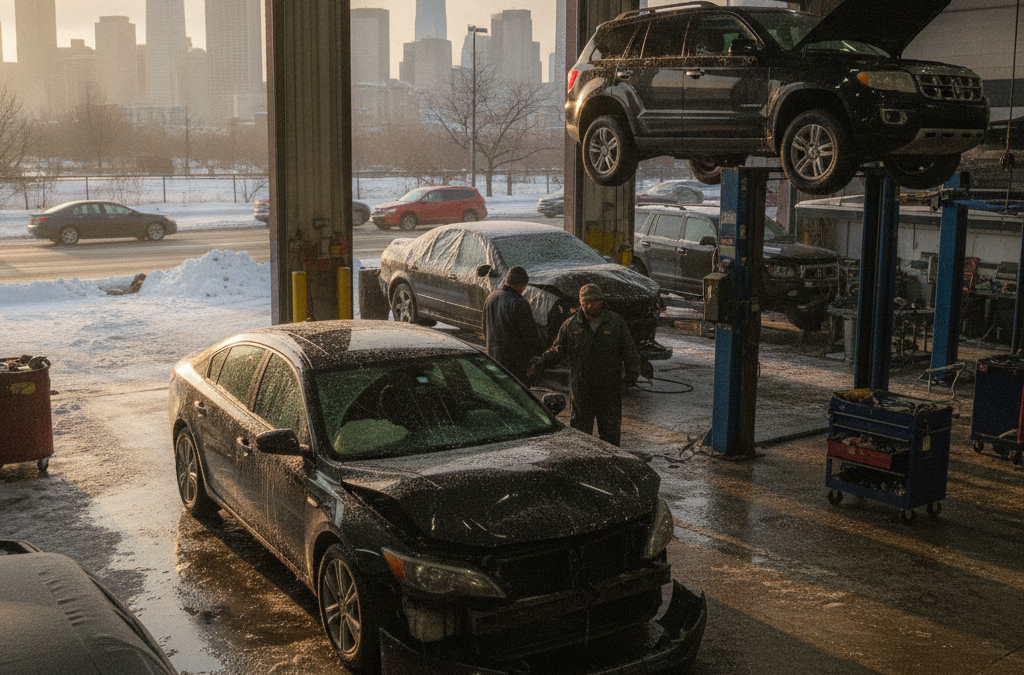
What Bronx and White Plains Drivers Should Know About Getting a Car Repaired When Winter Weather Caused the Accident
If you slid on black ice near the Grand Concourse, spun out on the Cross Bronx Expressway during a nor’easter, or got rear-ended on a slick street in White Plains, you’re dealing with a very specific kind of stressful situation — one where the accident wasn’t really anyone’s fault, but the damage to your car is just as real. Winter weather collisions come with their own set of complications when it comes to insurance claims, repair scope, and finding a shop that will actually handle everything correctly. Here’s what you need to know before you make any calls or sign anything.
How Insurance Handles Winter Weather Accidents Differently
A lot of drivers assume that if no one else was involved — you slid into a guardrail, spun into a snowbank, or hit a curb on an icy Fordham Road — it automatically goes through comprehensive coverage. That’s not always the case. Single-vehicle accidents caused by loss of control typically fall under collision coverage, not comprehensive. Comprehensive generally covers things like a tree falling on your car during a storm, or flood damage — not the damage from hitting something when your wheels went out from under you.
That distinction matters because it affects your deductible and how your claim gets processed. Before you call your insurer, it helps to know what coverage you have and what type of incident is being reported. If another driver was involved and they were at fault, their liability coverage may come into play — but in a winter storm, determining fault can get complicated fast.
If you’re a Geico customer, S&T Auto Body is a Geico-preferred shop, which means we work directly with their claims team to streamline your repair and help cut down on back-and-forth. But regardless of who your insurer is, we’ll walk you through the process.
Winter Accidents Often Cause More Damage Than They Look Like
This is where a lot of drivers get burned — they see a crumpled bumper or a bent fender and assume the repair will be quick and relatively minor. But winter collisions, especially those involving curbs, guardrails, or multi-vehicle pileups, frequently cause damage that isn’t visible from the outside.
Hitting a curb hard on ice, for example, can bend a control arm, knock the vehicle out of alignment, damage a wheel bearing, and in worse cases, compromise the subframe — all while the exterior looks like nothing more than a scraped rim. Sliding into another vehicle at low speed during a snowstorm can crumple the front end enough to damage the radiator support, trigger sensors tied to your ADAS system, and misalign the frame — even if the airbags didn’t deploy.
This is exactly why a thorough, itemized estimate from a qualified shop matters so much after a winter accident. Our I-CAR Gold Class certified technicians at S&T Auto Body don’t just look at what’s bent — they check what’s underneath, behind, and connected to it. You can learn more about how we approach collision repair at our collision and mechanical repair services page.
What Drivers in White Plains and Westchester County Should Watch Out For
Westchester County roads — especially the parkways and hillside streets that run through Scarsdale, White Plains, Mount Vernon, and Yonkers — tend to ice over faster than flat urban roads. The elevation changes and tree cover mean conditions can vary dramatically within just a few miles. Drivers coming down into the Bronx from Westchester on a bad morning are navigating some genuinely unpredictable surfaces.
What we see a lot of in these situations is suspension and undercarriage damage from drivers bottoming out or catching curbs at speed. That kind of damage can take a vehicle out of alignment so badly that tires wear out in weeks, or it can leave structural components stressed in ways that affect how the car handles in an emergency. You may not feel it immediately, but you’ll notice it — and if you’re in another accident before it’s caught, it can compound into something much more serious.
If you’re coming to us from White Plains, Scarsdale, or anywhere in Westchester County, the drive down is worth it. We’ll give you a free, itemized estimate and tell you exactly what we’re seeing — no pressure, no vague language.
The Part Most Body Shops Don’t Talk About: Road Salt and Corrosion
Here’s something that almost none of the local competitor shops discuss in any depth, and it’s genuinely important for anyone in the NYC metro area: road salt accelerates corrosion significantly, and if your vehicle sustained any paint damage, chipped undercoating, or exposed metal during a winter collision, that damage will get worse fast if it’s not properly sealed and painted.
New York City and Westchester roads are heavily salted during winter events. The moment bare metal is exposed — whether it’s a gouged rocker panel, a scraped wheel well, or a cracked bumper backing — that salt and moisture start doing real damage. This isn’t a cosmetic issue. Left untreated, corrosion can compromise structural metal and lead to rust that spreads well beyond the original damaged area.
When we repair winter collision damage at S&T Auto Body, we pay close attention to every area where the protective coating was compromised. Our paint matching and restoration process is precise, and we make sure any exposed surfaces are properly primed and sealed — not just painted over. That’s the kind of detail that separates a shop that’s been doing this for 50 years from one that’s just going through the motions.
Should You Wait Until Spring to Get the Repair Done?
We hear this question every winter, especially from drivers in Riverdale and Fordham who are thinking about timing. The short answer is: no, you shouldn’t wait. A few reasons:
- Structural damage doesn’t get better with time. A bent frame rail or damaged subframe is a safety issue right now, not just an aesthetic one.
- Exposed metal corrodes faster in winter because of the salt and moisture combination. A small gouge can turn into a rust problem by March.
- Insurance claims have time-sensitive elements. While your insurer typically won’t deny a claim just because you waited a few weeks, delays in documentation and assessment can complicate things.
- Your car may not be safe to drive. If your alignment, suspension, or steering was affected, continuing to drive the vehicle compounds the damage and creates real risk on the road.
If getting to us is difficult because of ongoing winter conditions, send us photos through our contact page and we can start the estimate process remotely before you bring the vehicle in.
Frequently Asked Questions
Does my collision coverage apply if I slid on ice and hit a guardrail with no other cars involved?
Yes, in most cases. Single-vehicle accidents where you lose control and hit something are typically handled under collision coverage, not comprehensive. Your deductible will apply. Check your policy or call your insurer to confirm before filing.
What if the roads were clearly icy and poorly maintained — can I claim against the city?
Potentially, but it’s complicated. Municipalities have specific notice requirements, and these claims are hard to win. Your best first step is to document the road conditions thoroughly (photos, timestamps, weather reports) and speak with an attorney who handles municipal liability. Your auto insurance claim can proceed independently of any such action.
My car drives fine after the accident. Do I still need to get it checked?
Yes. Suspension and frame damage from winter collisions often doesn’t produce obvious symptoms immediately — but it will. Alignment issues, worn tires, and weakened structural components can take weeks to become noticeable, and by then the situation is often worse than it would have been if caught early.
Will road salt damage affect my repair or paint job?
It can, especially if there’s exposed metal or cracked undercoating from the collision. A quality body shop will address this as part of the repair — sealing and priming any affected areas before painting. Make sure you’re working with a shop that takes this step seriously, not one that just sprays paint over a compromised surface.
How long does a winter collision repair typically take?
It depends entirely on the extent of the damage. A minor bumper repair might take two to three days. If there’s frame damage, suspension work, and paint involved, you could be looking at one to two weeks. We’ll give you a realistic timeline upfront, based on what we actually find — not a number designed to make you feel better in the moment.
We’ve Been Handling Bronx Winters Since 1975
S&T Auto Body has been serving the Bronx and the surrounding area for over 50 years. We’ve seen every kind of winter accident this region produces — from fender-benders in snowy parking lots off Fordham Road to serious multi-vehicle accidents on the Cross Bronx Expressway during ice storms. We know how these claims work, we know what hidden damage to look for, and we know how to get you back on the road safely and with confidence.
If you’ve been in a winter weather accident — whether you’re in the Bronx, coming down from White Plains, or anywhere in between — reach out to us for a free, no-obligation estimate. We’ll take a close look at what happened, explain everything we find, and help you navigate the insurance process from start to finish. Call us at (718) 220-2201 or send us your information online. You’ve had enough stress for one day.