
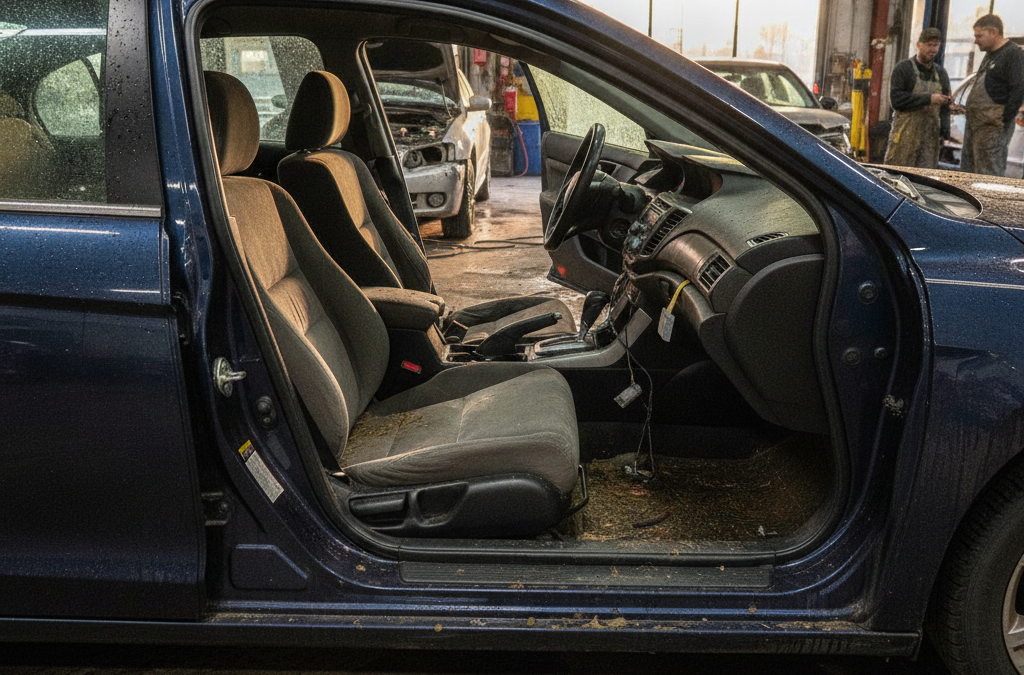
What Should Bronx Drivers Know About Getting Their Car Repaired After a Flood or Water Damage Event?
If your car sat in floodwater — even just a few inches — it’s more serious than it looks. In the Bronx and across the New York City metro, heavy rain events and flash flooding have become a real and recurring problem. Streets near Throgs Neck, low-lying sections of Pelham Bay, and underpasses throughout the borough can fill up faster than most people expect. And when water gets into your vehicle, the damage isn’t always visible right away. Here’s what you need to know before you try to start the engine, call your insurer, or hand the car off to anyone.
Why Flood Damage Is Different From a Typical Collision
After a regular fender bender, the damage is usually right in front of you — a crumpled bumper, a broken light, maybe a dent in the quarter panel. With flood damage, most of the real destruction is hidden. Water works its way into your car’s electrical system, your engine, your transmission, the interior lining, and the undercarriage. It can corrode wiring harnesses, seize brake components, contaminate transmission fluid, and quietly ruin your airbag sensors — all without showing a scratch on the outside.
That’s why flood-damaged vehicles are tricky. A shop that handles straightforward collision repair but doesn’t have experience with water-intrusion damage may miss things that come back to haunt you weeks or months later. This is exactly the kind of situation where choosing a certified, experienced shop matters more than finding the nearest or cheapest option.
The First Thing to Do — Don’t Start the Car
This is the most important piece of advice we can give you: do not attempt to start a flood-damaged vehicle. If water entered the engine air intake, starting the car can cause what’s called hydrolocking — essentially, water compresses in the cylinder where air normally would be, and it can destroy the engine block instantly. That turns a repairable situation into a total loss.
Instead, do the following:
- Leave the car off and disconnect the battery if you can safely do so
- Take photos and video of the water level, interior damage, and any exterior damage — date-stamp everything
- Document where the car was parked or located when it flooded
- Call your insurance company to report the damage before the car is moved if possible
- Have the vehicle towed — don’t drive it, even if it seems to start fine
What Does Insurance Actually Cover for Flood Damage?
Here’s where a lot of drivers get caught off guard. Flood damage is not covered under your standard collision coverage. It falls under comprehensive coverage, which is the part of your policy that handles events like theft, fire, hail — and yes, flooding. If you only carry liability insurance (which is the minimum New York State requires), flood damage to your own vehicle is not covered at all.
If you do have comprehensive coverage, your insurer will send an adjuster to assess the damage and determine whether the car is repairable or a total loss. In New York, a vehicle is typically declared a total loss when the repair cost exceeds a certain percentage of the car’s actual cash value — the threshold and calculation can vary, so it’s worth asking your insurer directly.
Drivers in Yonkers, Mount Vernon, and Queens dealing with the same storm event often find themselves navigating these same insurance questions simultaneously — which can slow down the claims process. Getting your documentation in order quickly gives you a head start. Our team at S&T Auto Body has helped drivers work through collision and flood-related repair claims for decades, and we can help you understand what to expect from your insurer before you commit to anything.
What a Thorough Flood Damage Inspection Should Cover
This is the section that most competitor shops don’t talk about in enough detail — and it’s one of the biggest gaps we see when drivers come to us after going somewhere else first. A legitimate flood damage inspection isn’t a quick visual once-over. It should include:
- Electrical system check: Water and electronics don’t mix. Every module, sensor, and connector that may have been submerged needs to be evaluated — including airbag sensors, ABS controllers, and the body control module.
- Engine and drivetrain: Oil dipstick check for water contamination (it’ll look milky), inspection of the air intake, and assessment of whether hydrolocking occurred.
- Interior and insulation: Carpet, foam padding, and door panels trap moisture and breed mold quickly. If these aren’t dried or replaced properly, you’ll smell it for years.
- Undercarriage and brake components: Standing water accelerates rust on brake rotors, calipers, and frame rails — especially in the salty winter environment of the NYC metro.
- HVAC system: The cabin air system can pull in floodwater and distribute mold spores through your vents if it’s not properly cleaned out.
If you’re driving a Tesla or another EV, the stakes are even higher. The high-voltage battery pack sits low in the vehicle and flood exposure introduces risks that require specialized EV-certified technicians to evaluate safely. You should not take a flood-damaged EV to a general shop. Learn more about EV-specific repair protocols and what certified handling looks like.
How to Tell If a Shop Is Actually Qualified to Handle This
Flood damage repair is more complex than it might seem on the surface, and not every shop is equipped to handle it properly. When you’re calling around or looking online — especially if you’re coming in from Westchester County or driving up from Manhattan — here are the right questions to ask:
- Do your technicians hold I-CAR Gold Class certification? (This means they’re trained to current industry repair standards.)
- Do you work directly with insurance adjusters, or do I have to manage that myself?
- Can you provide an itemized written estimate so I can see exactly what’s being repaired and why?
- Have you handled flood or water-intrusion damage before, including interior remediation?
- If my car is an EV or a manufacturer-certified vehicle, do you have the specific certifications required?
At S&T Auto Body, our technicians are I-CAR Gold Class certified, and we’re manufacturer-certified to repair vehicles from multiple brands. We provide free, itemized written estimates — no pressure, no vague numbers. You’ll know exactly what we’re recommending and why before you agree to anything.
Watch Out for These Common Mistakes After a Flood Event
In the days after a major rain event, shops that don’t normally handle complex repairs sometimes take on more than they’re qualified for because demand is high. A few things to watch out for:
- Cosmetic-only repairs on a structurally compromised car. If the interior got dried out and the carpet got replaced but nobody checked the electrical system, you may have a car that looks fine but has hidden problems.
- Pressure to accept a quick settlement. If your insurer offers a number quickly without a thorough inspection, it may not reflect the full scope of damage. You have the right to get your own estimate.
- Buying a used car after a flood event. This is a separate issue but worth noting — if a region floods heavily, some of those vehicles end up resold. Always pull a vehicle history report before buying used.
Frequently Asked Questions
Does flood damage void my car’s warranty?
It depends on the extent of the damage and how the repair is handled. If flood damage affects components that are still under manufacturer warranty and the repair is done improperly or by an uncertified shop, you could lose warranty coverage on those parts. Manufacturer-certified repair shops are the safest choice if your vehicle is still under warranty.
How long does flood damage repair take?
It varies significantly based on how much water entered the vehicle and which systems were affected. A car with minor interior moisture may be resolved in a few days. A vehicle with electrical damage, engine issues, and full interior remediation could take several weeks. Your shop should give you a realistic timeline in writing after the initial inspection.
What if my insurer says my flood-damaged car is a total loss but I don’t agree?
You have the right to dispute a total loss determination in New York. You can get an independent appraisal from a qualified shop and present that to your insurer. If there’s still a disagreement, New York State has an appraisal process built into most policies. Don’t just accept the first number if it doesn’t seem right.
Can I repair a flood-damaged car myself or use a general mechanic?
General mechanics can handle some flood-related mechanical issues, but the full scope of flood damage — especially electrical systems, airbags, and structural components — requires a qualified collision repair facility with the right equipment and training. DIY repairs on flood-damaged vehicles can create serious safety problems and may void your insurance coverage for those systems.
Is S&T Auto Body a Geico preferred shop?
Yes. We work with Geico and other major insurers, and we can manage the claims process on your behalf. That means fewer phone calls and less stress for you while we handle the documentation and coordination directly with the adjuster.
We’re Here When You Need Us
Flooding is stressful enough without having to figure out the repair process on your own. S&T Auto Body has been serving the Bronx and the surrounding New York City metro area since 1975 — family-owned, locally rooted, and built on the kind of straightforward service that keeps people coming back. Whether you’re in Pelham Bay, Throgs Neck, or coming in from Westchester County, we’ll give you an honest assessment, a free itemized estimate, and a clear plan forward.
Don’t wait too long — moisture damage compounds quickly, and the sooner a qualified shop gets eyes on your vehicle, the better your outcome is likely to be. Contact us today to request your free estimate or to ask any questions about your situation. We’ll help you figure out where things stand and what comes next.