What Bronx and Riverdale Drivers Should Know About Getting a Car Repaired After a Rollover or Roof Crush Accident
If your car rolled over — or got hit hard enough to crush the roof — you’re dealing with one of the most serious types of collision damage there is. And if you’re in the Bronx trying to figure out what comes next, the honest answer is this: not every shop can handle it. The repair is complicated, the safety stakes are high, and the insurance process can be slow. But if you choose the right shop, you can get your car back in safe, properly restored condition. Here’s what you need to know.
Why Rollover and Roof Crush Damage Is Different From a Regular Collision
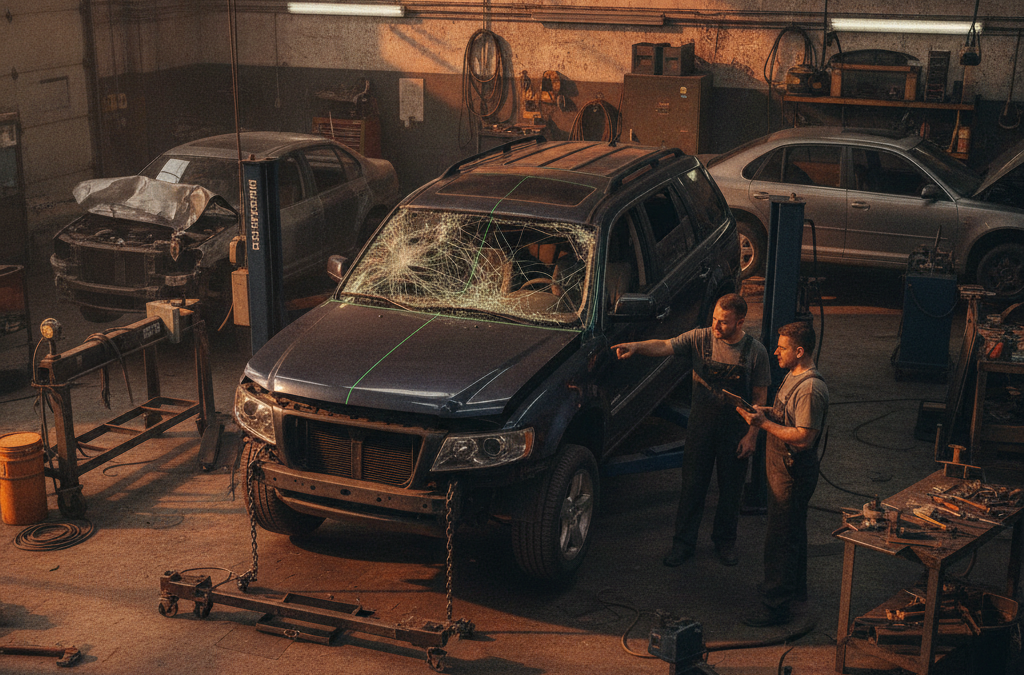
Most collision repairs involve the front end, rear end, or the sides of a vehicle. Rollover accidents are different. When a car rolls, the roof — along with the A-pillars, B-pillars, and C-pillars that hold it up — absorbs enormous force. That structure isn’t just cosmetic. It’s what keeps the passenger cabin intact in a crash, and it’s directly connected to how your airbags, seatbelt pretensioners, and curtain airbag systems function.
Roof crush damage often looks worse on the outside than people expect. But it can also hide damage that isn’t obvious at first glance — bent or cracked pillars, deformed door frames, compromised rocker panels, and misaligned suspension geometry. A shop that just pulls the roof back into shape and calls it done hasn’t fixed your car. They’ve created a false sense of safety.
In busy corridors like the Henry Hudson Parkway or on the ramps near the Cross Bronx Expressway, rollover accidents aren’t unheard of. Neither are incidents involving SUVs or trucks on Riverdale’s steep residential streets. When something like this happens, the first call most people make is to their insurance company. The second should be to a shop that’s actually equipped to do the job right.
What a Proper Repair Actually Involves
After a rollover or significant roof crush, a qualified shop will do more than look at the visible dents. Here’s what the repair process should include:
- Full structural scan and frame measurement: Using computerized measuring systems, technicians map the vehicle’s frame and body against manufacturer specifications. If the car is even a few millimeters out of tolerance, it needs correction — not just cosmetically, but structurally.
- Pillar repair or replacement: Depending on the severity of the damage, A-, B-, or C-pillars may need to be sectioned and replaced according to the manufacturer’s repair procedures. This is not guesswork — there are specific procedures published by each automaker, and certified shops follow them.
- Roof panel replacement or reshaping: This is often more involved than it looks, especially on vehicles with panoramic glass roofs or built-in antenna systems.
- Airbag and safety system inspection: Rollover accidents almost always deploy curtain airbags. All airbag modules, sensors, and the SDM (sensing and diagnostic module) need to be inspected and, where necessary, replaced — not reset with a scan tool alone.
- Refinishing and paint matching: The roof and surrounding panels need to be refinished in a way that matches your vehicle’s original color exactly. A mismatch on something this visible is unacceptable.
At S&T Auto Body, our I-CAR Gold Class certified technicians are trained specifically in structural repair procedures. That means we follow the published repair methods for each make and model — not shortcuts.
The Gap Most Shops Won’t Talk About: Pillar Repair Procedures
Here’s something you won’t find clearly explained on most competitor sites in this area: the repair of structural pillars after a rollover is one of the most technically demanding things a body shop can do. Not every shop has the equipment, the training, or the manufacturer authorization to do it properly.
Some shops will fill, reshape, and paint over damaged pillars without replacing them. That might look fine when you pick the car up. But a pillar that’s been structurally compromised and not properly replaced will not protect you the way it was designed to in a future crash. The roof intrusion standards that the federal government requires vehicles to meet depend on that structure being intact.
If a shop gives you an estimate that doesn’t mention pillar inspection or structural measurement, ask them directly: Are you following the OEM repair procedures for my vehicle? If they can’t answer that clearly, find another shop.
Navigating the Insurance Claim After a Rollover
Rollover accidents tend to generate large repair estimates. That means your insurance company is paying close attention, and there’s a real chance they’ll push back on certain line items — or suggest the vehicle is a total loss even when it can be repaired properly.
A few things to keep in mind as you work through the claim:
- You have the right to choose your own shop. In New York State, no insurer can require you to use a specific shop. They can recommend one, but the choice is yours.
- Supplement requests are normal on complex repairs. A good shop will document every element of the damage and submit supplement requests to your insurer as hidden damage is uncovered during the repair. This is standard practice, not a red flag.
- Get an itemized estimate before authorizing anything. You should know exactly what is being replaced, repaired, and refinished — and what parts are being used. S&T Auto Body provides free, itemized estimates so there are no surprises.
- If your insurer declares the car a total loss, you don’t have to accept the first offer. You can negotiate the settlement value, especially if you have documentation of recent maintenance or upgrades.
As a Geico preferred shop, we work directly with Geico on claims and can help streamline the process significantly. We also work with all major carriers and know how to communicate clearly with adjusters to get your repair authorized correctly.
What Riverdale, Yonkers, and White Plains Drivers Should Know About Choosing a Shop
If you live in Riverdale, you’re close enough to Yonkers and the lower end of Westchester County that you might be considering shops on both sides of the city line. And if you’re coming in from White Plains or elsewhere in Westchester, the Bronx is an easy drive. But wherever you’re coming from, the criteria for choosing a shop after a rollover are the same:
- Does the shop have I-CAR Gold Class certification?
- Are they certified by your vehicle’s manufacturer to perform structural repairs?
- Do they use computerized measuring equipment?
- Will they follow OEM repair procedures and use OEM or approved parts?
- Can they handle the insurance supplement process without you having to manage it yourself?
S&T Auto Body has been doing this work in the Bronx since 1975. We’re certified by multiple manufacturers — including Mercedes-Benz and Tesla — and we have the equipment and training to handle structural repairs properly. We’re a family-owned shop, not a chain, and we treat every car like it belongs to someone we know.
If You’re Driving an EV or Luxury Vehicle
Rollover repairs on electric vehicles and luxury models carry additional complexity. EVs like the Tesla Model Y and Model 3 use large aluminum structural components and integrated battery enclosures that require specific repair procedures and safety protocols around the high-voltage system. A shop that isn’t trained on EV structural repair shouldn’t be touching the frame on one of these vehicles after a rollover. Learn more about how we approach EV and Tesla body repair and why certification matters for these cars specifically.
On luxury vehicles like Mercedes-Benz or BMW, the pillar and roof structures often involve high-strength steel that cannot be heated or welded the same way as conventional steel. Improper repair methods on these materials can weaken the structure in ways that aren’t visible — but that matter enormously in a future impact.
Frequently Asked Questions
Can a car that rolled over be safely repaired, or is it always a total loss?
It depends on the severity. Some rollover accidents result in total loss declarations because the repair cost exceeds the vehicle’s value. Others — especially on newer vehicles with high market value — can be fully and safely repaired when the work is done correctly by a certified shop. A proper structural inspection will tell you which situation you’re in.
How long does a rollover repair typically take?
This varies significantly based on the extent of the damage. A moderate roof crush on a mid-size sedan might take two to three weeks. A more severe rollover involving multiple pillars, airbag replacement, and extensive panel work can take four to six weeks or longer, especially if parts need to be ordered. Your shop should give you a realistic timeline upfront and keep you updated throughout.
Will my car be as safe after a rollover repair as it was before?
If the repair is done correctly — following OEM procedures, using the right parts, and restoring the structural geometry to manufacturer specifications — yes. That’s the whole point of certified repair. A shop that cuts corners on a structural repair cannot make that guarantee.
Does my insurance cover a rental car while my vehicle is being repaired?
Most comprehensive and collision policies include rental reimbursement coverage, but it depends on your specific policy. Your shop can help you confirm what’s covered and coordinate with the insurer to make the process easier.
Can I get an estimate before my car is towed to the shop?
Yes. You can contact S&T Auto Body and share photos of the damage for a preliminary assessment. Keep in mind that with rollover damage, the full scope often isn’t visible until the vehicle is on the frame rack and properly disassembled — so the initial estimate may be supplemented as work progresses.
Talk to S&T Auto Body Before You Make a Decision
A rollover or roof crush accident is stressful. You’ve probably got a lot of questions and not many clear answers yet. We’ve been helping Bronx drivers — and drivers coming in from Manhattan, Yonkers, White Plains, and Westchester — navigate exactly these situations for fifty years. We’ll give you a straight assessment of the damage, walk you through the repair process, and work directly with your insurance company so you’re not stuck in the middle.
Start with a free estimate. Contact S&T Auto Body here or call us at (718) 220-2201. We’ll take a look, tell you exactly what you’re dealing with, and help you get back on the road safely.