What Bronx and Manhasset Drivers Should Know About Repairing a Car After a Rear-End Collision
If you just got rear-ended — whether it happened on the Cross Bronx Expressway during rush hour or at a stoplight in Manhasset — the first thing you’re probably thinking is: How bad is it? The honest answer is that rear-end collisions are almost always more complicated than they look. A crumpled bumper cover is the part you can see. What you can’t see from the outside is whether the bumper reinforcement bar is bent, whether the trunk frame has been pushed inward, or whether the sensors and cameras embedded in your rear bumper have been knocked out of calibration. This guide walks you through what to expect, what to watch out for, and how to get your car repaired the right way the first time.
Why Rear-End Collisions Are Deceptively Complex
Modern vehicles are engineered to absorb impact energy, which is exactly what you want in a collision. The problem is that “absorbing energy” means something actually deformed — and that deformation doesn’t always show up as obvious crushed metal. A rear-end hit at even 10 or 15 mph can compress the rear bumper’s foam energy absorber, bend the steel reinforcement bar behind the plastic cover, and put stress on the trunk floor or rear quarter panels without leaving a mark that’s visible to the naked eye.
On top of that, most vehicles made in the last several years have rear-facing parking sensors, backup cameras, blind-spot monitoring systems, and — on newer models — automatic emergency braking components mounted in or near the rear bumper. When that area takes a hit, those systems can be physically displaced or internally damaged even if the bumper cover itself looks relatively intact. If a shop just replaces the plastic cover and sends you on your way without checking the sensor calibration, you could be driving with a blind-spot monitor that gives you false readings or a backup camera that’s slightly off-angle — and never know it until something goes wrong.
The Damage You Can See — and the Damage You Can’t
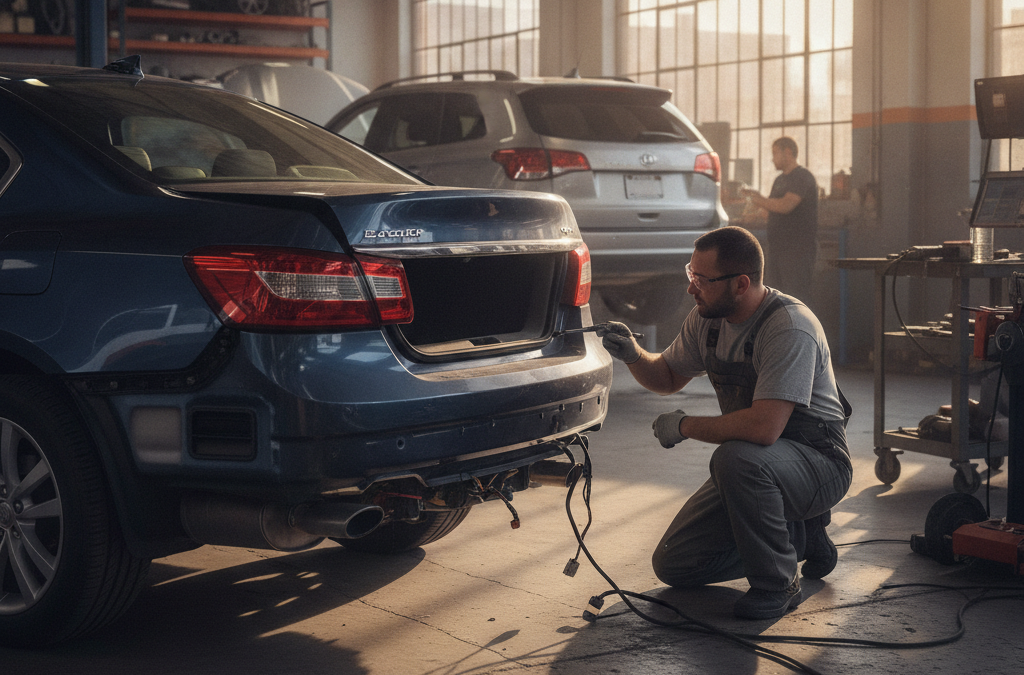
When you bring your car in after a rear-end collision, a thorough inspection should go well beyond the visible damage. Here’s what a qualified shop will check:
- Bumper cover and fascia: The plastic outer shell. Often cracked, scratched, or pushed in — but sometimes surprisingly intact even when deeper damage exists.
- Bumper reinforcement bar: The metal bar behind the plastic cover designed to take the real impact. This is frequently bent in moderate-speed rear-end collisions.
- Energy absorber: The foam or plastic component between the cover and the reinforcement bar. Once compressed, it doesn’t spring back.
- Trunk floor and rear frame rails: In harder hits, the force travels into the vehicle’s structure. This requires a frame inspection with measuring equipment — not just a visual check.
- Rear lighting systems: Taillights, brake lights, and turn signals can be damaged or misaligned from the impact.
- ADAS components: Advanced driver assistance systems including radar sensors, cameras, and parking assist modules. These require recalibration after any displacement.
A shop that skips any of these steps isn’t giving you a complete picture of what your car actually needs.
What Most Local Competitor Shops Don’t Tell You About Rear-End Repairs
One thing that’s genuinely underexplained at a lot of body shops — and frankly missing from how most local competitors describe their repair process — is what happens after the visible damage is fixed. Replacing a bumper cover is a straightforward job. Checking whether the impact transferred force into the rear subframe, verifying that your ADAS sensors are still within manufacturer spec, and documenting everything for your insurance company are different things entirely. That documentation matters because if a related issue shows up six months from now, you want a paper trail showing what was inspected and what was replaced.
At S&T Auto Body, our I-CAR Gold Class certified technicians are trained to inspect and repair to current industry standards — which includes knowing when a sensor needs recalibration and when a frame measurement is warranted even if the car doesn’t look that bad. We’ve been doing this work in the Bronx since 1975, and we’ve seen plenty of cars come back to shops — not us, other shops — because something was missed the first time.
How Insurance Claims Work After a Rear-End Collision in New York
In most rear-end collisions, the driver who struck you from behind is considered at fault under New York traffic law. That means their liability coverage should cover your repairs. But the actual claims process still requires some navigation on your end.
Here’s what typically happens: You file a claim with either your own insurer or the at-fault driver’s insurer. An adjuster will assess the damage — either in person or through photos — and issue an initial estimate. Here’s the part that catches a lot of drivers off guard: that initial estimate is often based on visible damage only. Once a shop tears down the repair and finds additional damage underneath, a supplement needs to be submitted to the insurance company. This is completely normal and happens on a large percentage of rear-end repairs, but it adds time to the process.
If you’re a Geico policyholder, S&T Auto Body is a Geico preferred shop, which means we work directly with Geico adjusters and can often streamline the claim process considerably. If you’re dealing with another insurer, we handle that coordination on your behalf as well. You shouldn’t have to spend your afternoons on hold with an insurance company — that’s our job.
Rear-End Collision Repairs on EVs and Newer Luxury Vehicles
If you drive a Tesla, Mercedes-Benz, or another EV or luxury vehicle, a rear-end collision adds another layer of complexity. Tesla vehicles, for example, use aluminum-intensive body construction and integrate battery management components in ways that require manufacturer-specific training to repair correctly. A rear-end impact on a Tesla isn’t just a bumper job — it may involve aluminum repair techniques that a general body shop simply isn’t equipped to handle.
Similarly, a rear-end collision on a Mercedes-Benz can affect the vehicle’s PRE-SAFE system and other safety electronics that require dealer-level diagnostics to verify. Taking a Mercedes to a non-certified shop after a rear-end collision risks leaving those systems in an unverified state — which has implications for both safety and your warranty.
Our team handles Tesla and EV collision repair with the proper high-voltage safety protocols and aluminum repair training, and we’re certified to repair Mercedes-Benz vehicles to factory standards. Whether you’re coming from the Bronx or driving in from Nassau County or Westchester County, we can handle the repair correctly the first time.
How Long Does a Rear-End Collision Repair Take?
Timeline varies depending on the extent of damage and parts availability. A straightforward bumper replacement on a common domestic or import vehicle can often be completed in two to four days. If the repair involves structural work, ADAS recalibration, or waiting on specialty parts for a luxury or EV model, expect the timeline to extend. Drivers in Yonkers and Manhattan often ask us about this upfront, and we always give honest estimates — we won’t tell you three days and keep your car for three weeks.
Parts delays are a real factor right now, especially for certain German and EV brands. We’ll be straight with you about that from the start and keep you updated as the repair progresses.
Frequently Asked Questions
Do I need a police report after a rear-end collision in the Bronx?
In New York State, you’re required to file a report with the DMV if there’s injury or property damage exceeding $1,000. Even if damage seems minor, it’s worth documenting the accident for insurance purposes. If police responded to the scene, get the report number before you leave.
Can I just replace the bumper cover and skip checking everything else?
You can, but it’s a risk. If hidden structural damage or a misaligned sensor goes unaddressed, you could face safety issues or a larger repair bill down the road. A proper teardown inspection catches things a surface estimate misses.
Will the other driver’s insurance pay for everything?
If they’re at fault, their liability coverage should cover your repairs. In practice, supplements are common when additional damage is found during the repair. We handle the supplement process directly with the insurance company on your behalf.
What if my car has a backup camera or blind-spot sensors — do those need to be recalibrated after a rear-end hit?
Yes, if any component in the bumper area was moved or replaced, those systems need to be recalibrated to manufacturer spec. Skipping this step leaves you with safety features that may not function correctly.
Does S&T Auto Body handle rear-end repairs for fleet vehicles?
Yes. We work with fleet account managers throughout the Bronx and surrounding areas. If you manage multiple vehicles, we can coordinate repairs to minimize downtime across your fleet. Reach out and we’ll set up an account.
Get a Free Estimate From a Shop That Actually Checks Everything
If you’ve been rear-ended and you’re not sure what you’re dealing with, don’t guess — and don’t let a shop guess either. S&T Auto Body has been serving drivers from the Bronx and across the NYC metro area for over 50 years. We give you a free, itemized estimate that tells you exactly what needs to be fixed and why. No pressure, no surprises. Contact us today to request your free estimate or to ask us anything about your repair — we’re here to help you get back on the road with confidence.