What Bronx and White Plains Drivers Should Know About Repairing a Car With Structural or Unibody Damage After a Collision
If your car was in a serious collision — whether it happened on the Cross Bronx Expressway, a parking lot in White Plains, or a side street in Yonkers — and something still feels wrong after the visible damage is repaired, there’s a good chance the problem goes deeper than bent sheet metal. Structural or unibody damage is one of the most consequential outcomes of a collision, and it’s also one of the most frequently mishandled. The short answer: not every body shop has the equipment, training, or certifications to fix it correctly. Here’s what you need to know so you don’t get a car back that looks fine on the outside but is compromised where it counts most — your safety.
What Is Unibody Damage, and Why Is It Different From Frame Damage?
Most people have heard the term “frame damage” and assume it applies to any serious structural problem. But if you’re driving a modern passenger car, SUV, crossover, or EV, your vehicle almost certainly uses a unibody construction — meaning the body and the structural frame are one integrated unit, not a separate chassis underneath.
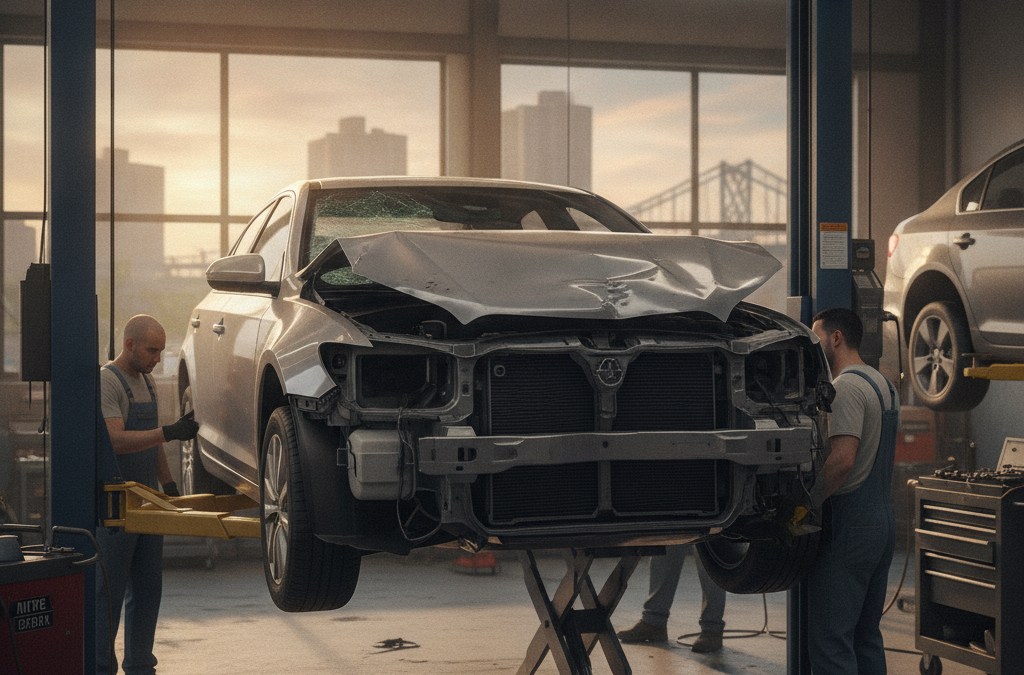
This design makes vehicles lighter and safer in a controlled crash, because the unibody is engineered to crumple in specific zones — called crumple zones — absorbing energy and protecting the passenger cabin. That’s actually good engineering at work. But it also means that after a significant impact, those carefully designed structural zones may be bent, twisted, or compressed in ways that aren’t always visible from the outside.
Traditional body-on-frame vehicles (like full-size pickup trucks and some SUVs) have a separate steel frame underneath, which can be straightened somewhat differently. Unibody vehicles require specialized measuring systems and repair procedures that vary by manufacturer. If a shop doesn’t know the difference — or doesn’t have the right equipment — you could end up with a car that’s been cosmetically repaired but structurally compromised.
Warning Signs That Your Car May Have Structural Damage After a Collision
Sometimes unibody damage is obvious at first glance. Other times, it’s subtle — and easy for an undertrained shop to miss, or quietly ignore. Watch for these signs after a collision:
- Doors or trunk that no longer close smoothly or align properly with the frame
- Uneven gaps between body panels, especially around doors, hood, or fenders
- The car pulls to one side while driving on a straight road
- Unusual vibrations or sounds at highway speed
- Visible creasing, buckling, or wrinkling in the floor, firewall, or rocker panels
- Airbags that deployed — which almost always signals a significant structural impact
- A steering wheel or dashboard that feels slightly off-center after repairs
If you experienced any of these and your shop didn’t specifically address structural measurement and repair in your estimate, ask them directly. You have every right to know.
What Does Proper Structural Repair Actually Involve?
Fixing unibody damage isn’t guesswork. It requires a computerized three-dimensional measuring system that compares your vehicle’s actual dimensions against the manufacturer’s factory specifications — down to the millimeter. Without that, a technician is essentially eyeballing whether the car is straight. That’s not good enough.
From there, a certified technician uses a frame straightening machine (sometimes called a pulling bench or frame rack) to apply controlled force and bring the structure back into spec. Depending on the damage, some sections of the unibody may need to be replaced entirely rather than pulled — and knowing which sections can be safely repaired versus which must be replaced is a judgment call that requires both experience and manufacturer guidance.
This is one of the key reasons manufacturer certifications matter. When a shop is certified by the brand that built your car, they have access to the OEM repair procedures that spell out exactly how structural repairs should be performed on your specific model. A generic shop without that access is working from general knowledge — which may be fine for a door ding, but isn’t acceptable for structural work.
Why This Is an Area Many Local Shops Handle Poorly — and What to Look For
Here’s something we’ve noticed over five decades in the Bronx: structural damage is frequently the area where corners get cut — not always out of bad intent, but because proper unibody repair is time-consuming, equipment-intensive, and requires real expertise. Some shops invest in it. Many don’t.
Several competitor shops in the area advertise collision repair without being transparent about whether they perform computerized structural measuring, what equipment they use, or whether their technicians hold current certifications for structural work. That’s a gap worth paying attention to.
When you’re evaluating a shop for structural damage repair, ask these specific questions:
- Do you have a computerized measuring system? What brand?
- Will you provide a written report showing before-and-after measurements?
- Are your technicians I-CAR certified for structural repair?
- Do you follow the OEM repair procedures for my vehicle’s make and model?
- Will my insurance company’s adjuster be able to review the structural repair documentation?
A shop that hesitates on any of those questions — or gives you vague answers — is telling you something important.
I-CAR Gold Class and Why It Matters for Structural Work in Particular
You may have seen the I-CAR Gold Class designation and wondered what it actually means in practice. I-CAR — the Inter-Industry Conference on Auto Collision Repair — is the national standard-setting body for collision repair training. Gold Class is their highest shop-level designation, requiring ongoing technician training across multiple disciplines, including structural repair.
S&T Auto Body holds I-CAR Gold Class certification, and our technicians maintain that training on an ongoing basis — not just when we first earned the designation. For structural work specifically, that training covers how to assess damage, how to use measuring equipment, and how to follow OEM procedures for the makes we’re certified to repair. It’s not a one-time trophy. It’s a commitment to staying current.
For drivers coming to us from White Plains, Mount Vernon, or across Westchester County, that matters — because it means your repair is done to the same standard regardless of whether you’re driving a Subaru, a Ford, a Hyundai, or a Mercedes-Benz.
How Insurance Claims Work When There’s Structural Damage
Structural damage can significantly affect the total repair cost — and in some cases, may push a vehicle toward a total loss determination. Your insurance company will want a thorough, documented estimate that accounts for all structural work, not just the visible surface damage.
This is one of the situations where working with a shop that has a direct relationship with major insurers makes a real difference. As a Geico preferred shop, we handle the documentation and communication directly with the adjuster, so you’re not stuck in the middle trying to explain what a frame pulling report means. We’ve done this for collision repairs of all kinds across the Bronx, Manhattan, and surrounding areas for decades, and we know how to make sure the structural damage is properly scoped and covered — not minimized to save the insurer money at your expense.
If you’re coming from Westchester — White Plains, Yonkers, or farther north in the Lower Hudson Valley — and your car was towed or you’re deciding where to bring it, you’re welcome to submit photos online for a free, itemized estimate before you make any commitments.
Frequently Asked Questions
Can a car with unibody damage ever be fully repaired?
Yes, in many cases — as long as the damage is properly measured, the repair is performed by certified technicians using OEM procedures, and the structural integrity is verified with before-and-after measurements. Not every car can be fully restored, but a proper assessment from a qualified shop will tell you clearly what’s possible.
Will structural damage always show up on a vehicle history report?
Not necessarily. Structural damage only appears on a vehicle history report if it was reported to an insurance company or through a police report. Unreported structural damage from a private repair may not show up — which is one reason it’s important to have any used vehicle inspected before purchase if you suspect prior damage.
Does my insurance cover structural repair after a collision?
In most cases, yes — if you have collision coverage and the damage was caused by an accident, structural repair is covered. The key is making sure the shop documents all structural damage in the estimate so it’s included in the claim, not discovered and added later as a supplement.
How long does structural or unibody repair take?
It depends on the severity. A moderate structural repair might add several days to a repair timeline. More significant damage — especially if replacement sections are needed — can take longer. We’ll give you a realistic timeline upfront so you can plan accordingly.
Can I drive a car with unibody damage that hasn’t been repaired?
It depends on what’s damaged and how severely. Minor structural deformation in a non-critical area may not affect drivability immediately, but compromised crumple zones mean your car won’t protect you properly in a subsequent collision. We strongly recommend getting a professional assessment before driving any vehicle with suspected structural damage.
Get a Free Structural Damage Assessment From a Shop That Knows the Difference
At S&T Auto Body, we’ve been doing this since 1975. We’re a family-owned shop in the Bronx with I-CAR Gold Class certification and manufacturer certifications across a wide range of makes — and we have the equipment and experience to assess and repair structural damage the right way. Whether your car was hit hard on the Grand Concourse or you’re coming to us from White Plains or Mount Vernon with a vehicle that still doesn’t feel right after another shop touched it, we’ll give you an honest evaluation and a clear explanation of what needs to happen.
Don’t let structural damage get glossed over. Contact us today to request your free, no-obligation estimate — and get the straight answers you deserve before you decide where to take your car.