What Bronx and Morris Park Drivers Should Know About Choosing Between a Dealership Body Shop and an Independent Certified Repair Shop
If you’ve just been in an accident in the Bronx — or even a fender-bender on one of the side streets around Morris Park — one of the first things people will tell you is to take the car back to the dealership. It sounds like solid advice. You bought it there, they know the brand, so naturally they’ll fix it right. But that assumption can cost you time, money, and in some cases, a repair that doesn’t hold up the way it should. The honest truth is that an independent certified collision repair shop can often do just as good a job — and in many cases, a better one — while giving you more personal attention and a faster turnaround. Here’s what you need to know before you make that call.
Why Drivers Automatically Think of the Dealership After a Crash
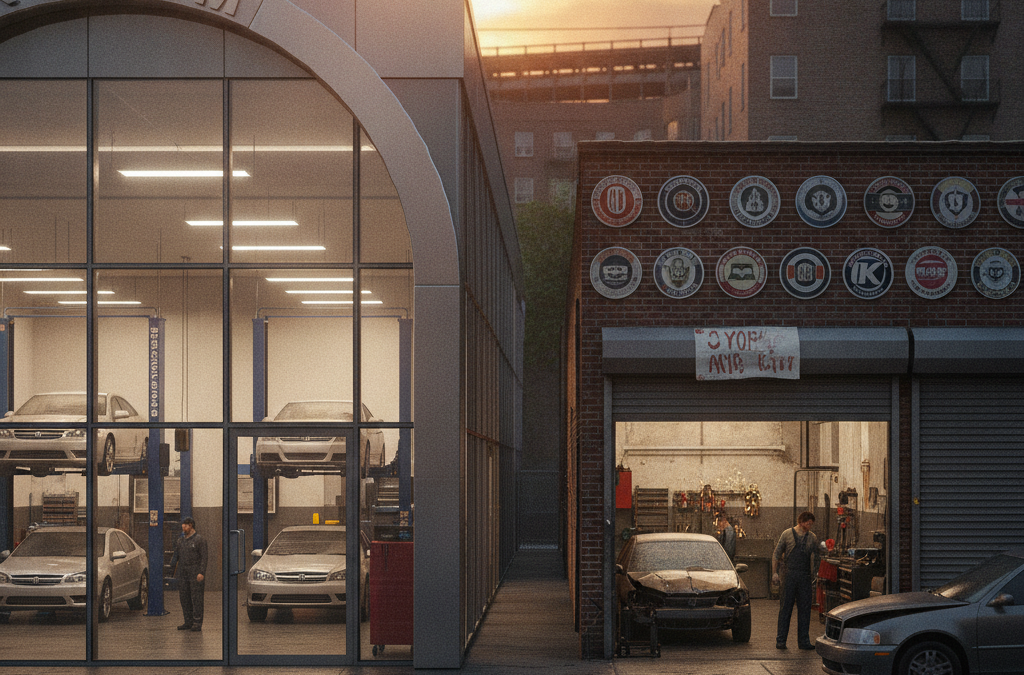
It’s an understandable reflex. You have a Mercedes, a Toyota, a Subaru — you go back to where you bought it. The brand name feels like a safety net. Dealerships lean into that trust, and some of them do run solid body shops. But what most drivers don’t realize is that a dealership’s body shop is a separate operation from the service department that does your oil changes and tune-ups. The collision center attached to a dealership is often run under a different management structure, uses different staff, and is held to different standards than the rest of the building.
More importantly, a manufacturer certification for collision repair is not automatically granted to a dealership just because it sells that brand. A Toyota dealership does not necessarily hold Toyota’s collision repair certification. A Mercedes-Benz dealership does not automatically meet the manufacturer’s standards for certified structural repair. Those certifications have to be earned — with specific equipment, trained technicians, and ongoing audits. An independent shop that has done the work to earn those certifications is, by definition, qualified to do the same repair to the same standard.
What Manufacturer Certification Actually Means — and Who Has It
When a collision repair shop earns a manufacturer certification — whether that’s for Mercedes-Benz, Tesla, Subaru, Ford, GM, Hyundai, Volkswagen, Nissan, or any other brand — it means they’ve met that automaker’s specific requirements for tools, training, repair procedures, and quality control. It’s not a marketing badge. It’s an ongoing commitment that gets audited and renewed.
This matters most for vehicles where the repair process is tightly tied to the engineering of the car. A modern Mercedes-Benz uses high-strength steel and aluminum alloys that can’t be repaired with generic equipment. A Tesla Model 3 or Model Y has a structural design and high-voltage system that requires technicians trained specifically for EV repair. If those repairs aren’t done to manufacturer spec, you’re not just dealing with cosmetic issues — you could be looking at compromised crash protection and voided warranties.
At S&T Auto Body, we hold manufacturer certifications for Mercedes-Benz, Tesla, and a range of other brands, and our technicians are I-CAR Gold Class certified. That’s the same standard a certified dealership body shop would need to meet — and in many cases, more than what the dealership next door has actually achieved.
The Experience You Actually Get: Dealership vs. Independent Shop
Here’s a comparison that drivers in the Bronx — and folks coming in from Yonkers, White Plains, or Westchester County — consistently report back to us:
- Turnaround time: Dealership body shops often have significant backlogs. They may prioritize service department work, and collision jobs can sit in a queue for weeks. An independent shop that focuses exclusively on collision repair can usually get your estimate done faster and schedule work sooner.
- Communication: At a large dealership, you’re often handed off between departments and don’t always have one person you can call to get a straight answer. A family-owned independent shop gives you direct access to the people actually working on your car.
- Insurance handling: Independent certified shops that work regularly with insurance companies — including as Geico preferred shops — often have a smoother claims process than dealership shops that handle collision work less frequently.
- Price: Dealerships have significant overhead, and their body shop rates often reflect that. An independent shop can frequently do the same certified repair for less, without cutting corners.
The Gap Competitors Aren’t Filling: Honest Guidance on This Exact Decision
If you search around for advice on this topic from shops in the NYC area, you’ll mostly find vague reassurances — “we’re just as good as the dealer” — without any real explanation of why or what to look for. What drivers in Morris Park, Manhattan, Queens, or anywhere else in the five boroughs actually need is a clear framework for evaluating any shop, dealership or independent, before they hand over the keys.
Here’s what to ask, no matter who you’re talking to:
- Are you manufacturer-certified for my specific vehicle make — and can you show documentation?
- Do your technicians hold current I-CAR Gold Class certification?
- Will you use OEM parts as specified by the manufacturer, or are aftermarket substitutions being considered without my approval?
- Can you provide a written, itemized estimate before any work begins?
- Do you work directly with my insurance company, and are you a preferred shop for major insurers?
- What is your warranty on the repair work?
If a shop — dealer or independent — can’t answer those questions clearly and in writing, that’s your signal to look elsewhere. You can review our full list of certifications to see exactly what we hold and what it means for your specific vehicle.
A Note on Tesla and EV Owners in the Bronx
EV ownership has jumped sharply across the Bronx and surrounding boroughs in recent years, and Tesla in particular has become a common sight everywhere from the Grand Concourse to the streets around Morris Park. What many Tesla owners don’t realize is that Tesla’s certified repair network is completely separate from Tesla’s service centers. Tesla does not repair collision damage at its own service locations — that work goes to Tesla-approved body shops. So if your Tesla has been in an accident, taking it to a Tesla service center is not the answer. You need a Tesla-approved collision repair shop, full stop.
S&T Auto Body is part of that network. Our technicians are trained in Tesla’s high-voltage safety protocols, aluminum body repair procedures, and structural requirements. You can learn more about how we handle EV and Tesla body repair and what the process looks like from estimate through delivery.
Frequently Asked Questions
Does going to a dealership body shop protect my warranty better than an independent shop?
Not necessarily. Under the Magnuson-Moss Warranty Act, manufacturers generally cannot void your warranty simply because repairs were performed at an independent shop — as long as the repair was done to manufacturer standards. If an independent shop holds the manufacturer certification for your vehicle, your warranty protections are intact. Ask the shop directly and get it in writing if you want certainty.
How do I verify that a shop is actually manufacturer-certified, not just claiming to be?
Most manufacturers maintain a searchable locator on their websites. You can look up certified collision repairers for Mercedes-Benz, Tesla, Subaru, Ford, and other brands directly through the automaker’s official site. You can also ask the shop to show you their certification documentation in person.
Will my insurance company tell me where to take my car?
Insurance companies can recommend shops — called direct repair programs or preferred shops — but in New York State, you have the legal right to choose where your car is repaired. Your insurer cannot require you to use a specific shop. What matters is that the shop you choose meets the certification standards required for your vehicle.
How long does a certified collision repair typically take compared to a dealership?
Timelines vary based on the extent of damage, parts availability, and the shop’s current workload. However, independent shops that focus exclusively on collision repair — rather than splitting attention between service department work and body jobs — often move faster. At S&T Auto Body, we give you a realistic timeline upfront and keep you informed throughout the process.
Is it worth driving from Yonkers or White Plains to the Bronx for a certified repair?
Many drivers from Yonkers, White Plains, and throughout Westchester County make the drive to us because we hold certifications they can’t find closer to home — or because they’ve had a poor experience elsewhere. If your vehicle requires a specific manufacturer certification, it’s worth the extra distance to know the repair is done right the first time.
Ready to Talk to a Shop That Will Give You a Straight Answer?
We’ve been serving drivers in the Bronx and the surrounding area since 1975. We’re not a dealership, and we’re not a chain. We’re a family-owned shop that has spent five decades earning certifications, building relationships with insurers, and doing right by the people who trust us with their vehicles. If you’ve been in an accident and you’re trying to figure out where to go, we’ll give you an honest assessment — no pressure, no runaround.
Contact S&T Auto Body to request a free, itemized estimate or to ask us anything about the repair process. Reach us at (718) 220-2201, email us at info@stautobody.com, or visit our contact page to submit your vehicle information and get started.