
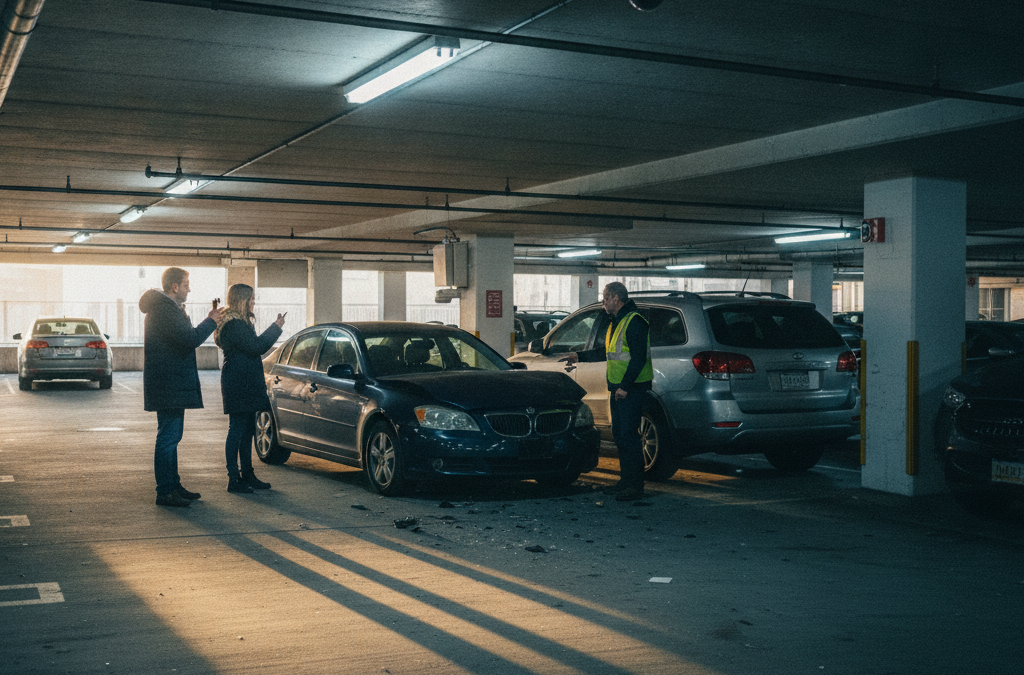
What Bronx and Queens Drivers Should Know About Getting a Car Repaired When the Accident Involved a Parking Garage or Lot
If your car got hit in a parking garage or lot in the Bronx or Queens, yes — you can absolutely file an insurance claim and get it properly repaired. But these accidents come with their own set of headaches that most drivers aren’t prepared for. Between disputed liability, missing witnesses, spotty camera footage, and insurance companies who’d rather cut you a low check than pay for a full certified repair, there’s a lot that can go wrong before your car even makes it to a shop. Here’s what you need to know from the moment you discover the damage.
Why Parking Garage and Lot Accidents Are So Common in NYC
It shouldn’t surprise anyone who drives in this city. New York has some of the most congested parking situations in the country — tight multi-level garages in Fordham, packed lots near Yankee Stadium, narrow street-level parking on busy Queens commercial strips. Drivers are maneuvering slowly, often distracted, in spaces that weren’t designed with modern vehicle sizes in mind. The result is a constant stream of door dings, scraped bumpers, clipped mirrors, and low-speed collisions that add up to serious repair bills.
What makes these accidents different from a typical road collision is the environment. There’s often no police report. There may or may not be working security cameras. The other driver might have left without leaving a note. And the garage operator — especially at a large commercial facility — usually tries hard to avoid accepting any liability for what happened on their property.
What to Do Immediately After You Find the Damage
Whether you walked back to your car and found a fresh dent or watched someone clip your bumper backing out of a space, the steps you take in the next few minutes matter.
- Document everything immediately. Take photos of your vehicle from multiple angles — including the full car, not just the damage. Capture the surrounding area, nearby vehicles, lane markings, and any visible security cameras.
- Look for a note. If the other driver left their information, great. If they didn’t, that changes how the claim gets handled.
- Ask for security footage right away. Parking garage operators are not legally required to preserve footage indefinitely. In many cases, recordings get overwritten within 24 to 72 hours. If you wait, it may be gone. Ask a manager on-site, get their name and contact info, and follow up in writing.
- File a police report if the damage is significant. Even in a parking lot, you can file a report — especially if the other driver fled. NYPD has a process for this, and your insurance company may require a report number to process the claim properly.
- Notify your insurance company. Do this sooner rather than later. Even if you’re not sure who’s at fault yet, you want the claim on record.
Who Pays When Your Car Gets Hit in a Parking Garage?
This is where things get complicated, and it’s an area that most local body shop websites don’t explain clearly — which leaves a lot of drivers confused and undercompensated.
In New York State, liability in a parking lot accident typically falls on one of three parties: the other driver, you, or the garage operator. Here’s a quick breakdown:
- Other driver identified: Their liability insurance covers your damage. If they’re uninsured or underinsured, your own policy may step in depending on your coverage.
- Hit-and-run with no driver identified: You’d typically file under your own collision coverage. If you don’t carry collision, you may be out of pocket — or you can pursue the garage operator if there’s evidence of negligence (like they knew the cameras were broken and failed to warn customers).
- Garage operator liability: This is harder to prove but not impossible. If the facility had a known hazard — like a structural column placed in an impossible spot, inadequate lighting, or a malfunctioning gate — and you can document it, an attorney can help you pursue the operator. This isn’t something most drivers attempt on their own, but it’s worth knowing it’s an option.
Regardless of who ends up paying, your first call after the incident should still be to your insurer. Major NYC-area carriers like Geico handle parking lot claims regularly, and working with a shop that knows how to navigate that process makes a real difference in how smoothly everything goes.
Getting an Honest Estimate — and Understanding What You’re Actually Paying For
One of the biggest mistakes drivers make after a parking garage accident is treating the damage as minor and assuming it’ll be a quick, cheap fix. A scraped bumper might look cosmetic, but depending on where the impact was, it could involve the bumper reinforcement bar, parking sensors, or in newer vehicles, forward-collision camera mounts. If those components are damaged and not replaced properly, you’re driving a car that’s less safe than it was before the accident.
At S&T Auto Body, every estimate is itemized. You see exactly what’s being replaced, what’s being repaired, and what the parts are. Our collision repair process is designed to catch hidden damage that a visual inspection at an insurance adjuster’s drive-through appraisal might miss entirely. We’ve been doing this in the Bronx since 1975, and we’ve seen plenty of “just a bumper” repairs that turned into structural issues when the vehicle got on the frame machine.
Why Certified Repair Matters Even for Parking Lot Damage
This is the part most shops — including several competing Bronx and Queens body shops — either don’t mention or gloss over. Manufacturer certifications aren’t just for major crashes. They matter any time your vehicle is being repaired.
If you drive a Tesla, a Mercedes-Benz, a Hyundai, or any number of other modern vehicles, the bumper cover isn’t just plastic over a foam block anymore. It’s integrated with sensors, cameras, radar units, and in EV models, potentially the front crumple zone design that protects the battery pack. Manufacturer-certified shops are trained to repair these systems to factory specifications — not just make them look right from ten feet away.
When you drop your car at a non-certified shop after a parking lot hit, you may get back a vehicle that looks fine but has sensors that weren’t recalibrated, parts that weren’t sourced to OEM spec, or structural components that weren’t inspected at all. That’s not just a quality issue — it can affect your safety and your vehicle’s resale value.
What Happens If the Insurance Company’s Estimate Is Too Low
Insurance companies often send adjusters who write quick estimates based on visible damage. Those estimates frequently come in too low once a certified technician actually gets into the repair. This is especially common with parking garage damage because the incidents are perceived as minor — which means adjusters don’t always look closely.
If the insurer’s number doesn’t cover what your vehicle actually needs, your shop can submit a supplement. We do this regularly on behalf of our customers. It takes documentation and some back-and-forth, but it’s a normal part of the process when you work with a shop that knows how to advocate for you. Drivers in Yonkers, Queens, and across the Bronx have come to us after getting lowball estimates from other shops — and we’ve helped them get their vehicles repaired correctly without coming out of pocket for the difference.
Frequently Asked Questions
Do I need a police report to file an insurance claim after a parking lot accident in NYC?
Not always, but it helps. For hit-and-runs or any incident with significant damage, filing a report with NYPD gives you documentation that your insurer can reference. Some insurers require a report for uninsured motorist claims. It’s always better to have it than to need it later.
What if the parking garage says it’s not responsible?
That’s a common response. Unless there’s clear evidence of negligence on their part — faulty equipment, dangerous conditions, broken cameras that weren’t disclosed — proving garage liability is difficult without an attorney. Most parking lot damage claims end up going through the other driver’s insurance or your own collision coverage.
Can I get my car repaired without going through insurance if the damage is minor?
Yes. If the repair cost is close to or under your deductible, you may choose to pay out of pocket. We provide free itemized estimates so you can make that decision with full information. Just because damage looks minor doesn’t mean it always is — but sometimes it really is a small fix, and we’ll tell you honestly either way.
How long does it take to repair parking lot damage?
Depending on the extent of the damage, minor dent and bumper repairs can often be completed in one to three days. If sensors need recalibration, parts need to be ordered, or hidden structural damage is found, it may take longer. We’ll give you an honest timeline upfront and keep you updated throughout.
Does getting hit in a parking lot affect my insurance rates?
It depends on your coverage and fault determination. If the other driver is at fault and their insurance covers it, your rates typically aren’t affected. If you file under your own collision coverage — especially in a no-fault situation — there may be an impact. It’s worth asking your insurer directly before filing if the damage is minor.
Get a Free Estimate from a Shop That Knows What It’s Looking At
Parking lot damage is easy to underestimate — which is exactly why you want a shop with trained eyes and the right certifications looking at it before anyone decides what gets repaired and what gets skipped. At S&T Auto Body, we’ve been serving Bronx drivers and customers from across Queens, Yonkers, and the surrounding area for over 50 years. We’re I-CAR Gold Class certified, work directly with Geico and other major insurers, and we don’t cut corners on repairs just because the damage happened at 5 miles per hour in a parking structure.
If your car was hit in a garage or lot and you’re not sure what it needs, reach out to us for a free, no-obligation estimate. You can submit photos online or bring the vehicle in. We’ll tell you exactly what’s going on and what it’ll take to get it right.