What Bronx and White Plains Drivers Should Know About Getting a Totaled Car Claim Right — Before the Insurance Company Makes You an Offer
If your insurance company is using the word “total loss,” slow down before you agree to anything. Whether your car was hit near the Cross Bronx Expressway, in a White Plains parking garage, or anywhere else in the metro area, a total loss declaration doesn’t mean the process is over — it means a negotiation is about to start. And the first number the insurer gives you is rarely their best one.
At S&T Auto Body, we’ve been working with Bronx drivers and their insurance companies for 50 years. We’ve seen people walk away from settlements that shortchanged them by thousands of dollars because they didn’t know they could push back. This article is here to change that.
What Does “Total Loss” Actually Mean?
A car is declared a total loss when the insurance company’s estimated repair cost exceeds a certain percentage of the vehicle’s actual cash value (ACV) — in New York State, that threshold is typically 75%. So if your car is worth $12,000 and the repairs are projected to cost $9,500 or more, the insurer will likely write it off rather than fix it.
Here’s what a lot of drivers don’t realize: the repair estimate the insurer uses to make that call is often based on a quick visual inspection or a third-party appraisal tool — not a full teardown by a certified technician. That number can be wrong. And the ACV the insurer assigns to your vehicle can also be wrong.
Both numbers are negotiable.
How Insurers Calculate Your Car’s Value — and Why It Often Comes in Low
Insurance companies use software tools like CCC One or Mitchell to generate an ACV estimate for your vehicle. These tools pull comparable vehicle listings from your area and apply adjustments for mileage, condition, and options. In theory, that sounds fair. In practice, the comparables they choose are often vehicles in worse condition than yours, or listed at lower prices than what you’d actually find on the market in the Bronx, White Plains, or anywhere in Westchester County.
Urban and suburban New York markets often have higher used car prices than national averages. If the insurer’s software is pulling comps from markets where cars are cheaper, your ACV is going to come in lower than it should.
You have the right to dispute this. Here’s how.
Step 1: Request the Valuation Report
Ask your insurance company for the full comparable vehicle report they used to calculate your ACV. You’re entitled to see it. Review every comparable listing — check the condition, mileage, and location. If any of the comparables are in significantly worse condition than your vehicle was before the accident, flag them.
Step 2: Pull Your Own Comparables
Search Carfax, Autotrader, Cars.com, and local dealer listings for vehicles matching your make, model, year, mileage, and trim. Focus on listings in the New York metro area — Yonkers, White Plains, the Bronx, and surrounding counties. Screenshot everything. Print it out. These are your comps.
Step 3: Document Condition and Upgrades
Did you recently replace the tires, put in a new battery, or have any work done? Do you have receipts? Recent maintenance and upgrades can increase your ACV if you present them. Insurance companies don’t always ask — you have to tell them.
Step 4: Submit a Formal Dispute
Put your objection in writing. Include your comparable listings, your maintenance records, and a clear statement of what you believe the ACV should be. Ask for a supervisor if the first representative won’t engage with your documentation.
When the Car Might Not Actually Be a Total Loss
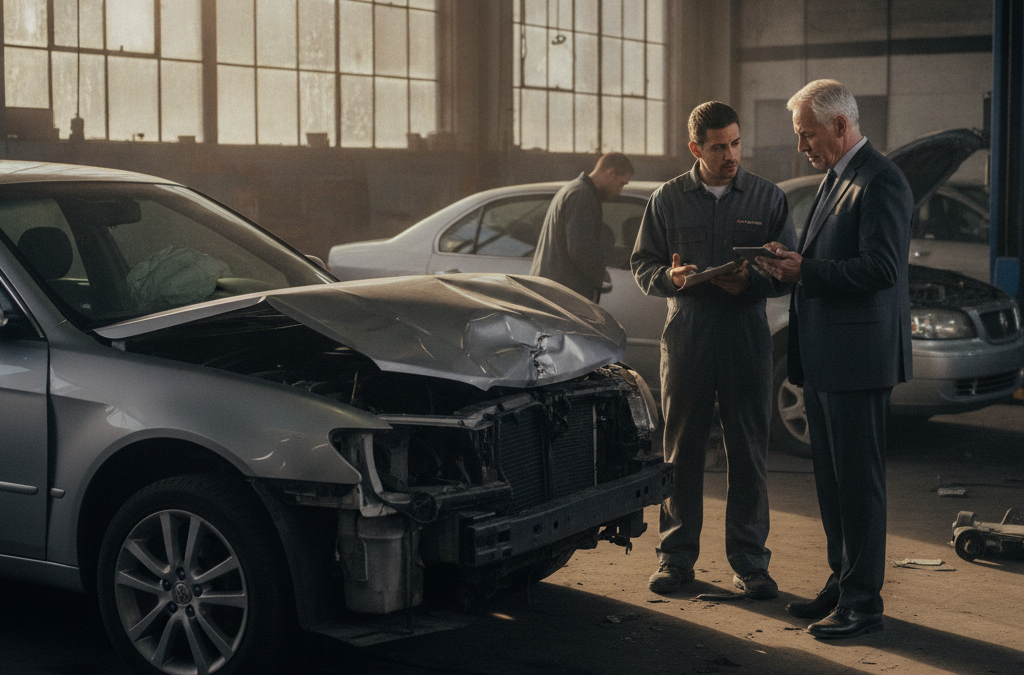
This is a gap that most local body shops — and most online resources — don’t address clearly. Sometimes an insurer declares a total loss based on an initial visual estimate, but a full structural inspection tells a different story.
If your car is already at a certified shop and the technicians haven’t done a complete teardown, the repair cost projection may be inflated. We’ve seen cases at our shop where a car looked like a write-off from the outside but came in under the total loss threshold once the real scope of damage was properly assessed.
Before you accept a total loss settlement, it’s worth having an independent certified shop do a full inspection — not just a walk-around. At S&T Auto Body, we offer free itemized estimates that reflect actual damage, not guesswork. That documentation can help you dispute a total loss declaration if the repair cost is genuinely lower than the insurer projected.
What Happens to Your Loan or Lease If Your Car Is Totaled?
This is where a lot of drivers get caught off guard. If you still owe money on a car loan — or you’re in a lease — the ACV payout may not cover what you owe. That gap is your problem, not the insurance company’s, unless you have gap insurance.
If you financed through a dealership or lender and you don’t have gap coverage, you could be stuck paying off a loan on a car you no longer have. It’s a painful situation, and it’s more common than people expect in high-cost markets like New York City, where car prices run higher and loan balances can be significant.
If you’re not sure whether you have gap coverage, check your original financing paperwork or call your lender directly. Don’t wait until after you’ve signed the settlement.
What If You Want to Keep the Car After a Total Loss?
New York State allows you to retain a totaled vehicle after a total loss settlement — it’s called a “salvage retention.” If you choose to keep the car, the insurer will deduct the salvage value from your settlement payout. The vehicle will then receive a salvage title, which affects your ability to re-register it and get insurance on it going forward.
Some drivers choose this route if the car has sentimental value, or if they believe the repair cost is overstated and they can get it fixed for less. It’s an option worth knowing about, but it comes with tradeoffs. Talk to your insurer and understand exactly what you’re agreeing to before you sign.
Working With Your Insurer — Without Getting Steamrolled
We work with Geico and most major insurers as a preferred and certified repair shop. That relationship matters because it gives us a direct line to adjusters — we can communicate on your behalf about repair scope and costs. If you’re dealing with a Geico claim and feeling lost, we can help you navigate the process from estimate to resolution.
That said, we’re not here to rubber-stamp whatever the insurance company says. We’re here to make sure the work is done right and that the documentation reflects the real damage. Our manufacturer certifications and I-CAR Gold Class status mean our estimates carry weight — insurers take them seriously.
Frequently Asked Questions
Can I negotiate a total loss settlement in New York?
Yes. You have the right to dispute the ACV the insurer assigns to your vehicle. Provide your own comparable listings, maintenance records, and any documentation of recent upgrades. Submit your dispute in writing and ask to speak with a claims supervisor if needed.
How long do I have to accept or dispute a total loss offer in New York?
There’s no fixed deadline set by law, but insurers will typically set a response window. Storage fees can accumulate at the lot where your vehicle is held, which creates pressure to settle quickly. Try to gather your documentation and respond within a week if possible.
Can a body shop help me dispute a total loss claim?
Yes, in some cases. If the insurer’s repair cost estimate is based on an incomplete inspection, a certified shop can provide a detailed written estimate that more accurately reflects the real scope of repairs. That documentation can support a dispute of the total loss declaration.
What’s the difference between ACV and replacement cost?
Actual cash value (ACV) is what your car was worth just before the accident — depreciation included. Replacement cost is what it would cost to buy a similar vehicle new today. Most standard auto policies pay ACV, not replacement cost. Some policies offer replacement cost coverage as an add-on — check yours.
Do I have to use the insurer’s preferred shop if my car isn’t totaled after all?
No. In New York, you have the right to choose your own repair shop regardless of what your insurance company recommends. Insurers cannot legally require you to use a specific shop. What matters is that the shop is qualified to do the work correctly.
We’ve Been Helping Bronx Drivers Through This Since 1975
Getting a total loss declaration on your car is stressful, especially when you’re still dealing with the aftermath of an accident. The insurance company moves fast. They want this closed. But you don’t have to accept the first number they give you, and you don’t have to navigate this alone.
Whether your car ends up being repaired or written off, S&T Auto Body is here to give you an honest assessment — not a number padded to benefit anyone. We’re a family-owned shop that’s been serving the Bronx and surrounding areas for 50 years. We know the insurers, we know the process, and we’ll tell you straight what we see.
Contact us today for a free itemized estimate — before you sign anything. Let’s look at the damage together and make sure you know exactly where you stand.