
What Bronx and Queens Drivers Should Know About Getting a Car Repaired When the Damage Is Mostly Cosmetic
If you drive in the Bronx or Queens, cosmetic damage is practically a rite of passage. A shopping cart in a parking lot near Fordham Road. A sideswipe from someone squeezing through a tight spot in Astoria. A door ding from the car next to you at the lot off the Grand Concourse. Most of the time the car still drives fine, and you’re left wondering: is it actually worth fixing? The honest answer is — it depends, and there are a few things worth understanding before you decide to let it go or call a shop.
“Cosmetic” Doesn’t Always Mean Minor
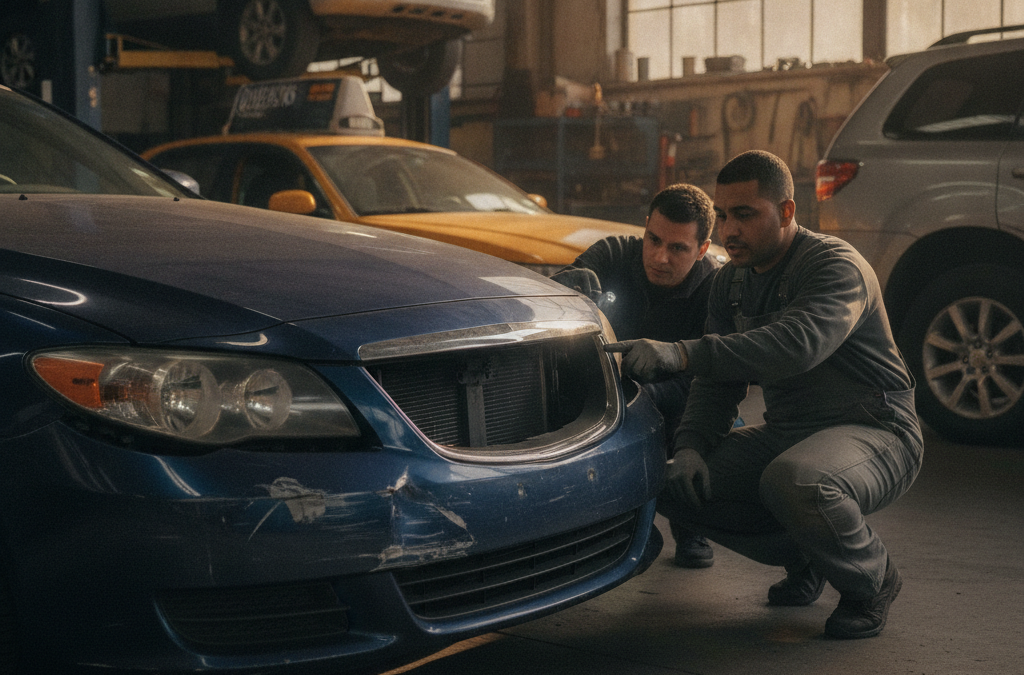
Here’s the thing that a lot of drivers don’t realize: what looks purely cosmetic on the outside sometimes isn’t. A dented rear quarter panel might have bent the inner structural support. A bumper that got pushed in during a low-speed collision might have damaged the plastic energy absorber or impact bar behind it — parts you can’t see without removing the cover. Even a deep key scratch that goes through the clear coat and paint layer down to bare metal can start rusting within a few weeks, especially with New York City’s winters and road salt.
That’s why a quick, free estimate from a qualified shop is worth your time — not because the shop wants to sell you more work, but because you should know what you’re actually dealing with before you make a decision. At S&T Auto Body, we’ve been doing this for over 50 years, and we’ll tell you straight: sometimes it really is just cosmetic, and sometimes there’s more going on underneath. You deserve to know the difference.
The Most Common Types of Cosmetic Damage We See
Across the Bronx, Queens, Yonkers, and Manhattan, the cosmetic damage we see most often falls into a handful of categories:
- Parking lot dents and door dings — Usually small, localized, and often repairable without full paint work if the metal hasn’t creased and the paint isn’t broken.
- Scratches and key marks — These range from light surface scuffs that only hit the clear coat to deep gouges that expose primer or bare metal. The deeper the scratch, the more involved the repair.
- Scuffed or cracked bumper covers — Plastic bumpers take a beating in city traffic. Minor scuffs can often be sanded and repainted. Cracks or deep gouges usually mean replacing the cover.
- Paint chips and fading — Common on older vehicles, especially if they’ve been parked on the street for years. This is often more of a restoration job than a collision repair.
- Mirror damage — Side mirrors get clipped constantly in tight NYC streets. Replacing or repainting a mirror housing is usually a straightforward fix.
Should You File an Insurance Claim for Cosmetic Damage?
This is probably the question we get most often, and the answer genuinely depends on your situation. If the repair cost is close to or below your deductible, it usually doesn’t make sense to file a claim — you’d pay most or all of it out of pocket anyway, and a claim on your record can affect your premium. On the other hand, if the damage is more extensive than it looks, or if another driver was responsible and their insurance is on the hook, filing may well be worth it.
What you shouldn’t do is file a claim based on a guess. Get a free itemized estimate first. That gives you a real number to compare against your deductible, and it documents the damage in writing — which matters if you end up going through insurance later. We work with Geico and most major insurers, and we can help you navigate that process without pressure.
Why Paint Matching Matters More Than People Think
One of the most underappreciated parts of cosmetic repair is color matching. It sounds simple — just spray some paint on it, right? But automotive paint has layers: primer, base coat, clear coat, and in many modern vehicles, special metallic or pearl effects that shift in different lighting. Match it wrong and the repaired panel looks like it belongs to a different car.
This is especially true on newer vehicles with complex color formulas, and it’s a real issue with Tesla and other EVs that use multi-stage paint. It’s also why those quick fix-it shops and touch-up kits you see advertised online rarely give you a result you’re happy with long-term. A shop with proper paint matching equipment and experience with your vehicle’s specific color code will produce a repair that’s essentially invisible.
Our paint technicians at S&T Auto Body use computerized color-matching systems that account for your vehicle’s exact factory color, including any fading that’s happened over time. The goal is a repair that blends — not one that sticks out under sunlight.
What Competitor Shops Often Skip: Documenting Cosmetic Damage Properly
One thing that’s largely missing from the content on most local competitor sites is any real guidance on documentation — and it matters more than people realize, especially for cosmetic damage. If you have an existing dent or scratch and then get into another accident, insurance companies will try to exclude pre-existing damage from the claim. If you never documented what was there before, you may have a harder time proving what’s new.
The practical advice here is simple: photograph your vehicle thoroughly and regularly, especially after any incident — even a small one. Date-stamped photos on your phone are usually sufficient. And when you bring your car in for any estimate, ask the shop to document everything in writing, including damage they’re not repairing. That written record can protect you later.
We’ve seen this issue come up with drivers all across the Bronx and Queens, and it’s the kind of thing a shop with real experience will flag for you. You can learn more about how we operate and what we prioritize when you bring a vehicle in.
DIY Repair Kits and Mobile Dent Services: When They Work and When They Don’t
There’s a time and place for touch-up pens and paintless dent repair (PDR). PDR works well on small, shallow dents where the paint is completely intact and there’s no crease in the metal — a technique where a technician massages the dent out from behind the panel without any painting. If the damage fits that description and the technician is skilled, it can be a clean, cost-effective fix.
But if the paint is cracked, the metal is creased, or the dent is on a panel that can’t be accessed from behind, PDR won’t fully correct it. Similarly, over-the-counter touch-up kits are fine for tiny chips you want to protect from rust, but they’re not going to produce a seamless repair on anything larger than a pencil eraser. Manage expectations accordingly.
Frequently Asked Questions
How long does cosmetic repair usually take in the Bronx?
It depends on the scope of work. A simple scratch or scuff repair might take a day. A bumper replacement with paint matching might take two to three days. If parts need to be ordered — which can happen with newer vehicles — it could take longer. We’ll always give you a realistic timeline upfront so you can plan accordingly.
Will cosmetic repairs affect my car’s resale value?
Done properly, a cosmetic repair should have little to no negative impact on resale value — and in many cases it improves it. A car with visible dings and scratches will almost always fetch less on a private sale or trade-in than one that looks well-maintained. A quality repair that blends correctly is effectively invisible to a buyer.
Do I need a manufacturer-certified shop for cosmetic repairs?
Not always — but if your vehicle is under warranty, check your manufacturer’s guidelines. For luxury vehicles or EVs like Tesla and Mercedes-Benz, some cosmetic repairs (especially paint work) may need to be done at a certified facility to avoid warranty complications. When in doubt, ask before you authorize any work.
Can I get an estimate for cosmetic damage without bringing my car in?
Yes. You can submit photos to S&T Auto Body for a preliminary estimate before you ever leave your driveway. It won’t be as precise as an in-person inspection — especially if there’s potential hidden damage — but it gives you a starting point and helps you decide your next step.
Does cosmetic damage need to be repaired to pass a New York State inspection?
Generally, no — NYS vehicle inspections focus on safety systems, emissions, and mechanical condition, not surface appearance. But if cosmetic damage has affected lighting, mirrors, or other safety-related components, those items would need to be addressed.
Don’t Guess — Get an Honest Assessment
If you’re a Bronx or Queens driver sitting on a dent or scratch and wondering what to do with it, the best first step is always a clear-eyed estimate from a shop you can trust. We’re not going to pressure you into a repair you don’t need. But we will tell you exactly what you’re looking at — including anything that might be hiding under the surface — so you can make an informed call.
S&T Auto Body has been serving the Bronx and the surrounding area since 1975. We’re family-owned, I-CAR Gold Class certified, and we work with all major insurers. Whether it’s a single scratch or a more involved cosmetic job, we’ll give you a straight answer and a fair price. Contact us today to request your free estimate — we can often get started with just a few photos.