What Bronx and Throgs Neck Drivers Should Know About Getting a Car Repaired When the Damage Involves Structural or Hidden Damage You Can’t See
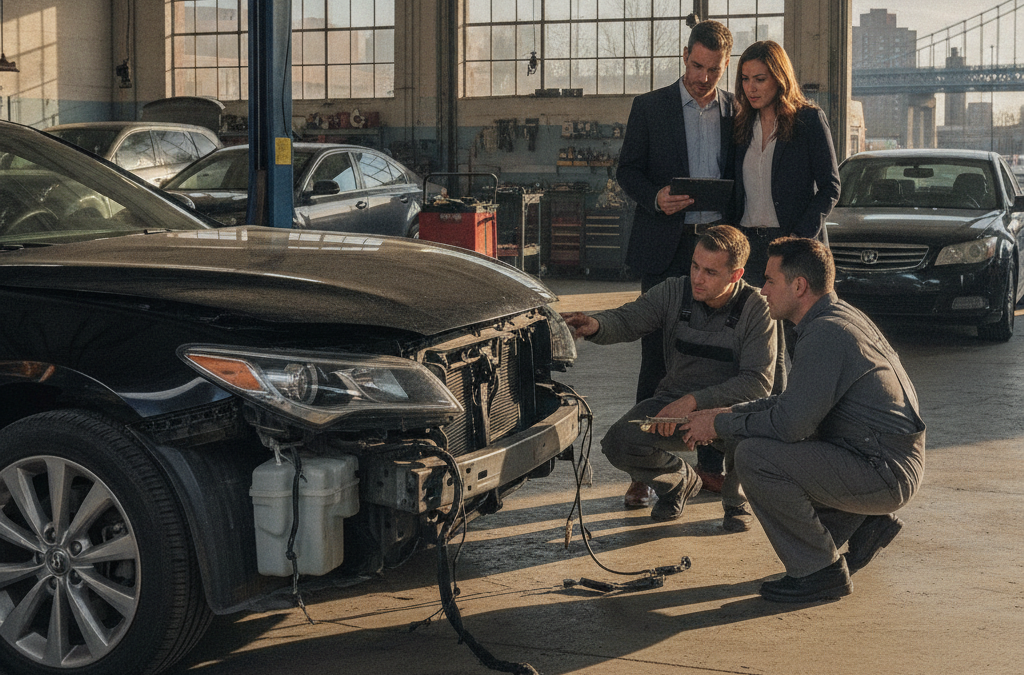
After a collision in the Bronx — whether it happened on the Cross Bronx Expressway, in a tight Throgs Neck side street, or during a slow-moving bottleneck near the Throggs Neck Bridge — the damage you can see is rarely the whole picture. A crumpled bumper or a dented quarter panel might look like the end of the story, but underneath that visible damage, your car’s frame, suspension, and structural components may have absorbed far more than meets the eye. Hidden structural damage is one of the most common — and most misunderstood — problems drivers face after a collision, and it’s worth understanding before you hand your keys to any shop.
Why Hidden Damage Happens — And Why It’s Easy to Miss
Modern vehicles are built with crumple zones, energy-absorbing structures, and high-strength steel or aluminum components designed to protect you during a crash. That’s a good thing — but it also means that impact energy travels through the vehicle in ways that aren’t always obvious. A collision that looks minor on the surface can transfer force through the unibody frame, twisting or bending components that sit well away from the point of impact.
This is especially common in rear-end collisions, where damage to the trunk area can push the rear frame rails forward, affecting the vehicle’s alignment, suspension geometry, and even the way the doors close. Front-end collisions can bend the engine cradle, damage subframe mounting points, or misalign the firewall — none of which you’d notice just by walking around the car.
In the dense stop-and-go traffic that defines daily driving in the Bronx and throughout NYC, these kinds of impacts happen constantly. And because they often don’t trigger airbags or produce dramatic visible damage, drivers sometimes assume the car is fine — or a shop that isn’t looking carefully enough tells them it is.
What a Proper Structural Inspection Actually Looks Like
A legitimate structural inspection goes well beyond a visual walkaround. At S&T Auto Body, our I-CAR Gold Class certified technicians use computerized measuring systems to check the vehicle’s frame dimensions against the manufacturer’s original specifications. These systems can detect deviations of just a few millimeters — deviations that would be completely invisible to the naked eye but that can compromise handling, alignment, and crash safety if left uncorrected.
Here’s what a thorough post-collision structural evaluation should include:
- Frame and unibody measurement: Using a computerized frame rack or laser measuring system to compare your vehicle’s current geometry against factory specs
- Suspension and steering inspection: Checking control arms, tie rods, steering knuckles, and related components for bending or cracking
- Subframe and engine cradle check: Especially critical after front-end collisions — these components are load-bearing and must be exactly right
- Torque box and rocker panel inspection: Areas where structural stiffness is concentrated and where hidden damage is common
- Post-repair alignment verification: After any structural correction, a four-wheel alignment confirms the vehicle tracks properly and handles safely
If a shop can’t tell you specifically how they measure for structural damage — or if they’re basing the estimate purely on what they can see — that’s a serious red flag.
The Problem With Shops That Don’t Look Deeper
This is the gap that too many local competitors don’t address head-on. Many body shops in the New York metro area are perfectly capable of making a car look repaired. New bumper, fresh paint, smooth panel gaps — and the car goes back to the customer. But if no one checked the frame, the suspension, or the subframe, the vehicle may be unsafe to drive, even if it looks perfectly fine.
Hidden structural damage that goes unrepaired leads to real problems down the road: premature tire wear from misalignment, handling that feels slightly off, and — most seriously — a vehicle that doesn’t perform the way it was designed to in a future collision. Your crumple zones are part of your safety system. If they’re already compromised and nobody fixed them, you’re not as protected as you think.
Drivers coming to us from Pelham Bay, Yonkers, Westchester County, and Queens have all shared the same story: they went to a shop that repaired the visible damage, got the car back, and then noticed the alignment pulling, the doors not closing right, or a new rattle they couldn’t explain. Often, that’s hidden structural damage that was never addressed.
How Insurance Claims Handle Hidden Damage — And Why You Need an Advocate
Hidden damage also creates complications on the insurance side. An initial estimate from your insurer may only account for what’s visible at the time of inspection. Once a certified technician starts the teardown and finds additional damage — bent frame rails, cracked subframe mounts, damaged suspension components — that requires a supplement to the original claim.
This is completely normal and expected in a proper collision repair. As a Geico preferred shop with decades of experience working with major NYC-area insurers, we handle supplement requests on your behalf. You shouldn’t have to fight that battle yourself. Our collision repair process includes full documentation of all damage found during teardown, with photos and written descriptions to support the supplemental claim.
The key is choosing a shop that will document everything honestly — not one that patches visible damage and hands the car back to avoid the paperwork and conversation with the insurance company.
Why Certified Technicians Make the Difference Here
Identifying and repairing structural damage correctly isn’t guesswork — it requires training, equipment, and knowledge of manufacturer repair procedures. Our I-CAR Gold Class certification means our technicians complete ongoing training in the latest repair methods, including how to work with the high-strength steel and aluminum structures found in modern vehicles. Many newer vehicles — including EVs — use aluminum-intensive construction that requires completely different repair techniques than traditional steel.
If you drive a Tesla, Mercedes-Benz, or another vehicle with a mixed-material body, structural repairs need to follow the manufacturer’s specific procedures. Welding in the wrong place, using the wrong repair technique, or failing to replace a component the manufacturer says must be replaced — any of these can void your warranty and compromise the vehicle’s safety. Our manufacturer-certified repair programs ensure your vehicle is repaired the right way, not just the fast way.
Frequently Asked Questions
How do I know if my car has hidden structural damage after a collision?
You often can’t tell just by looking. Signs that something may be wrong include doors or windows that don’t close smoothly, the vehicle pulling to one side while driving, unusual tire wear, or a rattling or creaking sound that wasn’t there before. The only way to know for certain is a proper inspection with computerized measuring equipment.
Will my insurance cover hidden structural damage found during repairs?
Yes, in most cases — as long as the damage is documented as part of the same collision. When additional damage is found during teardown, your shop submits a supplement to your insurer. This is a standard part of the process. As a Geico preferred shop, we handle this documentation directly so you’re not stuck in the middle.
Does structural damage mean my car is a total loss?
Not necessarily. Structural damage ranges from minor frame misalignment that can be corrected on a frame rack to severe damage that compromises the integrity of the vehicle. A certified shop will assess the extent of the damage and let you know whether repair is practical and safe. If total loss is on the table, they should be honest with you about that too.
Can hidden damage affect my car’s safety in a future accident?
Yes. Crumple zones and structural components are engineered to absorb and redirect crash energy in a specific way. If those structures are already bent or weakened from a previous collision and weren’t properly repaired, they won’t perform as designed in a future crash. This is a genuine safety concern, not just a cosmetic one.
How long does structural repair typically take?
It depends on the severity of the damage. Minor frame misalignment corrected on a frame rack might add a day or two to a standard repair. More significant structural damage — especially on newer vehicles with complex body construction — can take longer. A reputable shop will give you a realistic timeline upfront and update you if additional damage is discovered.
Don’t Let Hidden Damage Go Unaddressed
If you’ve been in a collision anywhere in the Bronx, Throgs Neck, or the surrounding area — or if you’ve already had a repair done and something still feels off — the right next step is a thorough inspection by technicians who know what to look for. At S&T Auto Body, we’ve been serving this community since 1975. We’re not going to hand you back a car that looks fine but isn’t. That’s not how we do business, and it never has been.
Request a free, no-obligation estimate and let us take a proper look. Contact S&T Auto Body today — we’ll tell you exactly what we find, explain your options clearly, and work with your insurance company to make sure everything that needs to be repaired gets repaired right.