What Bronx and Yonkers Drivers Should Know About Getting a Car Repaired When You’ve Been Told the Frame Is Damaged
If a shop or insurance adjuster has told you your frame is damaged after a collision, your stomach probably dropped. It sounds serious — and it is. But it doesn’t automatically mean your car is totaled or that you’re out of options. Drivers in the Bronx and Yonkers deal with this more than you might think, especially on roads like the Cross Bronx Expressway where high-speed rear-end collisions and side-impact crashes happen regularly. The key is understanding what frame damage actually means, what a proper repair looks like, and how to make sure nobody cuts corners on a job this important.
What Does “Frame Damage” Actually Mean?
Most people picture a big steel ladder frame when they hear “frame damage” — but the reality is a little more nuanced for the vast majority of vehicles on the road today. If you’re driving a modern sedan, SUV, crossover, or EV, your vehicle almost certainly has what’s called a unibody structure. That means the body and the frame are one integrated unit, not two separate pieces. When a collision bends, creases, or compresses part of that structure, it’s referred to as frame or structural damage.
Truck owners and some older vehicles do have traditional body-on-frame construction — a separate chassis underneath. But either way, structural damage is serious because it affects how your vehicle handles, how your doors and panels align, and critically, how the car will perform in a future crash. Modern vehicles are engineered with specific crumple zones that absorb and redirect impact energy. If those zones are bent and not properly restored, your car won’t protect you the way it was designed to.
Can a Damaged Frame Actually Be Repaired?
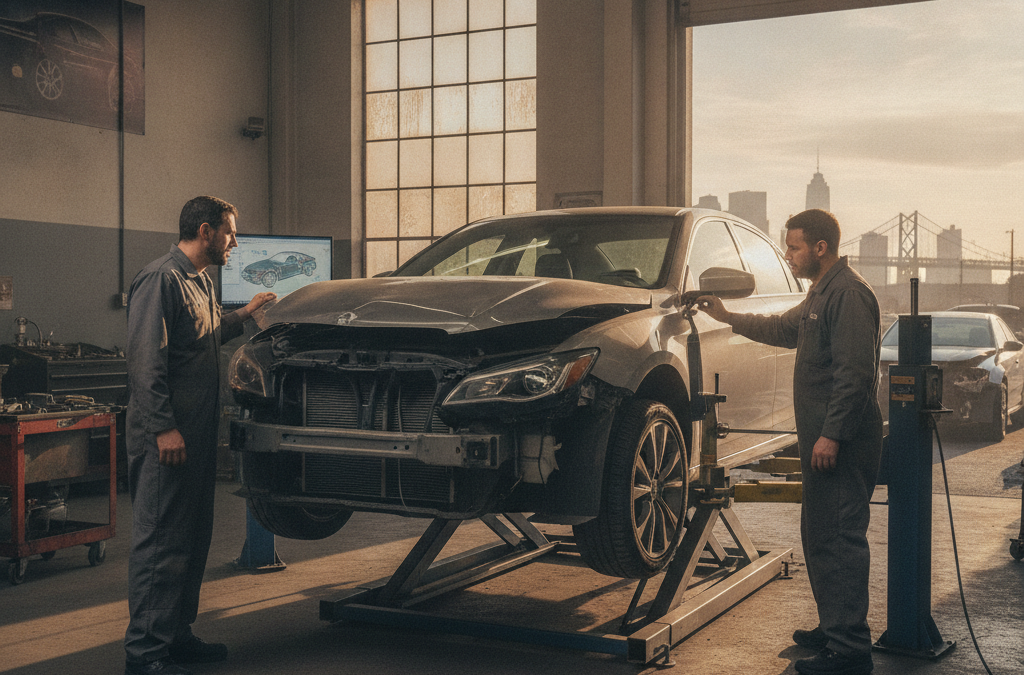
Yes — in many cases, it can. Whether repair is the right call depends on several factors: how severe the damage is, where on the vehicle it occurred, the age and value of the car, and what your insurance company determines. A shop with the right equipment and trained technicians can use computerized frame measuring systems and hydraulic straightening equipment to restore a unibody or frame to manufacturer specifications.
That word — specifications — matters a lot. It’s not enough to get the car looking straight. The measurements have to match the original factory dimensions within very tight tolerances. Any reputable shop doing this work should be able to show you a before-and-after printout from the measuring system, confirming the vehicle was returned to spec. If a shop can’t or won’t provide that documentation, that’s a problem.
At S&T Auto Body, our I-CAR Gold Class certified technicians use industry-standard measuring and straightening equipment to do this job correctly — not approximately. We’ve been doing structural repair in the Bronx since 1975, and we know the difference between a vehicle that looks fixed and one that actually is.
What Competitor Shops Often Don’t Tell You About Frame Repair
Here’s something that tends to get glossed over at a lot of shops: not all frame damage is the same, and not every shop is equipped to handle every type. Some shops have basic frame straightening equipment but lack the computerized measuring systems needed to verify the repair was done to spec. Others may repair visible structural damage but miss secondary damage — bends and stress fractures that only show up when the vehicle goes up on a proper measuring bench.
This is especially relevant for drivers in the Bronx and Yonkers who own newer vehicles with advanced driver assistance systems (ADAS) — features like lane-keeping assist, automatic emergency braking, and blind-spot monitoring. These systems rely on sensors and cameras that are calibrated based on the vehicle’s precise structural geometry. If the frame isn’t restored exactly to spec, those systems may not work correctly, and you might not know it until it’s too late. After any structural repair, your ADAS systems need to be recalibrated — and that’s something many shops either skip or don’t mention.
When you’re evaluating a shop for frame repair, ask directly: Do you have computerized measuring equipment? Will you provide a printout showing pre- and post-repair measurements? Do you recalibrate driver assistance systems after structural repairs?
How Insurance Handles Frame Damage Claims
Frame damage claims tend to generate more back-and-forth with insurance companies than straightforward panel or bumper repairs. The insurer’s adjuster will assess the damage and determine whether repair is feasible or whether the vehicle is a total loss — meaning the estimated repair cost exceeds a certain percentage of the car’s actual cash value.
In New York, that threshold is set by state law, and it’s worth knowing that insurance companies sometimes push for a total loss declaration on vehicles that could actually be repaired properly. On the flip side, some insurers — and some shops — will approve a repair that doesn’t fully address all the structural damage, because a partial repair is cheaper. Neither outcome is in your best interest.
Working with a shop that understands how to document frame damage thoroughly — and advocate for a complete, correct repair on your behalf — makes a real difference here. Our collision repair team works directly with Geico and other major NYC-area insurers, and we know how to make sure your estimate reflects everything that actually needs to be fixed, not just what’s easiest to approve.
When Frame Damage Means the Car Might Be Totaled
There are situations where frame damage is extensive enough that repair genuinely isn’t economically or structurally sound. If the damage involves multiple major structural zones, the repair cost climbs fast — and there’s a point where it makes more sense financially and from a safety standpoint to let the car go.
If your car is declared a total loss, that’s a separate process involving the settlement of your claim and the surrender of your title. If you’re in that situation and have questions about your options, it’s worth talking to both your insurance company and an independent shop before accepting a settlement. Mount Vernon and Westchester County drivers who’ve been through this process know it can take longer than expected — patience and documentation are your best tools.
Frequently Asked Questions
Is a car with frame damage safe to drive?
It depends on the severity. Minor structural damage may not immediately affect drivability, but it compromises crash protection and can affect alignment, handling, and sensor calibration. You shouldn’t drive a vehicle with serious frame damage until it’s been properly assessed and repaired.
How long does frame straightening take?
For moderate structural repairs, expect anywhere from a few days to one to two weeks, depending on parts availability and the extent of accompanying damage. More complex repairs involving multiple structural zones can take longer. We’ll give you a realistic timeline upfront — not a number designed to make you feel better in the moment.
Will my car’s value drop after frame repair?
Yes, in most cases. Even a properly repaired frame can affect resale value because the accident history appears on vehicle history reports. This is sometimes the basis for a diminished value claim against the at-fault driver’s insurance — worth asking your insurer about.
Does frame damage affect my warranty?
It can. If your vehicle is under a manufacturer warranty, structural damage may affect certain warranty coverage depending on how and where the repair was done. Using a certified shop that follows manufacturer repair procedures helps protect your warranty status.
What’s the difference between frame damage and unibody damage?
Traditional frame damage refers to the separate chassis on body-on-frame trucks and older vehicles. Unibody damage refers to structural deformation in modern integrated-body vehicles — which includes most cars, SUVs, and EVs on the road today. Both require precision repair and measurement verification to be done correctly.
Get a Straight Answer — and a Straight Frame
Frame damage is one of those situations where you really need a shop you can trust to tell you the truth — whether that’s “yes, this can be fixed properly” or “here’s what a total loss really means for you.” At S&T Auto Body, we’ve been in the Bronx for 50 years for a reason: we don’t tell people what they want to hear, we tell them what they need to know, and we back it up with the documentation to prove the work was done right.
If your vehicle has been in a serious collision and you’ve been told there may be structural damage, don’t guess — get a proper assessment from a shop with the equipment and certifications to evaluate it correctly. Contact us today for a free, itemized estimate, or call us at (718) 220-2201. We work with Geico and all major insurers, and we’ll walk you through the process from start to finish.