What Bronx and Manhattan Drivers Should Know About Getting a Car Repaired When the Accident Happened in a School Zone or Construction Zone
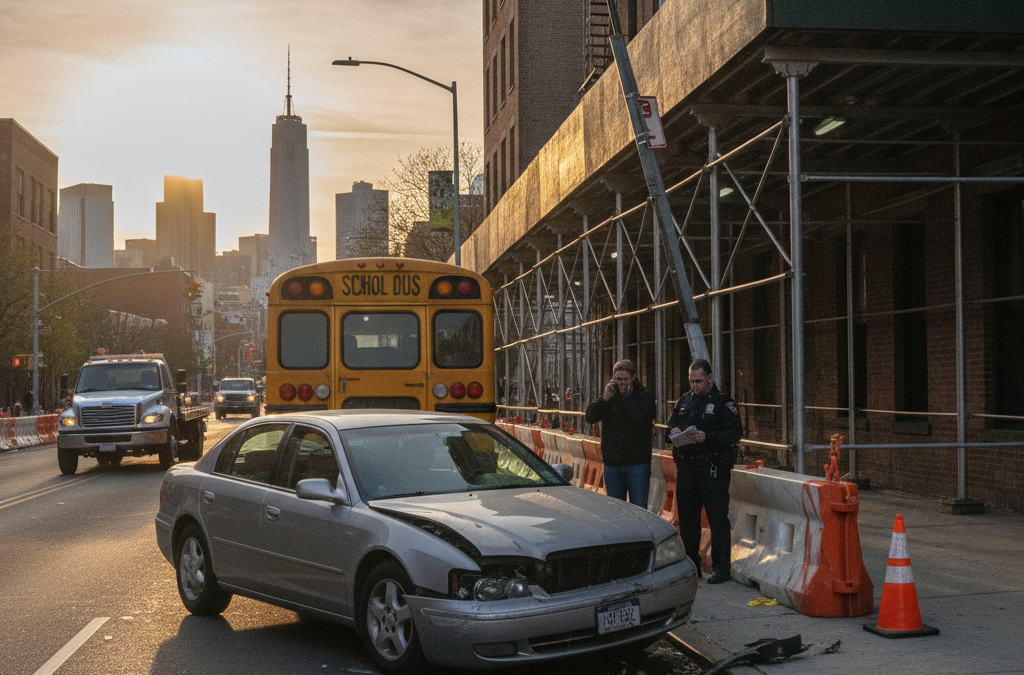
If you just got into an accident near a school or a work zone in the Bronx or Manhattan, you’re probably dealing with more than just a dented bumper. These types of accidents often come with elevated fines, modified fault determinations, and insurance complications that can slow down your claim — and your repair. The good news is that the collision repair process itself doesn’t have to be one more thing to stress about. Here’s what you need to know so you can move forward with confidence.
Why School Zone and Construction Zone Accidents Are Different in NYC
New York City has some of the most heavily regulated school zones and work zones in the country. Speed cameras are active in hundreds of school zones across the five boroughs — and in the Bronx alone, there are cameras near Fordham Road, Kingsbridge, and dozens of other neighborhoods where schools sit right on dense, high-traffic corridors. If you were cited in one of these zones, that ticket can complicate how fault is assigned during your insurance claim.
Construction zones add another layer. The city is constantly repaving, expanding, or repairing roadways — from the Cross Bronx Expressway to side streets in Manhattan — and temporary lane shifts, reduced sight lines, and unclear signage contribute to a significant number of accidents every year. If the accident involved a city contractor’s vehicle or equipment, there may be a municipal claim involved, which creates its own timeline.
None of this changes the fact that your car needs to get fixed. But understanding the landscape helps you deal with your insurance company more effectively — and choose the right repair shop from the start.
How the Insurance Claim Process Can Get Complicated
When an accident happens in a school zone or construction zone, insurers sometimes take longer to assign fault because they’re waiting on police reports, camera footage, or municipal records. That delay can hold up your claim authorization — and if you haven’t already chosen a certified body shop, you may find yourself in a holding pattern.
Here’s what experienced drivers do: they choose their shop first, get a free itemized estimate, and have everything ready to go the moment the claim is approved. That way, the second your insurer gives the green light, the parts are ordered and your repair slot is lined up.
At S&T Auto Body, we work directly with Geico and other major NYC-area insurers, and we know how to keep your claim moving even when the paperwork side gets complicated. If you’re not sure where your claim stands, we can help you navigate that process — it’s part of what we do. Learn more about how we handle collision repair and insurance claims.
What Your Body Shop Actually Needs to Know About the Accident Location
Most drivers don’t realize that the location of an accident can affect the repair assessment. Here’s why it matters:
- Construction zone debris damage: Loose gravel, metal scraps, temporary barriers, and uneven pavement can cause undercarriage damage, bent wheels, or paint damage that isn’t immediately visible. A good shop will inspect beneath the vehicle, not just the visible body panels.
- Low-speed school zone collisions: Accidents at 15–20 mph can still cause bumper, sensor, and structural damage that looks minor from the outside. Many modern vehicles — especially those with parking sensors, backup cameras, and driver assist systems — have components embedded in the bumper that require recalibration after even a minor hit.
- Multiple-impact scenarios: Work zones sometimes involve chain reactions or multi-vehicle contact. Each point of impact needs to be documented and assessed separately for the insurance claim.
This is an area where a lot of quick-turnaround shops cut corners. They write up the obvious damage and miss the rest. With I-CAR Gold Class certified technicians on staff, we’re trained to look for everything — including damage you can’t see from the driveway.
The Gap Most Local Shops Don’t Address: Post-Accident ADAS Recalibration
This is something that competitor shops in the area rarely talk about openly, and it matters a lot if your car was built in the last several years. Advanced Driver Assistance Systems — lane departure warning, automatic emergency braking, blind spot monitoring, and others — rely on sensors and cameras that are often positioned in or near the front and rear bumpers. If your car was involved in even a low-speed collision in a school zone or work zone, those systems may need to be recalibrated after the bodywork is done.
Skipping this step isn’t just a quality issue — it’s a safety issue. A lane departure system that’s slightly off-axis after a repair could fail to warn you at exactly the wrong moment. At S&T Auto Body, recalibration is part of a complete repair, not an afterthought. We work with manufacturer-certified standards across a wide range of brands — including Mercedes-Benz, Tesla, Subaru, Toyota, Hyundai, Ford, and more — so your car’s safety systems are restored properly. See all our manufacturer certifications.
Tips for Drivers in the Bronx and Manhattan After a Work Zone or School Zone Accident
- Document everything at the scene. Take photos of all damage, skid marks, temporary signage, lane markings, and any visible construction barriers. If a camera or unusual road condition contributed to the accident, that documentation supports your claim.
- Get the police report number. In NYC, this is essential. Your insurer will need it, and so will your body shop if there’s any dispute about fault or repair scope.
- Don’t rush to a shop just because it’s close to the accident site. Shops near busy construction zones sometimes see a surge of quick-turnaround work. Quick isn’t always thorough. Choose a shop that’s certified to repair your specific make and model.
- Ask for an itemized estimate in writing. This protects you if the insurance company tries to limit the scope of repairs. At S&T Auto Body, our estimates are always free and fully itemized — no vague line items.
- Check whether the other driver or a city contractor is involved. If a municipality is partly responsible, your attorney or insurance adjuster may pursue a separate claim. Your body shop doesn’t need to get involved in that legal side, but they should be prepared to provide documentation of all damage.
Local Context: Why This Matters More in the Bronx Than Almost Anywhere Else
The Bronx has an unusually high concentration of both active school zones and long-running infrastructure projects. The Cross Bronx Expressway, the Major Deegan, and dozens of neighborhood streets near Fordham, Kingsbridge, and Mount Vernon Avenue have seen ongoing construction for years. At the same time, school zone speed cameras are dense in this borough, and the interaction of heavy pedestrian traffic with tight urban roadways creates genuine collision risk every day.
Drivers coming in from Yonkers, Mount Vernon, or down from Westchester County often aren’t familiar with how quickly conditions change near active work zones in the Bronx. If you got caught in one of those situations and your car took the hit, you don’t have to figure out the next steps alone.
We’ve been a family-owned shop in the Bronx since 1975. We’ve seen this city change around us for five decades, and we’ve repaired vehicles from every kind of accident this borough can produce. Learn more about who we are and how we work.
Frequently Asked Questions
Does getting a ticket in a school zone affect my insurance claim?
It can. A citation for speeding in a school zone may be used by an insurance adjuster to assign partial or full fault to you. That doesn’t mean your claim is lost — but it does mean you should document everything carefully and consider working with a shop that understands how to coordinate with adjusters on your behalf.
What if the accident happened because of poor road conditions in a construction zone?
If a city contractor or the construction zone itself contributed to unsafe conditions, there may be grounds for a separate municipal claim. Your first step is still to get your car assessed and your insurance claim started. An attorney can handle the municipal side. Your body shop’s job is to repair your vehicle correctly and document all damage thoroughly.
My airbags didn’t deploy but the bumper sensors are acting up after the accident. Is that covered?
Sensor damage after a collision — even a low-speed one — is typically covered under a collision claim. The key is making sure your body shop identifies and documents it during the initial estimate. Many shops miss sensor damage because it doesn’t show up on a visual inspection. Ask specifically about ADAS recalibration.
How long will my repair take if the insurance claim is still being sorted out?
You can get your estimate and have everything ready before the claim is approved. That way, once you get the green light, the repair starts immediately. Delays usually come from waiting on parts or insurance authorization — not from the actual repair work itself, which is typically a few days to a week depending on the damage.
Can S&T Auto Body repair my car if I drive a Tesla or another EV that was damaged in a construction zone?
Yes. We’re certified for Tesla and EV body repair, including aluminum panel work and high-voltage safety protocols. Construction zone damage — including undercarriage impact, wheel damage, and sensor issues — is well within what our technicians are trained and certified to handle.
Ready to Get Your Car Repaired the Right Way?
You’ve already dealt with the accident. You don’t need to deal with a repair process that creates more problems than it solves. At S&T Auto Body, we give every customer a free, fully itemized estimate, we work directly with your insurance company, and we repair your vehicle to manufacturer standards — not just to what the adjuster initially approves.
Whether your accident happened near a school in Fordham, a construction zone on the Cross Bronx, or somewhere in Manhattan on your commute, we’re here to help. Call us at (718) 220-2201 or visit our contact page to request your free estimate. We’ll walk you through the whole process from first call to final inspection.