
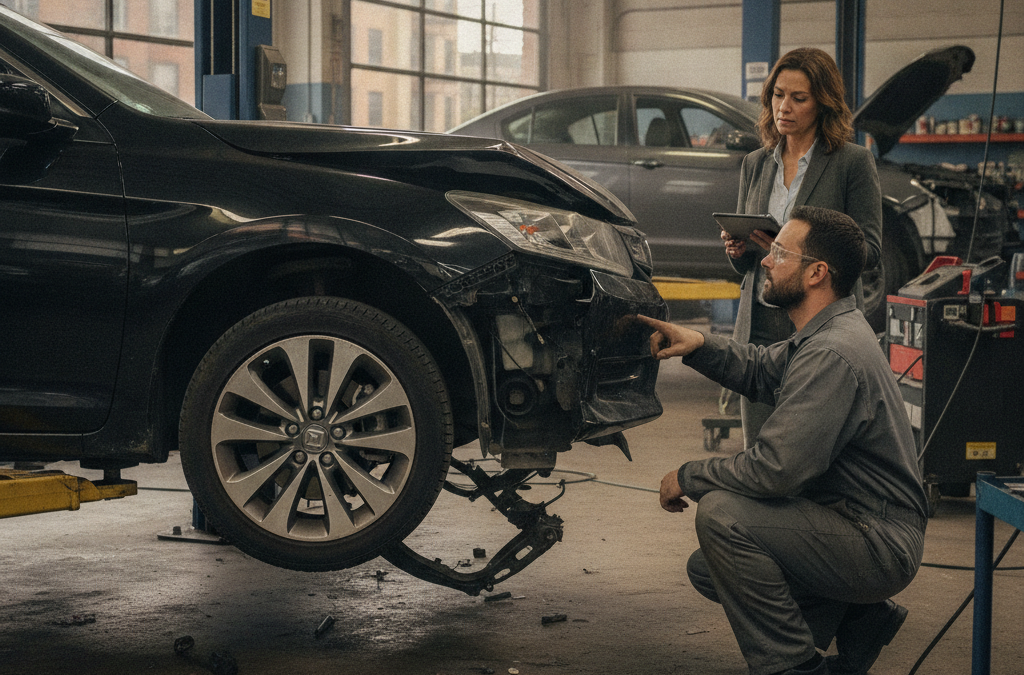
What Bronx and Scarsdale Drivers Should Know About Getting a Car Repaired When the Accident Involved a Pothole or Road Defect
Yes — a pothole can total a car’s suspension, crack a rim, throw a vehicle out of alignment, and in serious cases, cause enough of a jolt that structural components shift. If you hit a road defect in the Bronx, on the Cross Bronx Expressway, or coming down through Westchester County into Scarsdale, your first instinct might be to assume it’s just a flat tire situation. But pothole damage is often deeper than what you can see standing next to the car on the shoulder. This article will walk you through what to do next — from documenting the damage to filing a claim to getting your vehicle inspected and repaired at a certified shop that actually knows what they’re looking for.
Why Pothole Damage Is More Serious Than It Looks
New York City’s roads are notoriously rough. The freeze-thaw cycle that hits every winter tears up pavement, and high traffic volume on corridors like the Cross Bronx and Fordham Road means the damage spreads fast. Scarsdale and Yonkers drivers who commute into the Bronx or Manhattan regularly deal with the same problem — the roads don’t get better once you cross the city line.
When you hit a pothole hard enough, here’s what can actually happen to your vehicle:
- Bent or cracked wheels and rims
- Blown or damaged tires (sometimes both sides if you drop into a deep hole)
- Bent control arms or tie rods
- Damaged struts or shocks
- Knocked-out wheel alignment that causes pull, uneven tire wear, or handling problems
- In more serious impacts — bent subframe components or even frame misalignment
- Undercarriage damage from bottoming out on a raised road edge or broken asphalt
None of that is minor. And if you’re driving a vehicle with low-profile tires — common on luxury vehicles, performance models, and many EVs — the sidewall has almost no cushion to absorb a hard impact. The wheel takes the hit directly.
What to Do Right After the Incident
If you’re safe to do so, document everything before you move the vehicle. Take photos of the pothole itself, including its size and location relative to any street signs or landmarks. Photograph your tire, wheel, and any visible undercarriage damage. If there are witnesses or other vehicles that experienced the same hazard, note that too.
Then report the pothole. New York City has an online pothole reporting system through the city’s 311 portal. Getting a complaint on record matters — both for your own peace of mind and because it creates a paper trail if you decide to pursue a claim against the city. The NYC Department of Transportation tracks these reports, and in some cases drivers have successfully filed claims for reimbursement through the NYC Comptroller’s office when a pothole caused documented damage. That process has strict timelines and requirements, so acting quickly matters.
For drivers in Westchester County — Scarsdale, Yonkers, or neighboring areas — road defect claims go through the county or municipality responsible for that specific road. The process is different from the NYC system, but the documentation steps are the same: photograph, report, and get your vehicle inspected promptly.
Can Your Insurance Cover Pothole Damage?
This depends on your coverage. Standard liability insurance won’t help you here — that covers damage you cause to others. For pothole damage to your own vehicle, you’re generally looking at your collision coverage or, in some cases, comprehensive coverage depending on how the claim is classified by your insurer.
If you have collision coverage, you’ll likely pay your deductible and your insurer handles the rest. The tricky part is that some drivers hesitate to file a claim for a pothole hit because they’re worried about their rates going up — and that’s a real concern worth discussing with your insurer before you decide how to proceed. If the damage is minor and your deductible is high, you may choose to pay out of pocket. If the damage is significant — which it often is when suspension components are involved — filing makes more sense.
At S&T Auto Body, we work with Geico and other major insurers on exactly these types of claims. We can help you understand what the estimate covers and work with your adjuster to make sure everything is documented properly. Our collision and mechanical repair services cover the full scope of what a pothole impact can do to a vehicle, from alignment and suspension work to frame straightening when it’s needed.
Why a Certified Shop Matters for This Type of Damage
Here’s the thing with pothole damage: it’s easy to fix what’s visible and miss what isn’t. A shop that replaces your blown tire and bent rim without putting the vehicle on an alignment rack and doing a full undercarriage inspection is sending you back out on the road with potential problems you won’t notice until something fails at highway speed.
At S&T Auto Body, our I-CAR Gold Class certified technicians are trained to look at the whole picture. That means a proper inspection of steering and suspension geometry, not just a tire swap. It means checking the frame and subframe for stress or deformation when the impact was hard enough to warrant it. And if your vehicle is a manufacturer-certified model — Mercedes-Benz, Tesla, Subaru, Ford, GM, Volkswagen, Hyundai, or any of the other brands we’re certified to repair — we follow the manufacturer’s own inspection and repair protocols, not a shortcut version.
That matters especially for EV drivers. Tesla and other electric vehicles carry heavy battery packs low to the ground, which means a serious pothole hit can involve the battery enclosure or undercarriage shielding in ways a conventional vehicle wouldn’t experience. Those components have to be inspected by someone who knows what they’re looking at.
What to Expect From the Repair Process
When you bring your vehicle to us after a pothole incident, here’s what you can expect:
- A free, itemized estimate that details what was found and what it will take to fix it
- A clear explanation of what’s structural versus what’s mechanical, and why each repair matters
- Direct communication with your insurer if you’re filing a claim
- Honest guidance if the damage is more than your insurer initially acknowledged
- Repair work backed by our 50 years of experience serving the Bronx and surrounding areas
We know that most people who come to us after a pothole hit are frustrated. You didn’t cause this. The road did. And then you’re stuck figuring out insurance paperwork and repair timelines on top of it. We try to make that process as straightforward as possible. We’ve been doing this since 1975, and we’ve seen just about every road hazard scenario you can imagine in New York City.
Frequently Asked Questions
Can I file a claim with New York City if a pothole damaged my car?
Yes, but it’s not guaranteed to result in payment. You need to file a Notice of Claim with the NYC Comptroller’s office within 90 days of the incident, and you’ll need to show that the city had prior notice of the pothole. It’s a formal legal process, and many claims are denied. That said, if the damage was serious and the pothole was previously reported, it’s worth pursuing. Document everything — photos, the 311 report number, and your repair estimate from a certified shop.
Does hitting a pothole count as a collision for insurance purposes?
Generally yes. Most insurers classify pothole damage under collision coverage because your vehicle impacted a road surface or object. Some policies may handle it differently, so check with your insurer. Your deductible will typically apply.
How do I know if my car’s frame was affected by a pothole hit?
You often can’t tell just by looking at the outside. Signs include the car pulling hard to one side even after alignment, doors or panels that no longer fit flush, or a steering wheel that sits crooked at center. A proper inspection on a frame straightening rack is the only way to know for sure. We offer that inspection as part of our standard post-accident assessment.
What if I didn’t notice the pothole damage right away?
It happens. Sometimes a bent control arm or damaged strut doesn’t make itself obvious until you’ve driven the vehicle for a few days. If your car is handling differently, pulling, vibrating, or making new noises after a rough road incident — even one that seemed minor — bring it in. Catching a compromised suspension component early is a lot better than dealing with a failure on the highway.
I drive a Tesla. Is pothole damage handled differently?
Yes, in important ways. Tesla’s aluminum body structure and battery enclosure require technicians trained specifically on those vehicles. We’re a certified EV repair shop, and we follow Tesla’s own repair procedures for any structural or undercarriage work. Don’t take a Tesla to a general shop after a serious road impact — you need someone who knows the platform.
Get a Free Estimate — No Obligation
If a pothole or road defect left you with damage — obvious or suspected — don’t wait to get it looked at. The longer a suspension problem or alignment issue goes uncorrected, the more it costs to fix and the more it wears on your tires and other components. We offer free, itemized estimates with no obligation, and we can help you navigate the insurance side of things if you need it. Contact S&T Auto Body today to schedule your inspection or submit photos online for a quick quote. We’re here when you need us.